Chandigarh Free 20 Parking Area Or Face Demolition Says Dc To Schools At Foswac Meeting
Hindustan Times
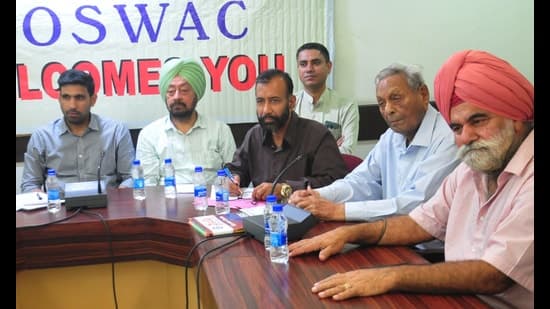
The private schools that have not earmarked 20% of their premises for parking as per the approved building plan are bound to face action, Chandigarh deputy commissioner (DC) Nishant Kumar Yadav said...
The private schools that have not earmarked 20% of their premises for parking as per the approved building plan are bound to face action, Chandigarh deputy commissioner (DC) Nishant Kumar Yadav said on Sunday. During the executive committee meeting of the Federation of Sectors Welfare Association Chandigarh (FOSWAC) at People Convention Centre in Sector 36, the DC said the structures constructed on the parking sites in schools would be demolished.Yadav was responding to a query on traffic congestion seen daily outside large private schools in busy sectors, including Sectors 26, 32, 36, 35 and 40. “All 79 private schools have been issued notices to use 20% parking on the premises as approved by the administration in building plans. Some schools have constructed basketball courts or other things on designated parking sites. They have been given appropriate time. Afterwards, such structures will be razed,” he said.Schools have been advised to have different dismissal times to reduce traffic congestion. “Guru Nanak Public School, Sector 36, has adopted the approach of circular departure and we hope other schools will also adopt it,” the DC said.Various civic issues were raised by FOSWAC members, including shortage of water, encroachments in markets by vendors and shopkeepers, bad condition of roads, poor law and order and need to develop Chandigarh as medicity. Regarding road maintenance, he pointed to a shortage of bitumen, a tar-like substance made of crude oil. He also cited the upcoming monsoon season.Amid resident welfare associations’ concern regarding crimes, the DC said notices were being issued to illegal guest houses and hotels. “They have to shut them. Hoteliers have been directed to share visitors’ data. Random verification of visitors in hotels will be done,” the DC said.Bed and breakfast policy draws ireFOSWAC members opposed the bed and breakfast policy rolled out by UT administration, questioning its plausibility, keeping in mind the issues related to parking, water, sewerage and fire safety. FOSWAC chairperson Baljinder Singh Bittu said residents in sectors were already facing shortage of water. “Residential plots can’t be used for commercial purposes,” he said.The DC clarified that only those residential areas having plots bigger than 1 kanal would be authorised to have a bed and breakfast establishment and have maximum eight rooms per property. To open a homestay, a registration process will be there, requiring a fire NOC and a certificate by building branch.FOSWAC secretary Pardeep Chopra said Chandigarh’s three big hospitals are overcrowded so there was a need to develop the city as a medicity.