Makarand Sathe Exit And Other Plays Review
Indian Express
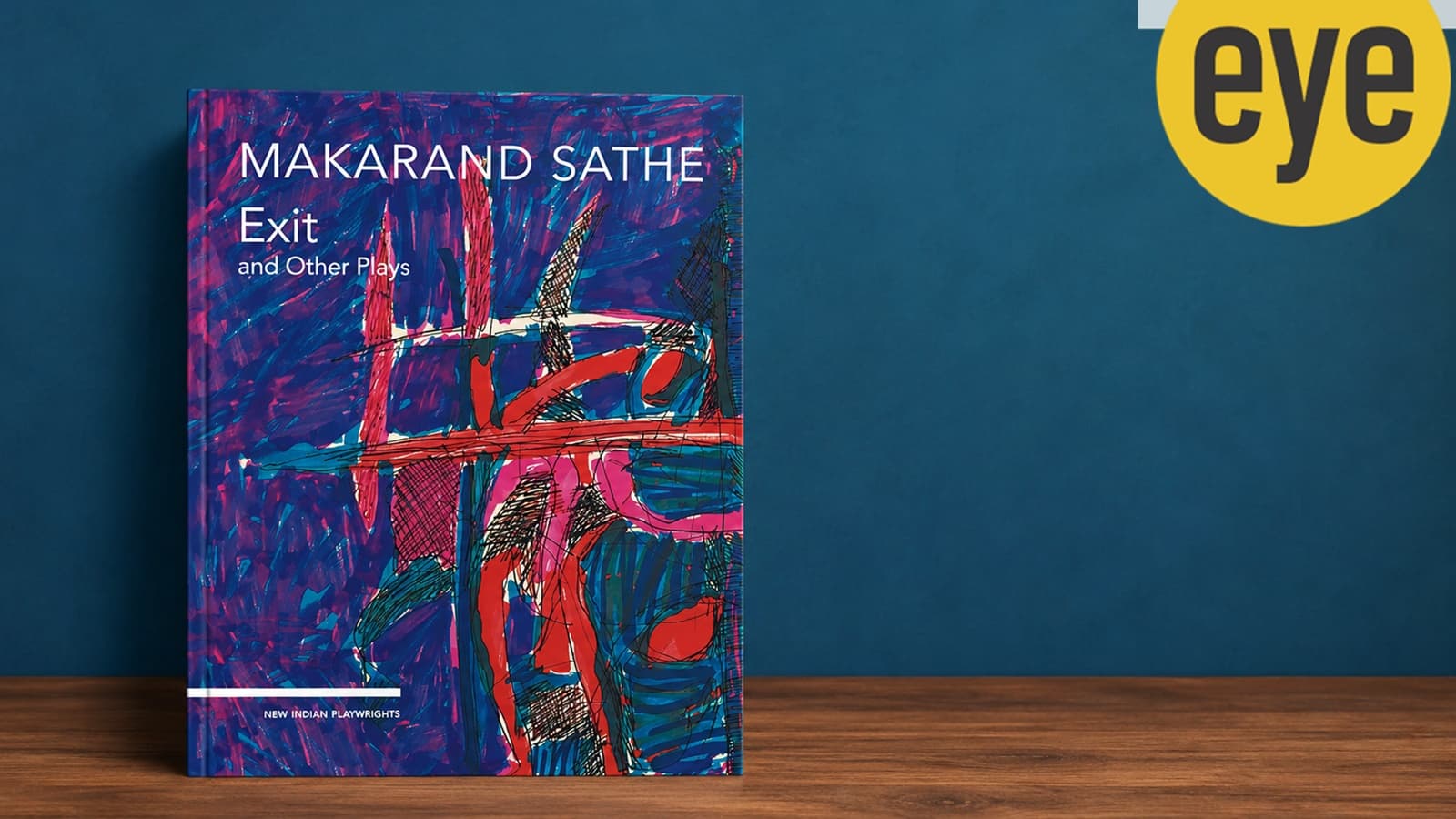
(Written by Sundar Sarrukai) Reading plays is always a challenge. Unlike other genres, the play demands more than just reading; it demands an imagination to see the play on stage
(Written by Sundar Sarrukai) Reading plays is always a challenge. Unlike other genres, the play demands more than just reading; it demands an imagination to ‘see’ the play on stage. In Exit and Other Plays, playwright Makarand Sathe offers exactly that — an insight into the production of an imagination that allows one to read plays as more than just political, philosophical or comic texts. This ‘staging of reading’ produces a new world that can alert us to what our real world hides. Theatre produces a sense of time that forces us to listen, see and feel what everyday life masks. Reading Sathe’s plays makes us reflect on these questions, not merely as an intellectual exercise but as something that can jar our sensibilities. The collection features translations of six of Sathe’s plays. They deal with a variety of topics but all of them draw upon mythical characters to comment on contemporary life. Through figures such as Narada and Krishna among others, he mines our cultural memories to provide a framework to see our daily lives. A depiction of the battle between Duryodhana and Bhima in Razmnama Ashwathama and Maruti Take Four Billion Amnesiacs, which deals with time as money, a theme often used in Hollywood films as well. Sathe, however, explores the idea through the characters of Ashwathama and Maruti, while touching upon the ideas of the ‘business of time’ and immortality. Time and mortality reappear in Mr Sapatnekar’s Child but this time, through the theme of rebirth (of god) as well as the politics of motherhood. Reading this play made me think about the ‘being’ of an unborn child in a culture that accepts the possibility of another soul inhabiting the unborn child. What does it say about a society that needs gods to constantly save them from themselves? Echoing Bertolt Brecht’s famous line from Galileo: ‘Unhappy the land that needs heroes’, Sathe could well be saying, ‘Unhappy the land that needs gods.’ The theme of marriage, which recurs in some of the other plays, including the titular ‘Exit’, pervades through the narrative. ‘Crossroads’ deals with the complexities of familial as well as conjugal relationships. Two plays are particularly striking — ‘They Went Ahead’, which is a dramatic rendering of farmers’ suicides and ‘Time and Time Again, Men Take to the Battlefield’, a poetic rendering of the fight between Duryodhana and Bheema as seen from the perspective of an ordinary citizen. The latter has been wonderfully translated by Irawati Karnik who has retained the form of the original. In both these plays, Sathe’s fundamental concern is about the growing mass of members of a society that has lost the capacity to respond to injustice. Terrible actions are often ascribed to some agency such as the government, capitalists, communists, modern technology and the many other ‘ists’ and ‘isms’ that populate these plays. But, at the end of it all, his question remains about the ease with which these systems erode the moral sensibilities of the well-off in society by co-opting them in every manner possible. (Sarukkai is an academic, author, public speaker and teacher)