How Many Days Of Swelling Is Normal After Getting A Piercing Dermatologist Clears Doubts About Bumps Infections
Hindustan Times
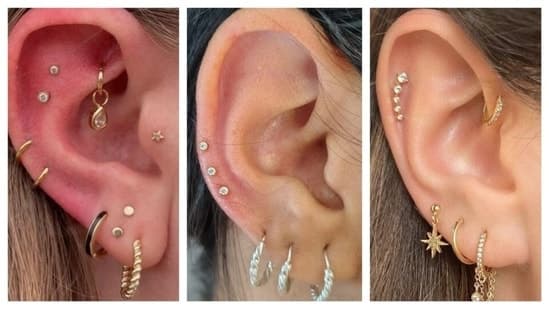
Piercing, a form of body adornment, has predominantly risen as a powerful means of self-expression. The variety of experimentation is also indescribable
. Pinterest feeds are abundant with beautiful ear stacks and nose rings, positioning piercings as wearable art. Rooted in trends, such as trend piercing emerging as a chic choice, and in culture, such as Kashmiri Pandit women wearing dejhoor, a traditional conch piercing, you still need proper aftercare.
Dr Nishita Ranka Bagmar, dermatologist and founder of Dr Nishita’s Clinic for Skin, Hair & Aesthetics, Hyderabad, shared with us the common steps one needs to take after getting a new piercing and addressed some frequently asked doubts. After all, a piercing is a fresh wound, which means it needs proper care.
Answering this, the dermatologist clarified that no food directly infects a piercing. However, certain foods and drinks can worsen inflammation in the first week after getting pierced.
She cautioned, “Alcohol thins the blood and prolongs swelling. Spicy food and caffeine increase sweating, and sweat under jewellery breeds bacteria. I also ask patients to skip raw and street-side foods.”
After piercing, the site swells a bit, which makes many people anxious. More importantly, it can be difficult to know when the swelling is a normal part of healing and when it crosses into red-flag territory.
Clarifying this, the dermatologist shared a checkpoint, “I ask patients to treat day five as the checkpoint. Until then, mild swelling, warmth, and clear or straw coloured fluid are part of healing. If on day five the swelling is worse than day three, or the skin looks angry red rather than pink, that is early infection.”
A small, soft swelling or bump may develop near the piercing hole within days or weeks of getting pierced. Many worry whether it is a piercing or a keloid.
Clarifying this, Dr Bagmar said it is one of the most confusing diagnoses she often sees. “A bump is soft, moves slightly when pressed, sits at the hole, and shows up within weeks. A keloid is firm, immobile, and extends beyond the wound like spilled wax, and arrives months later. Indian skin is genetically keloid-prone, and cartilage piercings carry the highest risk. If keloids run in your family, tell your dermatologist before you pierce."
This suggests that while piercing bumps may occur due to irritation, friction, wearing the wrong jewellery, or repeatedly touching the jewellery, a keloid is more serious because it is more likely to develop in people who are genetically prone to it.
So while kelpuds require immediate medical attention, bumps can be prevented and managed by following some habits. Here are some of the things the doctor advised:
But, she urged visiting a doctor if the bump lasts over four weeks, then instead of self-treating, the doctor will use an intralesional steroid injection to resolve it.
While much of the aftercare can be done by yourself, there is a point after which you need to visit a doctor. Here are some of the signs Dr Bagmar shared:
Note to readers: This article is for informational purposes only and not a substitute for professional medical advice. Always seek the advice of your doctor with any questions about a medical condition.