The Dilip Kumar Film J Jayalalithaa And Every Bollywood Heroine Turned Down
Indian Express
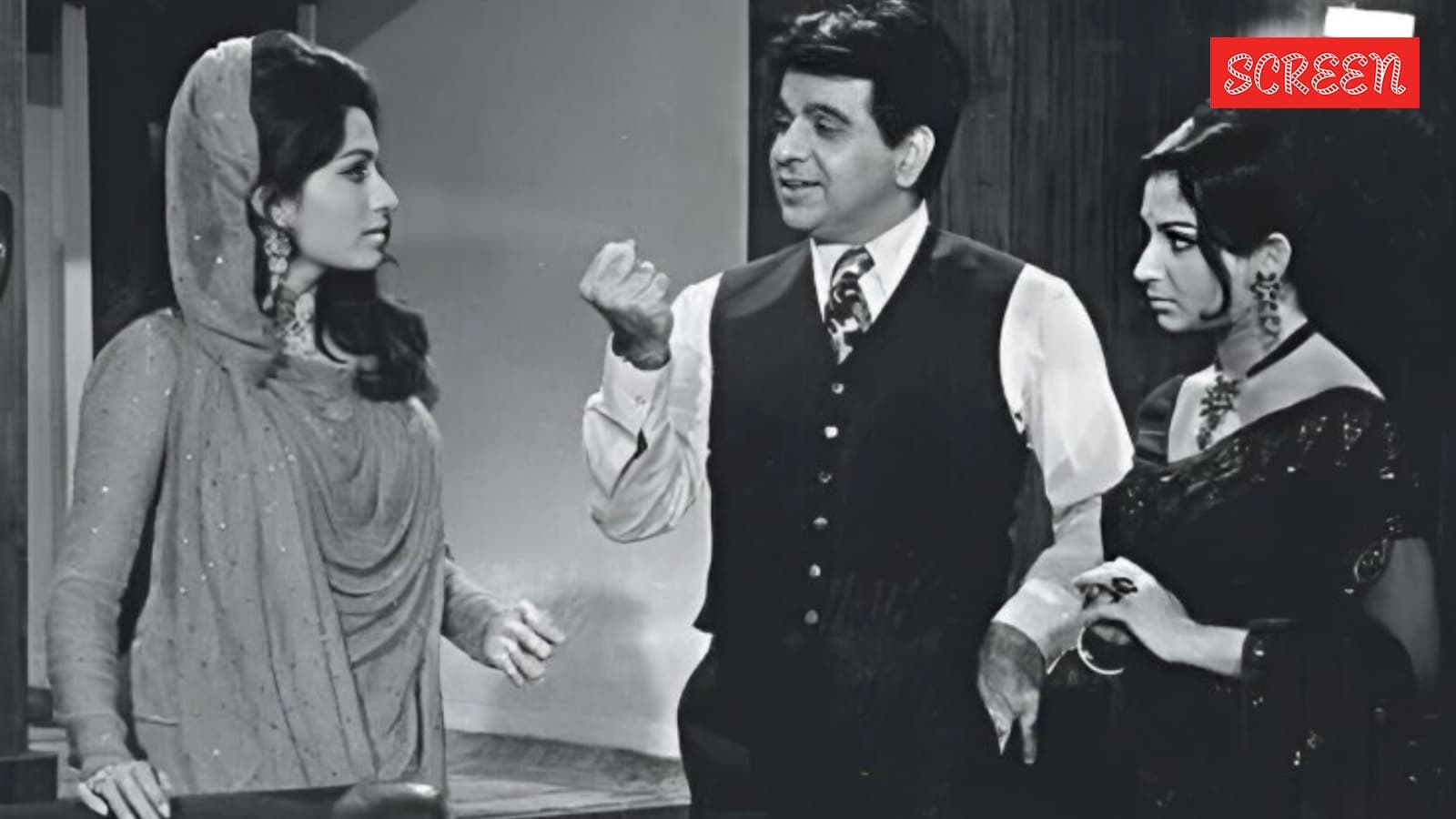
When B.R. Chopra s Dastaan released in 1972, it had everything going for it on paper Dilip Kumar in a challenging dual role, Sharmila Tagore, Bindu, Prem Chopra, music by Laxmikant-Pyarelal and...
When B.R. Chopra’s Dastaan released in 1972, it had everything going for it on paper—Dilip Kumar in a challenging dual role, Sharmila Tagore, Bindu, Prem Chopra, music by Laxmikant-Pyarelal and lyrics by Sahir Ludhianvi. Yet, despite its star power, the film failed to click at the box office.
More than five decades later, however, Dastaan is remembered as much for the fascinating stories behind its making as for the film itself. One of them involves Bindu, who landed a pivotal role only after several leading heroines reportedly turned it down.
In a recent conversation with Vickey Lalwani, Bindu recalled how she unexpectedly became part of the film after a string of actresses, including Saira Banu and even Jayalalithaa, were considered for the role.
According to Bindu, veteran distributor Gulshan Rai first informed her that B.R. Chopra was remaking Afsana and suggested she get in touch with the filmmaker.
“Gulshan Rai ji, who was the distributor, called me and said B.R. Chopra was making Dastaan, a remake of Afsana. He told me there was a good role in the film and suggested I speak to him.”
She immediately got in touch with Chopra, who told her the film was in the works but no decision had been made about the role. According to Bindu, Chopra then approached several leading heroines, but none wanted to take on a negative role.
“Then he started calling all the heroines, but no one was willing to play a negative character. Even Saira Banu said that if Dilip Kumar hadn’t been her husband, she would have done the role.”
Bindu also revealed that actor and future Tamil Nadu Chief Minister Jayalalithaa was considered for the part and even underwent a screen test.
“After all the heroines refused, perhaps Dilip sahab suggested Jayalalithaa. She even did a screen test, but things didn’t work out. Whether they didn’t like her or she didn’t like the role, I don’t know the inside story.”
Only after that did the role finally come to Bindu.
“Then they thought of casting me. I was so happy because I was getting a chance to work with Dilip sahab. He used to do only one film every three years, so I never imagined my turn would come. But it happened by chance.”
She said B.R. Chopra later called her in for a look test before finalising her casting.
Looking back at her time on the set, Bindu said Dilip Kumar’s humility surprised her. “Dilip Kumar was very sweet, very down to earth. You wouldn’t even realise he was such a big artist. He was very helpful.”
Her experience echoes what Sharmila Tagore, who played the film’s female lead, said years later while remembering the late actor.
Speaking to PTI after Dilip Kumar’s death, Sharmila revealed that she accepted Dastaan without even reading the script because it gave her the opportunity to work with him.
“I had a small role in the film but I did it only because I would get a chance to work with him. When Chopra sahab asked me for the film, I told him, ‘I am not even looking at the script.’ Yusuf sahab was extremely kind, generous. When I S Johar (actor) would talk to me about my pronunciation, Yusuf sahab would say, ‘No, there’s nothing wrong. She’s speaking her lines quite well.’ He was the best we had seen on-screen. An actor par excellence.”
Interestingly, Dastaan itself exists because of a decision Dilip Kumar regretted for years.
More than two decades earlier, B.R. Chopra had offered him the lead role in Afsana (1951), a psychological drama about twin brothers. Dilip Kumar declined the project, and the role eventually went to Ashok Kumar. Afsana became a major commercial success and one of the defining films of Ashok Kumar’s career.
Years later, Dilip Kumar reportedly approached B.R. Chopra and expressed regret over missing the film. He urged the filmmaker to remake Afsana so that he could finally play the dual role. Chopra eventually revisited the story, updating it for a new generation as Dastaan in 1972.
While the film faded over time, Mohammed Rafi’s Na Tu Zameen Ke Liye Hai Na Aasman Ke Liye, written by Sahir Ludhianvi and composed by Laxmikant-Pyarelal, remains one of Hindi cinema’s most celebrated philosophical songs.
B. R. Chopra reportedly had doubts about the song. It was too philosophical, he felt, for a suspense thriller. Mainstream audiences would not connect with it.
Dastaan could not recreate the success of Afsana, it was Dilip Kumar’s first major flop in six years, since Dil Diya Dard Liya in 1966. The film’s climax, where Vishnu stages a theatrical play to expose his wife and best friend, was precisely the kind of slow, monologue-heavy sequence that Dilip Kumar was famous for. Critics acknowledged his performance. But 1972 audiences were not in the mood for it.
The film arrived at a time when Hindi cinema was undergoing a generational shift. The restrained, theatrical performances that had defined Dilip Kumar’s era were gradually giving way to a new style of storytelling and a younger crop of stars. Rajesh Khanna’s era was already at its peak. Amitabh Bachchan was right around the corner. Dastaan was not a bad film. It just arrived at exactly the wrong time.