Listicle 10 Indian Foods That Have Gone International
Hindustan Times
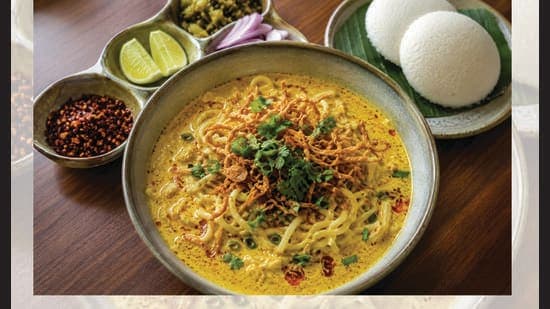
Nattukottai Chettiars (Tamil bankers and merchants) established Murugan temples and tiffin rooms in Rangoon, Burma, in the 19th century.
Nattukottai Chettiars (Tamil bankers and merchants) established Murugan temples and “tiffin rooms” in Rangoon, Burma, in the 19th century. Locals loved the cloud-like steamed rice cakes, but saw no reason to stop at sambar and chutney. They dunked mini idlis into rich coconut curries, garnished it with fried garlic, shallots and chili oil, and topped it up with Mohinga, their legendary fish soup.
Nearly 188 years ago, 2.4 lakh indentured Indians boarded ships for British Guiana, to labour on sugar plantations. No airport fits, no matching luggage, no custom passport covers. But they did carry their food histories in their hearts as they crossed the ocean. One recipe was for the famed Mathura peda. But fresh dairy was scarce, so they used condensed milk and local sugar, and shared it among themselves. Eventually, peda picked up a Caribbean accent and became peera.
In 1936, Mamool Deen and his wife Rasulan Ali, both descendants of Indian indentured labourers in Princes Town, South Trinidad, sold their only goat to escape poverty. They bought a bicycle and began hawking curried chickpeas on soft turmeric-spiced bara, a local cousin of bhatura. The base was Indian, the toppings local: Tamarind, green mango, shadow beni and pepper sauces. Delighted customers asked Mamool to “double up” the bara. And that’s how chole bhature got a West Indian glow-up.
GC Ranchod, aka Kapitan, a Bania ship worker, opened GC Kapitan Vegetarian Restaurant in Durban in 1912. When the Whites said, “you can’t sit with us” during apartheid in the 1940s, the restaurant found a way to keep serving roti and curry to their Black South African patrons. They hollowed out a loaf of bread and filled it with piping hot bean curry. Bania became bunny, the dish, bunny chow.
Canai as in Chennai. The dish descended from the South Indian parotta, and was served in Indonesia as far back as the 17th century, via Muslim traders from the Coromandel Coast. Centuries later, Tamil migrants carried it into British Malaya, where Mamak (Uncle) stall owners stretched, flipped and folded the dough into impossibly flaky layers. Malaysia calls it roti canai, Singapore knows it as prata, and Indonesians say roti cane.
It started out as dal-puri in the Bhojpuri-speaking regions of Bihar and UP. It changed in Mauritius, when almost a century ago, Ramawadh Ramsahye Maraz sold a version that swapped puri for soft griddled flatbread and used pounded yellow split-peas. Affordable, portable and vegetarian, it became one of the few foods that drew Hindus, Muslims, Creoles and Franco-Mauritians to the same cart. Today, it’s loaded with broad bean curry, rougaille, pickles and chilli paste.
On the French-controlled island, few recall the journey these crisp pastries have taken. They started out as khaja, the syrup-soaked pastry, and travelled east with migrants departing French enclaves such as Puducherry in the mid-19th century. In Réunion, local vanilla and orange blossom joined the recipe, while Chinese-owned corner shops helped take it mainstream. Cravate, because of the bow-tie shape, now appear at Hindu festivals and on Christmas tables.
In India, rainy days call for pakodas. In Fiji, they call for gulgula. Brought by indentured families between 1879 and 1916, these are the versions made in Uttar Pradesh and Bihar with atta, jaggery and fennel. Fiji gave them a tropical twist, folding mashed overripe bananas, coconut and nutmeg into the batter. Fijians flick perfectly round dollops of batter into hot oil, one after another with wet fingers and a well-practised thumb, turning gulgula-making into an art form.
Kheer is not a dish you’d expect to encounter along the banks of the Volga. This story begins in 1647, when Sutur, an Indian merchant, established a trading compound in Astrakhan, drawing merchants from Multan, Sindh and Punjab who built a thriving community there. They also brought India’s favourite milk-and-rice pudding. Over time, Russian short-grain rice replaced basmati, and some versions even passed through Slavic ovens.