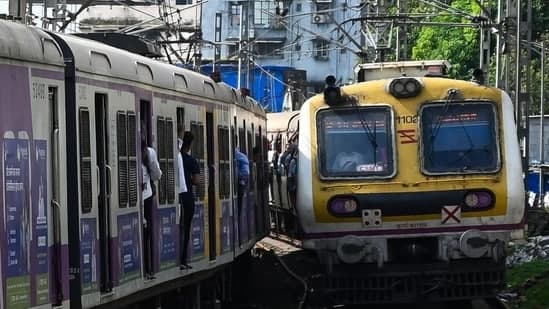
The brutal murder of 22-year-old Mayank Lohar aboard a moving Western Railway local train on Tuesday night, following a dispute over closing the door because of heavy rain, has left passengers with safety concerns on the suburban railway network.
The Government Railway Police (GRP), however, say they are fighting an uphill battle. Crippled by severe manpower shortages and inadequate technological support, the force is struggling to police one of the world’s busiest suburban rail systems, which ferries between 6.8 million and 8 million passengers every day. (See box)
Railway activist Sameer Zaveri said the strength of the GRP has remained virtually unchanged for nearly two decades despite a steady rise in commuters. “There is just one police personnel for every 2,000 suburban railway passengers,” he said. According to 2025 GRP data, 693 constabulary posts and 85 officer-level posts remain vacant.
Against a sanctioned strength of 255 officers, only 190 are currently in service, leaving 65 posts (nearly 25%) vacant. The force presently comprises 173 male and 17 female officers, including vacancies for 8 police inspectors, 17 assistant police inspectors and 40 police sub-inspectors. Overall, 693 of the 4,185 sanctioned police personnel posts across the Central and Western Railway divisions remain unfilled.
Officials said the shortage worsened after recruitment came to a standstill during the Covid-19 pandemic. With nearly 1,500 personnel retiring every year and no recruitment in 2019, 2020 and 2021, vacancies have continued to pile up.
Zaveri advocated the use of artificial intelligence-enabled surveillance, saying it can identify violent behaviour, suspicious movements, abandoned objects and other threats in real time, allowing authorities to intervene before situations escalate.
Police officials insist manpower remains the biggest challenge. Kishore Shinde, assistant commissioner of police (GRP), said chronic overcrowding frequently triggers confrontations. “There is a constant clash between the train’s capacity and the number of passengers boarding. Frustration due to overcrowding often leads to fights, and even minor issues like talking loudly on the phone can spark disputes,” he said.
GRP commissioner Rakesh Kalasagar said recruitment efforts are underway. “The recruitment process for 743 personnel has been completed. Of them, 350 have left for training and will join in August, while the remaining recruits will be sent as training seats become available. We are also increasing surprise baggage checks at suburban stations and intensifying patrolling,” he said.
Another senior police officer admitted that even with additional recruitment, deploying police personnel in every coach of every local train would remain impossible, underscoring the scale of the security challenge on Mumbai’s suburban railway network.