Master Plan Amendments Far Infrastructure
Indian Express
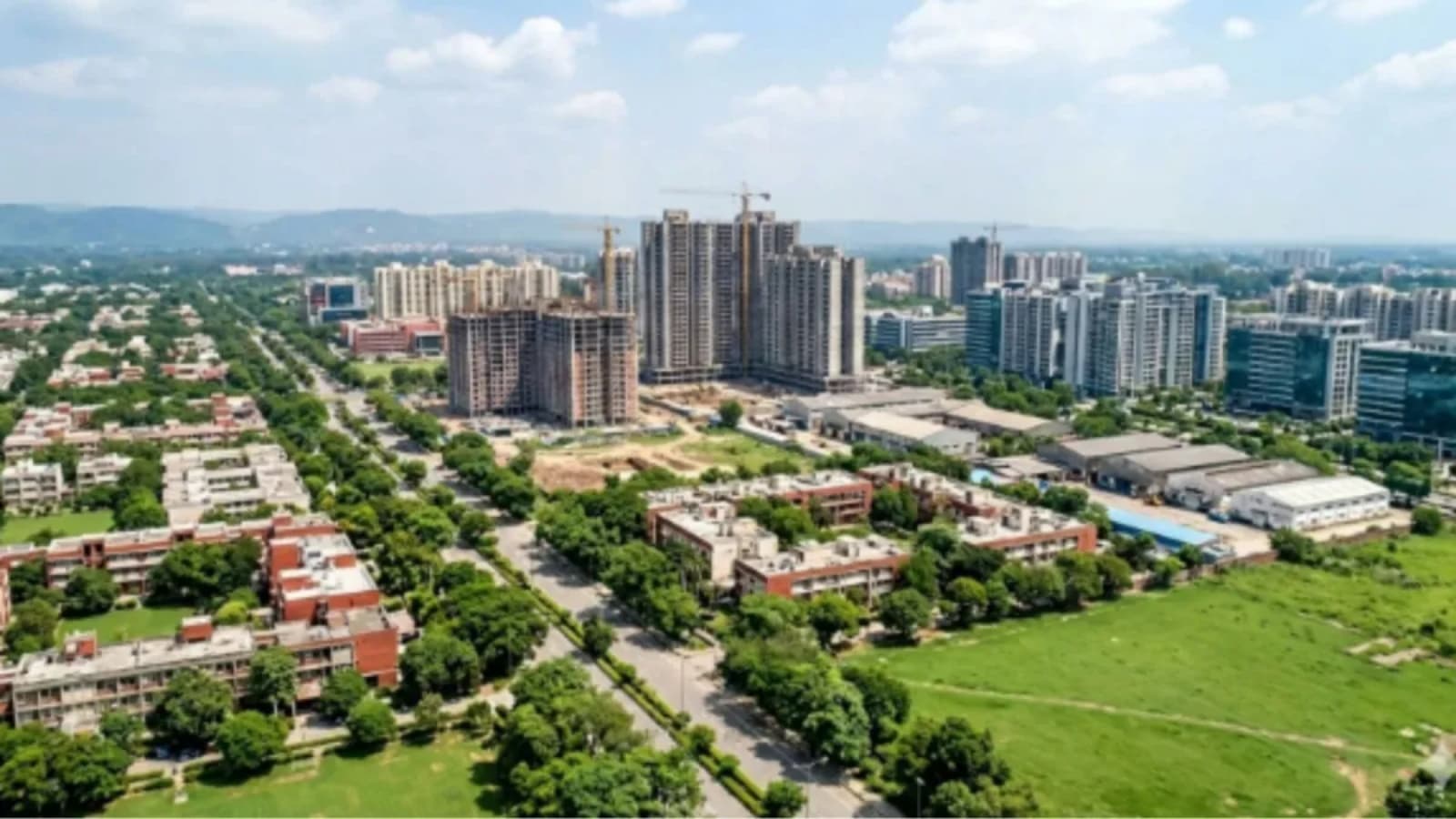
At the heart of the controversy surrounding Chandigarh s proposed Master Plan amendments lies a striking contradiction in the expert committee report itself.
At the heart of the controversy surrounding Chandigarh’s proposed Master Plan amendments lies a striking contradiction in the expert committee report itself. While recommending a substantial increase in the floor area ratio (FAR) for the industrial belt, ground coverage and building heights in industrial areas, a panel of UT officers simultaneously acknowledged that existing infrastructure would require major augmentation before the changes could be implemented, details accessed by The Indian Express suggested.
The bureaucratic panel itself clearly specified that the “recommendation shall be kept in abeyance till infrastructure augmentation of the components as mentioned above is not executed”.
The expert committee report, a copy of which is with The Indian Express, revived an issue flagged in Chandigarh Master Plan 2031, which had cautioned against increasing FAR because of pressure on existing infrastructure.
“In view of the enhanced FAR… the Engineering Department, UT Chandigarh and Chandigarh Municipal Corporation shall undertake augmentation of the existing trunk infrastructure of Industrial Area Phase I and II to commensurate with the increased development load,” the report said.
It further specifies that the augmentation must cover “sewer pipelines, water pipelines, electricity network, effluent treatment plants, waste collection systems, road width and public parking”.
However, the committee proceeded to recommend denser development, while simultaneously acknowledging that extensive upgrades would be required before it could absorb the additional load. It cited representations by several industrial associations for seconding the recommendations.
The recommendation effectively opened the door to more intensive development and taller structures in areas that were historically governed by Chandigarh’s uniform architectural character.
However, after recommending the relaxations, the committee went on to record that the enhanced FAR would significantly increase development load and require strengthening of civic infrastructure.
The committee directed that the recommendations should not be implemented until the infrastructure upgrades are actually carried out.
“It is again clarified that the recommendation shall be kept in abeyance till infrastructure augmentation of the components as mentioned above is not executed, the report said.
Resident welfare associations, urban planners and former officials have argued that Chandigarh’s roads, parking facilities, water supply systems and civic infrastructure are already under pressure.
Meanwhile, Chandigarh Chamber of Industries said that infrastructure cannot be an “afterthought” and that the UT Administration has the capacity and resources to support planned growth.
“As the industry expands, infrastructure must grow with it. The new FAR policy can boost the economy, but it should be rolled out along with upgrades to roads, utilities and parking. Infrastructure strengthening cannot be an afterthought. A balanced approach is essential to protect both businesses and residents and ensure Chandigarh’s development remains organised and sustainable,” Naveen Manglani, vice president, Chamber of Chandigarh Industries, said.
Activist R K Garg has opposed the FAR increase, stressing that Chandigarh is already saturated and congested.
“The city is already saturated with all sorts of congestion, and which will be further pressurised with no window to get out of it. The FAR increase from 1.5 to 2 on payment basis is a failure for the city,” Garg added.