Punjab Haryana Hc Anticipatory Bail Exam Impersonation Case
Indian Express
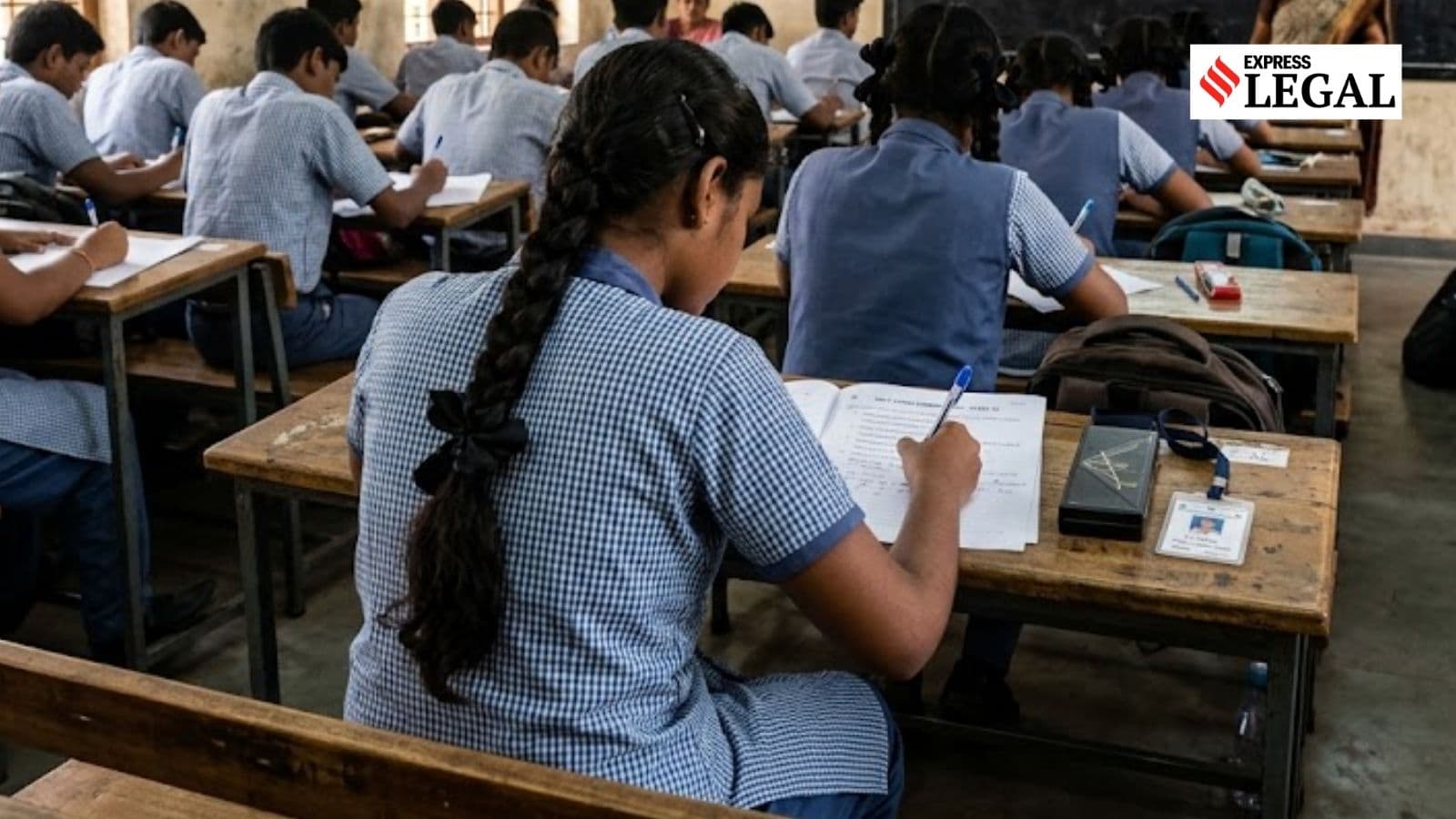
Refusing to grant anticipatory bail to a man accused of arranging a proxy candidate to help a Class 10 student clear her examination, the Punjab and Haryana High Court held that to uncover the...
Refusing to grant anticipatory bail to a man accused of arranging a proxy candidate to help a Class 10 student clear her examination, the Punjab and Haryana High Court held that to uncover the truth, custodial interrogation would be necessary.
Justice Deepak Gupta was hearing the man’s plea, contending that he had been falsely implicated, was not the student’s brother and had no connection to the impersonation matter.
“Having noticed the aforesaid facts and circumstances, custodial interrogation of the petitioner may be necessary to probe the entire truth. It is not a fit case for grant of an anticipatory bail. As such, the present petition is hereby dismissed,” the June 19 order said.
The Class 10 examination at the centre, Gurukul, Kurukshetra, was happening, and on suspecting that a girl was appearing in place of the real candidate, the duty staff enquired about the matter and found that one girl was impersonating as a candidate in place of another girl.
The matter was further enquired into, and it was found that the petitioner had contacted a person to arrange a girl who could appear instead of the real candidate and impersonate her to appear in the exam. It was also found that an amount of Rs 4,000 was transferred by the petitioner to the said person’s account.
Advocate Vikas Bairagi on behalf of his client argued that the petitioner was falsely being implicated in the case, as he had no connection with the accused person and was willing to cooperate with the investigation.
Opposing the petitioner’s submission, Deputy Attorney General Anuj Garg for the state highlighted the co-accused’s statement alleging that the petitioner had helped in arranging an impersonator for the examination. Relying on the evidence that the petitioner had sent Rs 4,000 to one of the accused, the counsel questioned his claim of having no connection with them.
In the view of the material on record, the Punjab and Haryana High Court observed that the petitioner would be required to be present for the interrogation process, to probe the entire truth, because of which it might not be a fit case for granting anticipatory bail to the petitioner, and dismissed the plea.
Earlier in another ruling, the Punjab and Haryana High Court has directed the Central Board of Secondary Education (CBSE) to consider and decide a petition filed by the Class 10 students seeking a “golden chance” to appear for a compartment examination despite missing the deadline, alleging that a lapse on the part of their school affected their exams.
Justice Kuldeep Tiwari was hearing a plea filed on behalf of 25 Class 1o students seeking inclusion of their names in the list of candidates to appear in the compartment examinations, along with the All India Secondary School Class 12 compartment examinations scheduled to be held in July.
“In view of the above, the instant petition, at this stage, is disposed of, with a direction upon the respondents no.3 to 6-CBSE to decide the representations (Annexures P-6 and P-8) of the petitioners, within a period of three weeks from the date of this order. 6. Learned counsel for respondents no.3 to 6-CBSE is directed to inform the competent authority of the CBSE about the aforesaid direction of this Court,” the May 29 order noted.
The aggrieved Class 10 students had approached the Punjab and Haryana High Court with the grievance that on account of their school’s lapse, they were unable to take their examinations properly, and requested the court’s direction to the CBSE to give them a “golden chance”.
It refers to a final and special opportunity granted to the students for reappearing for examinations or clearing a compartment, despite missing the regular supplementary and compartmental attempts.
Somya Panwar works with the Legal Desk at The Indian Express, where she covers the various High Courts across the country and the Supreme Court of India. Her writing is driven by a deep interest in how law influences society, particularly in areas of gender, feminism, and women’s rights. She is especially drawn to stories that examine questions of equality, autonomy, and social justice through the lens of the courts. Her work aims to make complex legal developments accessible, contextual, and relevant to everyday readers, with a focus on explaining what court decisions mean beyond legal jargon and how they shape public life. Alongside reporting, she manages the social media presence for Indian Express Legal, where she designs and curates posts using her understanding of digital trends, audience behaviour, and visual communication. Combining legal insight with strategic content design, she works on building engagement and expanding the desk’s digital reach. Somya holds a B.A. LL.B and a Master’s degree in Journalism. Before moving fully into media, she gained experience in litigation and briefly worked in corporate, giving her reporting a strong foundation. ... Read More