Kerala Students Fail To Get Relief Engineering Admission Formula
Indian Express
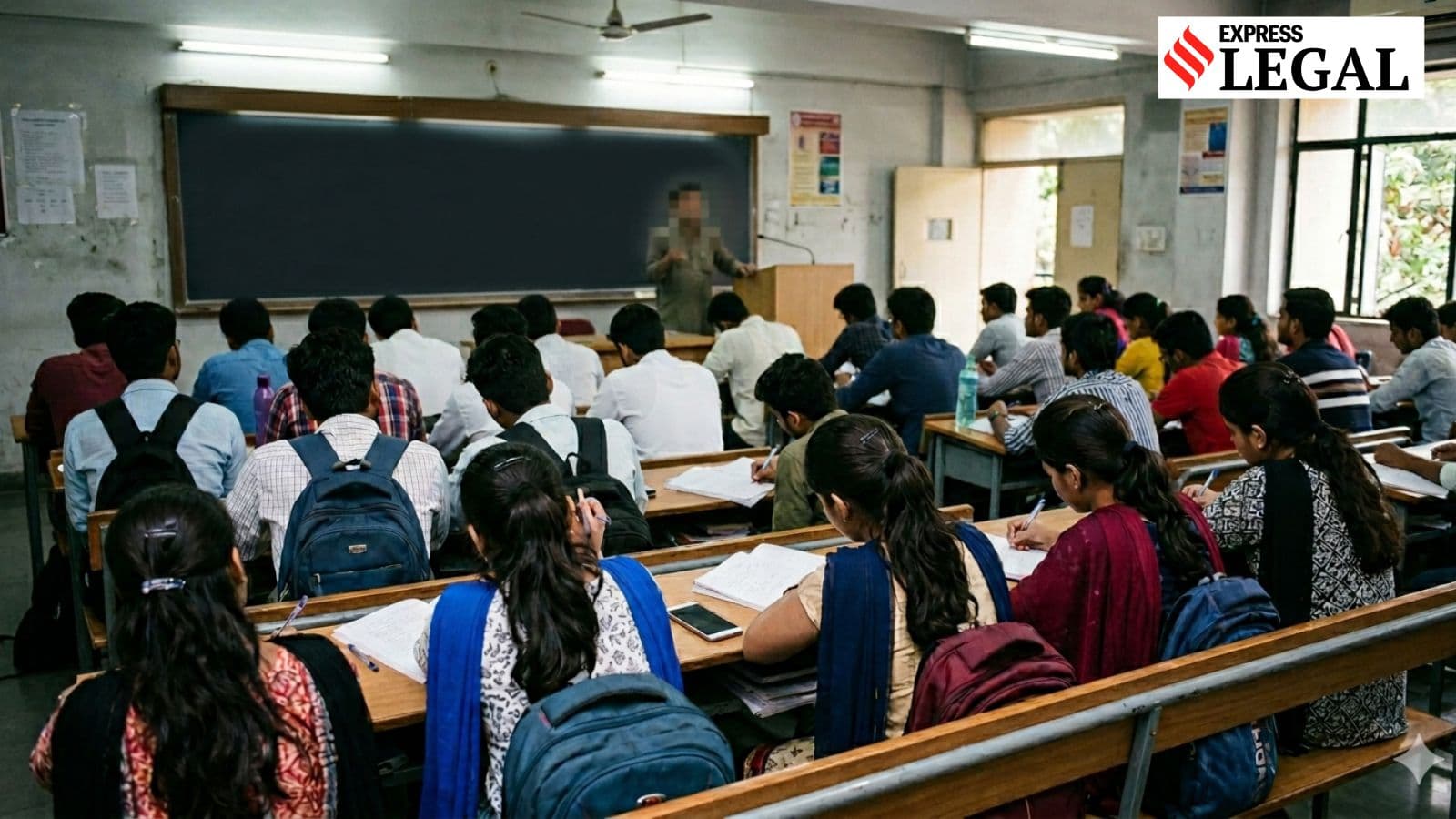
Reiterating that the government s decision to formulate educational policies was not amenable to judicial review, a division bench of the Kerala High Court has affirmed a ruling that rejected the...
Reiterating that the government’s decision to formulate educational policies was not amenable to judicial review, a division bench of the Kerala High Court has affirmed a ruling that rejected the claims of Class 12 CBSE students against the new criteria adopted under the Kerala Engineering Architecture Medical (KEAM) entrance examination prospectus 2026.
A bench of Justices Anil K Narendran and Muralee Krishna S, while upholding the single judge’s order of June 8, which was reported by The Indian Express, observed that such policies can be changed only if it is contrary to constitutional provisions.
“Such policies can be interfered with only if it is demonstrated that the policy is contrary to any statutory provision or the Constitution of India or is totally absurd that no reasonable or prudent person could have adopted it,” the court held in its latest order dated June 19.
The high court observed that the committee’s recommendations were reasoned and also found that allegations of mala fides against the state were unsupported by specific pleadings or evidence.
“It was alleged…that, by unilaterally bypassing the findings of that Expert Committee…, the respondents have acted with evident mala fides, to confer unlawful and undue advantage upon the students of the State syllabus, to the detriment of others, the said allegation of mala fides is neither supported by any specific pleadings in that writ petition nor it can be inferred from the proof of facts,” the court noted.
The court held that the policies can be interfered with only if it is shown that the policy is against any statutory provision or the Constitution, or is so absurd that no reasonable or prudent person could have adopted it.
It ruled that the challenge against the method of normalisation introduced in the prospectus for KEAM 2026 is not legally tenable.
“Since the petitioners could not make out any such case, the learned Single Judge rightly declined interference in the policy of the 1st respondent State in amending Clauses 1.4(a) and 9.7.4(b) of the prospectus for KEAM, vide government order dated 26.12.2025,” the court held.
Holding that no interference is required, the division bench dismissed the appeal.
“For the reasons stated hereinbefore, conclusion is irresistible that, no interference is warranted on the judgment of the learned Single Judge…whereby that writ petition was dismissed, declining the reliefs sought for,” the order read.
The additional advocate general for the state, P A Mohammed Shah, and the commissioner for entrance examinations contended that the single judge had rendered the decision after taking note of the legal and factual issues of the case.
It was contended that the reasoning of the single judge was neither perverse nor patently illegal, warranting an interference in this intra-court appeal.
It was argued that the impugned judgment of the single judge was rendered after taking note of the law laid down by the Supreme Court in Maharashtra State Board of Secondary and Higher Secondary Education v Paritosh Bhupesh Kumar Sheth that, in academic matters involving technical expertise, the court should not ordinarily interfere.
Ashish Shaji is a Senior Sub-Editor at The Indian Express, where he specializes in legal journalism. Combining a formal education in law with years of editorial experience, Ashish provides authoritative coverage and nuanced analysis of court developments and landmark judicial decisions for a national audience. Expertise Legal Core Competency: Ashish is a law graduate (BA LLB) from IME Law College, CCSU. This academic foundation allows him to move beyond surface-level reporting, offering readers a deep-dive into the technicalities of statutes, case law, and legal precedents. Specialized Legal Reporting: His work at The Indian Express focuses on translating the often-dense proceedings of India's top courts into clear, actionable news. His expertise includes: Judicial Analysis: Breaking down complex orders from the Supreme Court and various High Courts. Legal Developments: Monitoring legislative changes and their practical implications for the public and the legal fraternity. Industry Experience: With over 5 years in the field, Ashish has contributed to several niche legal and professional platforms, honing his ability to communicate complex information. His previous experience includes: Lawsikho: Gaining insights into legal education and practical law. Verdictum: Focusing on high-quality legal news and court updates. Enterslice: Working at the intersection of legal, financial, and advisory services. ... Read More