Quad Is Not Trump S Immediate Priority
Hindustan Times
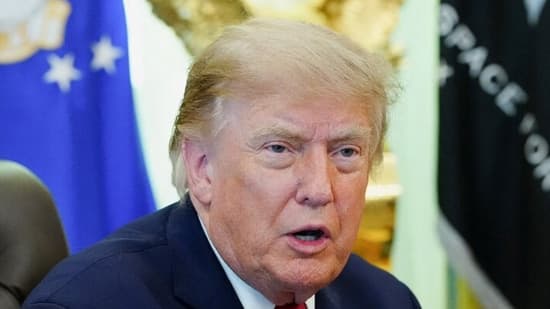
Quad was revived in 2017 during Trump 1.0 as a regional security dialogue among the US, Australia, Japan, and India, aimed at ensuring freedom of navigation in the Indo-Pacific.
While Quad is not anti-China, the group has been particularly concerned about Beijing’s military dominance and maritime assertiveness, threatening freedom of navigation in the Indo-Pacific, including the South China Sea. However, since his return to the White House in 2025, President Trump has refused to attend the Quad Leaders’ Summit, which suggests his displeasure with Quad's current progress. While the Quad’s foreign ministers’ meeting, held in the last week of May, brought some momentum, the US’s removal of ‘Indo’ from its Indo-Pacific Command has further cast a cloud of uncertainty over Quad. Seemingly, Quad is not an immediate priority for Trump, but rather talks with China. Since his arrival, Trump has outlined his vision for Quad within the first 100 days of his presidency. His over-emphasised protectionist policies, seeking to reindustrialise the US under the banners of America First and Making America Great Again (MAGA), have created a negative impression globally. Besides, he has been pressuring its allies and partners across the region to invest in their own self-defence and help Washington manage its workload across other regions. Washington’s close ties with Islamabad following Operation Sindoor, along with Trump’s extensive tariffs and the diplomatic issues with India, further heightened tensions bilaterally and within Quad. Despite years of Quad’s collective efforts, Trump sought a direct rapprochement with China, signalling a loosening of his trust in Quad and a shift in his priorities. Trump has met Xi Jinping twice in just eight months, sparking global debate and an inflated discussion over the G-2 grouping. In both the Trump-Xi talks, the role of Pakistan has been a common point of analysis. Before the October 30 US-China meeting in Busan, Trump’s lunch invitation to Pakistan army chief, Field Marshal Asim Munir and the US’s dramatic inclination towards Pakistan, more than at any time in recent decades, sparked speculation about Islamabad’s hotline, reminiscent of President Richard Nixon's visit to China in 1972. Similarly, before their second meeting in Beijing on May 14, Pakistan's role in brokering a ceasefire and hosting direct negotiations between Washington and Tehran was widely acknowledged by both the US and China. During Trump 2.0, Pakistan has strived its best to be in Washington’s good book. Not only did the US-China presidential meeting irk India, but it also raised concerns for Japan, Europe and other US allies. In the past two decades, the US involvement, particularly in Afghanistan, Ukraine, and West Asia, has consistently placed a burden on its economy and military stockpiles, restraining its capacity to manage workload in the Indo-Pacific. Despite being a Quad member, Japan has not been left untouched either. On April 21, the Japanese Cabinet, led by PM Sanae Takaichi, amended its decades-long export control restrictions, allowing transfers of lethal arms to 17 countries, including the remaining three Quad partners. With this, Japan has departed from its pacifist policies, as established in reforms in 1967 and 1976. Though the relaxation will help Japan boost its defence industry and military preparedness, one cannot forget that Tokyo had been under consistent US pressure to make this decision. Above all, on June 16, the US War Department reverted its Indo-Pacific Command (USINDOPACOM) to its pre-2018 name, the Pacific Command (USPACOM), without providing any explanation. However, the Pentagon said the renaming won’t affect the Quad grouping and its maritime cooperation and initiative. But as the 2018 name change decision was based on acknowledging India's importance to the US and its interests in the Indo-Pacific region, the sudden omission of Indo from the Command’s name is drawing negative attention. On reversal of the eight-year-old decision (both during Trump’s administration), India’s Congress leader Shashi Tharoor remarked, “one more nail in the coffin of the Quad”. As a symbolic event, this is concerning for India and the entire Indian Ocean region, which hinges on the US for security and economic stability. On May 26, New Delhi held the 11th Quad Foreign Ministers’ meeting, which welcomed key initiatives to strengthen maritime and transnational security, economic prosperity, critical and emerging technologies, and support humanitarian assistance and emergency response across the Indo-Pacific region. Despite the strong potential for collaboration, the initiatives do not specify any deadlines. These initiatives have a long-term agenda that requires years to materialise. Though the meeting’s broader agenda suggests Quad is not dead, its posture vis-à-vis China has changed from that of the previous Quad. The new Quad is polite, redefining its purpose and vision in the Indo-Pacific, where the China factor is now fading. The concept of a free and open Indo-Pacific remains; however, the approach is looking unclear and confused. Preferring bilaterals over minilaterals, Trump is willing to talk rather than challenge the Dragon until it finds alternatives. (The views expressed are personal)This article is authored by Mukesh Kumar, researcher, Indian Council of World Affairs, New Delhi.