T20 Game Affects India Cricket Prospects Olympics
Indian Express
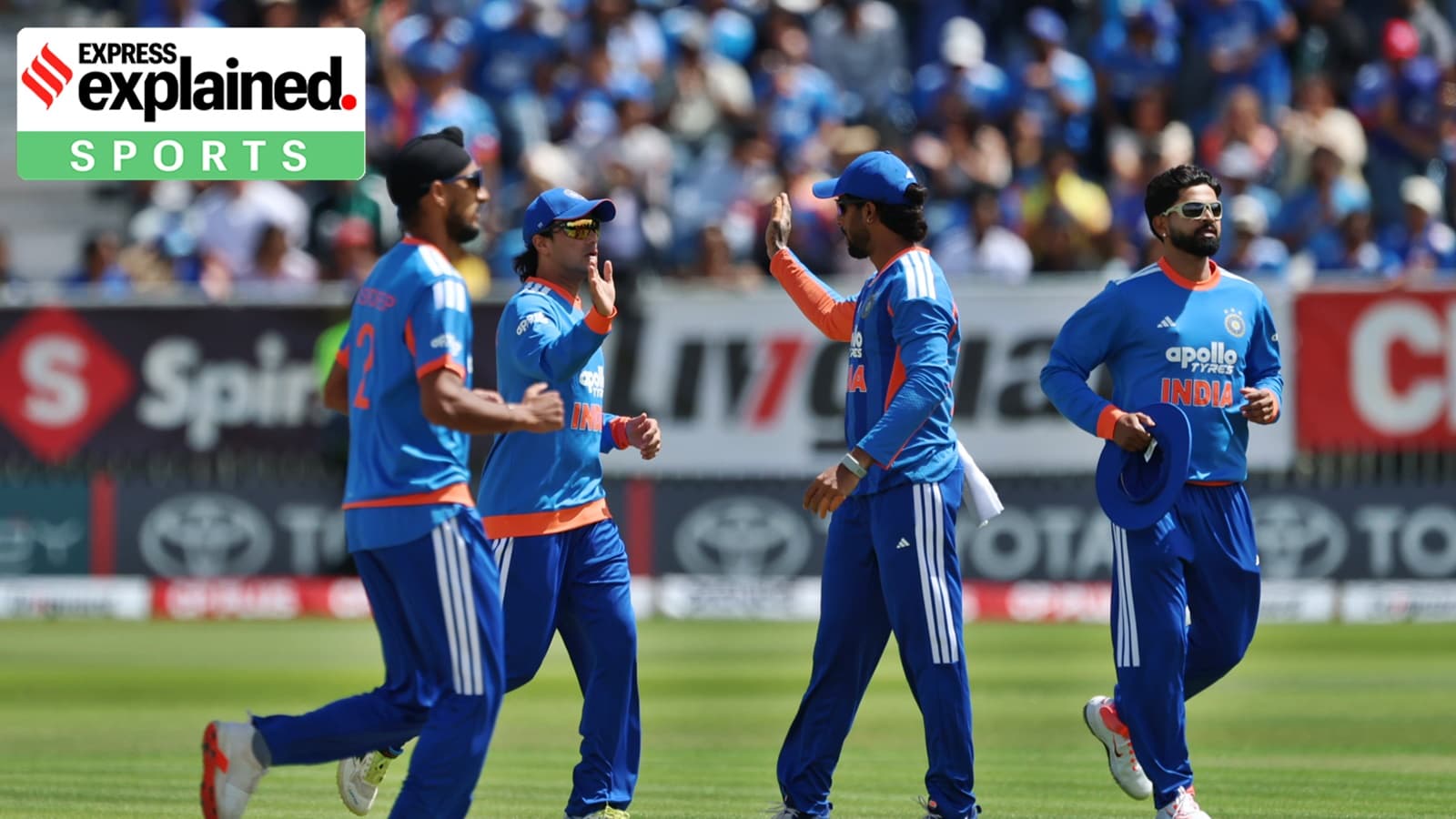
The qualification system for cricket's return to the Olympic Games has made one thing abundantly clear: India can no longer afford to treat bilateral T20Is as expendable.
The Shreyas Iyer-led side lost two T20Is to Ireland last week. More such defeats could cause India to drop in the rankings and potentially impact its 2028 Olympics qualification. Who will qualify for cricket at the 2028 Olympics? Under the qualification criteria released by the International Olympic Committee (IOC), only six teams will feature at the Los Angeles Games. One berth is reserved for hosts USA, provided they meet a minimum ranking requirement — the US must be ranked 15 or better by the end of the qualification period in December this year. Four other direct places will not simply go to the top four teams in the ICC rankings. Instead, they will be awarded to the highest-ranked eligible nation from four different continents. And the final spot will be decided through a final global qualification tournament involving the eight highest-ranked teams that haven’t qualified. For India, that makes every ranking point precious. The team is comfortably placed at the top of the ICC charts at the moment. With 3,623 points, India is ahead of the second-placed New Zealand, who have 3,384 points. Explained | The man standing still: Why Patrice Lumumba became DR Congo’s symbol at the FIFA World Cup If India holds on to its spot, Olympic qualification becomes straightforward. But should Pakistan — the next best Asian team — overtake India in the rankings at the end of the qualification window on December 31, 2026, they would claim Asia's direct berth, leaving India to fight through the eight-team Final Olympic Global Qualification Tournament for the last available place. That is why seemingly insignificant T20 internationals suddenly assume enormous importance. India’s recent bilaterals record In recent years, India have frequently rested senior players and experimented with combinations in bilateral series. Surprise defeats — such as the loss to Ireland — have been viewed as little more than statistical blips. Under the Olympic qualification system, however, every defeat has the potential to affect ranking points and, ultimately, direct qualification. India are scheduled to play five T20Is in England starting July 1 and travel to Zimbabwe from there for three more T20Is. India will then host the West Indies for five matches in October before travelling to New Zealand for another five-match series. The five games in New Zealand will be of particular significance. If New Zealand – currently ahead of Australia – hold on to their spot, it would mean that Australia will miss the direct berth and have to go through the tricky playoffs route. Explained | From the Balkans to the World Cup: How a country that no longer exists shaped football The qualification system also opens the door for both India and Pakistan to qualify. Nothing prevents both teams from featuring in the six-team tournament — either by being the highest-ranked eligible nation from Asia or through the final global qualification tournament. Whether they meet in the group stage or only in the knockout rounds depends on the draw format that will be announced closer to the Games. But the possibility of an Olympic India-Pakistan clash is now very real. Cases of West Indies and Britain The qualification system also addresses one of cricket's longest-running Olympic complications: the West Indies. Unlike ICC events, the Olympics recognise only sovereign National Olympic Committees. The West Indies, a composite team made up of multiple Caribbean nations, cannot participate as a single Olympic side. To account for that, if the West Indies occupies one of the eight places for the final Olympic qualification tournament, the ICC will first stage a regional playoff among the eligible Caribbean nations. The winner of that tournament – not the West Indies – will represent the region at the final Olympic qualifier. Countries such as Jamaica, Barbados, Trinidad and Tobago and Guyana could therefore end up competing against one another for a chance to keep the Caribbean's Olympic hopes alive. A similar Olympic quirk applies to Britain. The qualification pathway explicitly states that only England will be considered for Olympic qualification because Great Britain competes as a single Olympic entity. Scotland, despite being a full ICC member and an increasingly competitive T20 nation, cannot qualify independently if England is Britain's nominated representative. The qualification criteria released by the IOC states: "As Great Britain takes part in the Olympics, only one British nation, England, will be considered as part of the quotas."