Total Solar Eclipse August 12 Date Time Location What To Know
Indian Express
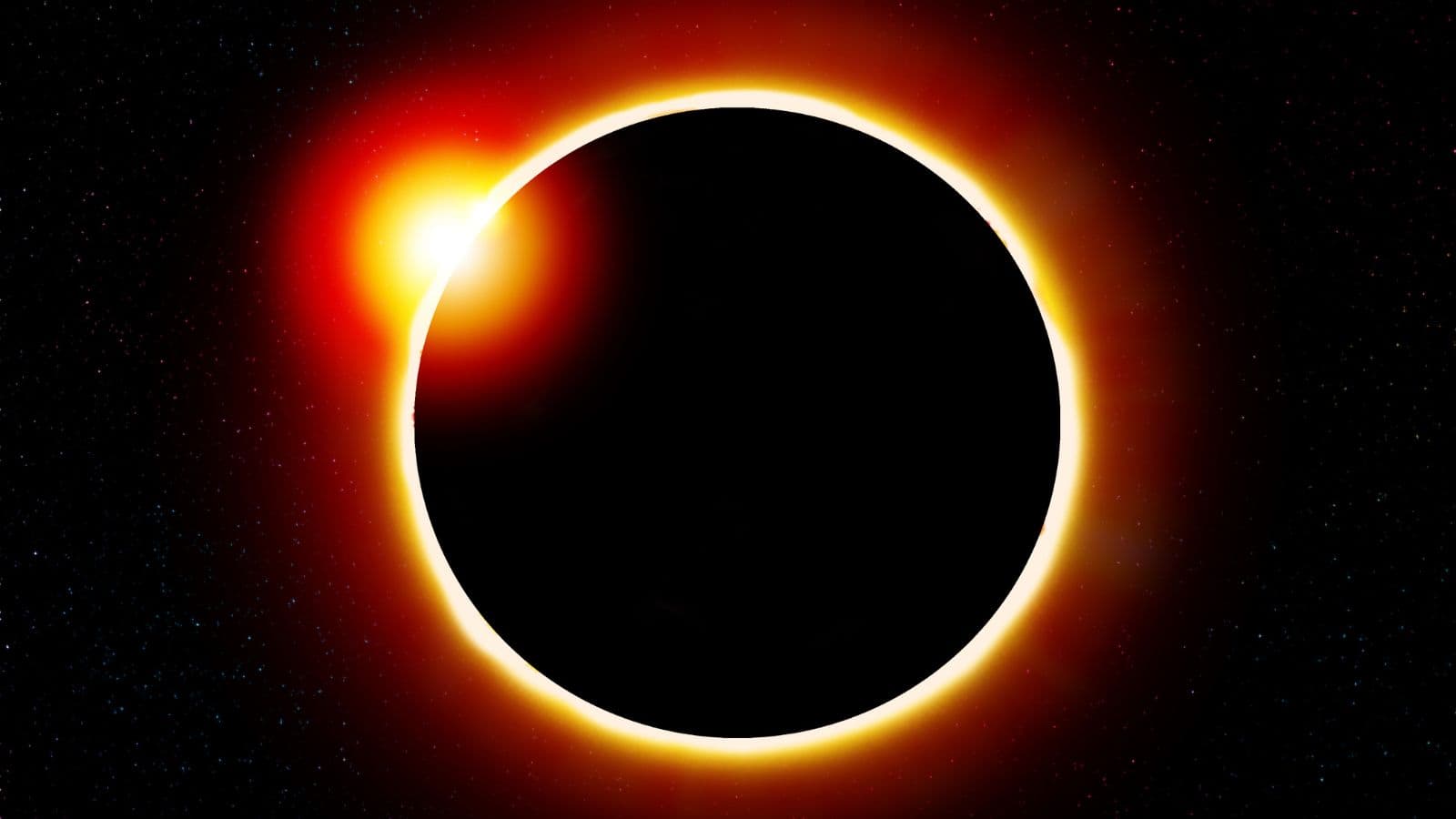
Solar Eclipse August 2026: There will be a total solar eclipse on August 12, 2026, the National Aeronautics and Space Administration (NASA) has confirmed.
A total solar eclipse occurs when the Moon blocks the Sun entirely, and the areas on Earth in the centre of the Moon’s shadow at the time witness a total solar eclipse. For those who are within the Moon's shadow but outside the path of totality, the Moon will never completely block out the Sun, meaning that people in these regions will only experience a partial solar eclipse. During a partial or total solar eclipse, it is never safe to look directly at the Sun without proper eye protection. "A total solar eclipse is one of those rare moments when millions of people can look up together and feel both wonder and curiosity. It is a shared moment that connects us to the Universe and reminds us that the desire to explore and understand is one of humanity's greatest strengths,” Carole Mundell, the European Space Agency (ESA)'s director of science, said in a statement. People who are situated in the centre of the Moon's shadow when it falls on Earth will experience the total solar eclipse, as per NASA. The sky will likely grow dark, much like the fading light of dawn or dusk. Weather permitting, those in the path of a total solar eclipse will be able to see the Sun's corona, its outermost atmosphere, which is normally hidden. Where the eclipse will be visible The places likely to witness the total solar eclipse on August 12, 2026, are supposedly Greenland, Iceland, northern Russia, the Atlantic Ocean, Spain, and a small corner of Portugal. When will the eclipse start It will begin in Russia around midday, then sweep eastward across the Arctic Ocean. It will pass just south of the North Pole and make landfall in northeastern Greenland just after 4:00 pm local time. How long will the eclipse last According to NASA, the Sun will be eclipsed by the Moon for less than two minutes. For people who are nearer to the centre of the eclipse path in Greenland, Russia, or the North Atlantic, the total solar eclipse will last slightly longer, but still under two and a half minutes. (The article is curated by Paramita Datta, who is an intern with The Indian Express)