Reporters Diary The Blame Game Behind Gurugram S Blackouts
Hindustan Times
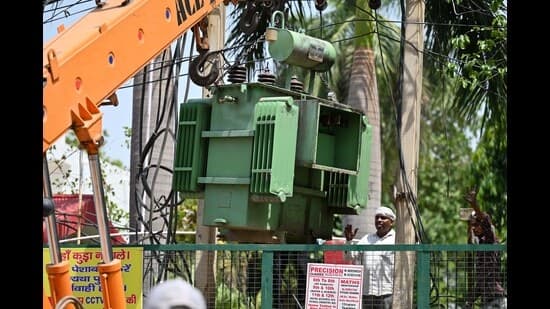
Every summer, Gurugram s power crisis returns despite crores of rupees being spent annually on upgrading the city s electricity infrastructure.
Every summer, Gurugram’s power crisis returns despite crores of rupees being spent annually on upgrading the city’s electricity infrastructure. As I spoke to residents, power officials and engineers over the past several weeks, one question repeatedly surfaced: if there is no shortage of electricity, why do outages continue for hours?
Residents often described a familiar routine. During outages, they file complaints, call junior engineers, sub-divisional officers or linemen, and even use the Dakshin Haryana Bijli Vitran Nigam Limited’s online complaint helpline, hoping for updates on restoration. Yet, prolonged outages remain common across several parts of the city.
On the other side are the agencies responsible for supplying power. The Discom, Dakshin Haryana Bijli Vitran Nigam Limited (DHBVN), the transmission utility Haryana Vidyut Prasaran Nigam Limited (HVPNL), and private builders each point to shortcomings elsewhere.
While the Discom blames consumers for being impatient, residents argue officials have failed to upgrade infrastructure with adequate planning to prevent overloading and recurring outages. Internally, DHBVN and HVPNL officials continue to trade blame over the cause of major disruptions.
DHBVN officials maintain that several HVPNL substations are overloaded and require capacity augmentation. HVPNL officials, however, argue that DHBVN’s inadequate planning of the 33kV distribution network continues to strain transmission infrastructure.
“They (DHBVN) have a mere three 33kV substations across entire Gurugram whose actual count should have been much more today,” an HVPNL official said. A DHBVN official countered that seven new 33kV substations are currently under construction. “We are doing whatever is required,” he said.
Interestingly, both DHBVN and HVPNL officials agree on one point: Gurugram does not face any shortage of power availability. Officials from both organisations said they collectively spend ₹100-200 crore every year on feeder bifurcation, new transmission lines, transformers, substations and upgrades. Yet outages continue.
For residents, however, electricity availability on paper means little if supply remains disrupted during peak summer nights.
Parveen Thakur, a resident of a society in Sector-99, questioned why consumers should bear the consequences of poor planning. “There should be a strong policy on the ground so that consumers neither suffer due to power supply failure, whatever the reason may be, nor due to builders who don’t provide adequate infrastructure to meet the needs of the load generated from the consumer end,” he said.
“It will be far better if the entire power supply infrastructure is privatised, which can take swift decisions to resolve long-term issues and internal tussles and can even monitor developers forcing them to develop a society’s power supply infrastructure as per planned future load to mitigate outages,” he added.
Debashish Karmakar is a principal correspondent covering crime, court, power, anti-corruption for HT Gurugram.