Utah Wildfire July 4 Fireworks Ban Emergency Cottonwood Fire
Indian Express
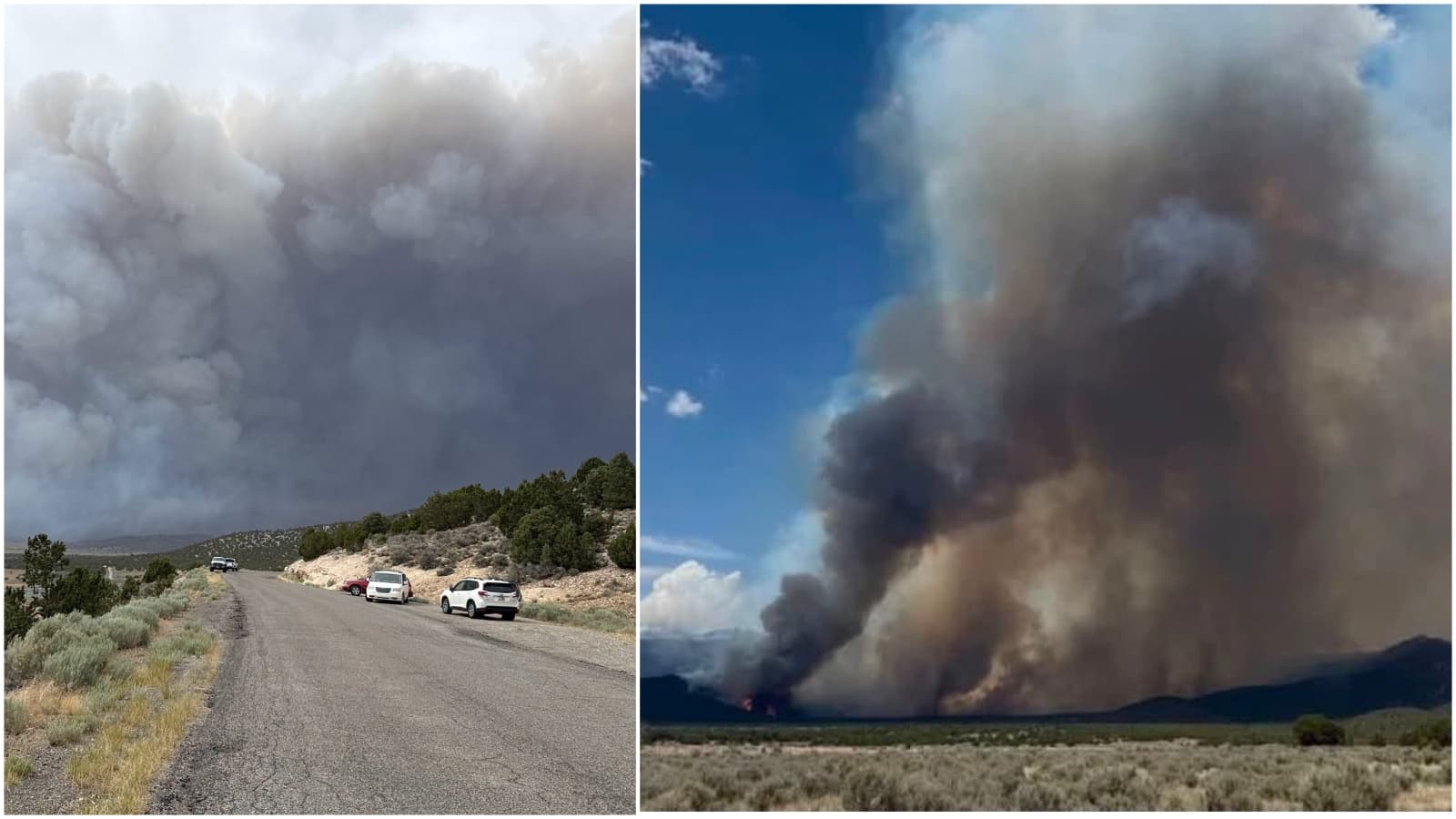
The state of Utah in the US will be welcoming the Fourth of July, a celebrated as Independence Day , without the famed fireworks as it would be under a state of emergency.
The state of Utah in the US will be welcoming the Fourth of July, a celebrated as ‘Independence Day’, without the famed fireworks as it would be under a state of emergency. Reason: The state is dealing with the largest wildfire in the US, which has consequently resulted in a temporary restriction on fireworks ahead of the July 4 holiday.
Utah was already dealing with the ‘Iron fire’ from June 19, when the Cottonwood wildfire spread out.
On Friday, the National Weather Service issued a red flag warning, usually reserved for critical fire warnings. “This is the FIRST Particularly Dangerous Situation Red Flag Warning issued in NWS Salt Lake City history. This is an exceptionally rare event,” it said. “…dangerous fire weather pattern will continue over portions of the Great Basin and Four Corners Region where the Storm Prediction Center has outlooked an Extremely Critical Risk of fire weather (level 3/3) today with at least a Critical Fire Risk remaining in place both Saturday and Sunday,” another warning by the federal agency read.
The strong winds are also hampering aerial firefighting operations, worsening matters.
The Cottonwood Fire began on Monday in a remote part of southern Utah and has now spread to over 70,000 acres, according to NBC. It is one of the several major fires burning across Utah — the others being in Juab, Toole, Iron, Salt Lake City, Utah county, and Millard. Fires have broken out at multiple locations within these regions.
They have caused extensive damage to the Eagle Point ski resort in Beaver County and prompted mandatory evacuation orders.
Government spokesperson Alyssa Mason was quoted as saying by news agency AP: “We have the 56 kilometres per hour sustained winds that they predicted, and we definitely have the 72 kilometres per hour gusts. So there has been a great increase in the fire activity. We are seeing extreme fire behaviour out there with some crown runs and definitely some spotting.”
Utah Governor Spencer Cox announced that fireworks restrictions will remain in effect through July 5 as the country prepares to mark its 250th anniversary, saying that “this year is different”.
For the first time in its history, the National Weather Service office in Salt Lake City issued a “Particularly Dangerous Situation” warning covering five Utah counties, including the area affected by the Cottonwood Fire. The alert, originally introduced for severe tornado threats, was accompanied by a red flag warning covering most of the state.
“Prepare now for rapid fire growth,” the weather service warned.
A similar “Particularly Dangerous Situation” alert had previously been issued during the 2025 Palisades Fire in Los Angeles.
While the cause of the Cottonwood Fire remains under investigation, Cox noted in his emergency order that most wildfires reported in Utah this year have been caused by human activity.
The declaration also authorises Barnes to restrict or ban fireworks displays across Utah’s cities and towns, replacing local decision-making with statewide authority during the emergency.
Apart from Utah, wildfires are threatening a broad belt from Idaho to southern Arizona and New Mexico. Large parts of Utah are already facing severe to extreme drought, while sections of Colorado, Arizona and New Mexico continue to experience severe drought, AP reported citing US Drought Monitor.
Florida officials have also urged residents to avoid using personal fireworks because of multiple brush fires, encouraging people to attend professionally managed displays instead.
In Utah, federal agencies have temporarily closed public lands near the Cottonwood Fire as a safety measure. In neighbouring New Mexico, campgrounds and hiking trails near a wildfire burning in the Jemez Mountains have also been shut.
The Express Global Desk at indianexpress.com which delivers authoritative, verified, and context-driven coverage of key international developments shaping global politics, policy, and migration trends. The desk focuses on stories with direct relevance for Indian and global audiences, combining breaking news with in-depth explainers and analysis. A major focus area of the desk is US immigration and visa policy, including developments related to student visas, work permits, permanent residency pathways, executive actions, and court rulings. The Global Desk also closely tracks Canada’s immigration, visa, and study policies, covering changes to study permits, post-study work options, permanent residence programmes, and regulatory updates affecting migrants and international students. All reporting from the Global Desk adheres to The Indian Express’ editorial standards, relying on official data, government notifications, court documents, and on-record sources. The desk prioritises clarity, accuracy, and accountability, ensuring readers can navigate complex global systems with confidence. Core Team The Express Global Desk is led by a team of experienced journalists and editors with deep expertise in international affairs and migration policy: Aniruddha Dhar – Senior Assistant Editor with extensive experience in global affairs, international politics, and editorial leadership. Nischai Vats – Deputy Copy Editor specialising in US politics, US visa and immigration policy, and policy-driven international coverage. Mashkoora Khan – Sub-editor focusing on global developments, with a strong emphasis on Canada visa, immigration, and study-related policy coverage. ... Read More