From 5 Indians To 5 Of Population As Pm Heads To Seychelles A Look At The Ties Binding The Two Nations
Indian Express
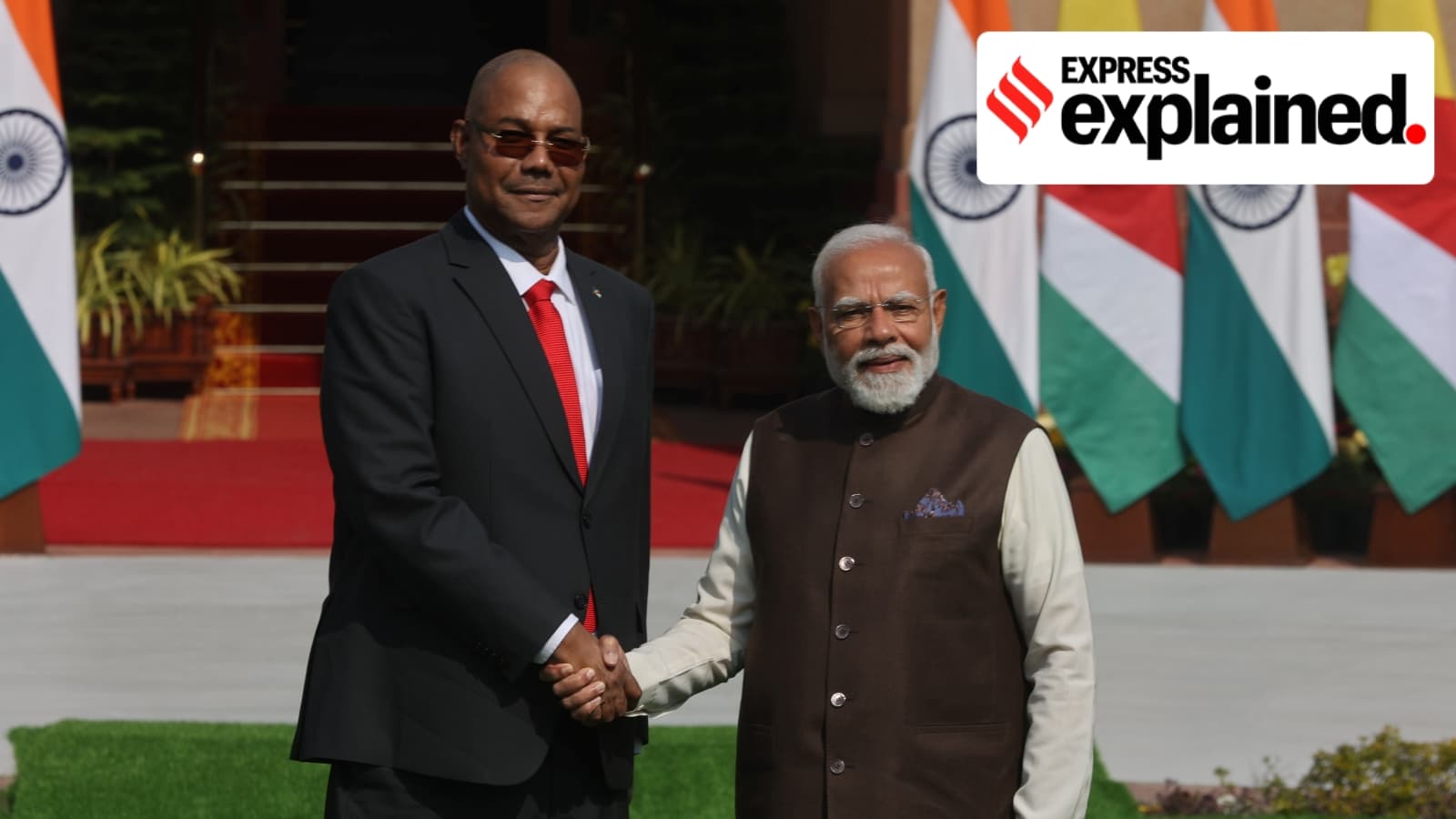
It was in 1770 that five Indians landed in Seychelles as plantation workers, along with seven African slaves and 15 French colonists, recorded as the first inhabitants of the Islands located in the...
It was in 1770 that five Indians landed in Seychelles as plantation workers, along with seven African slaves and 15 French colonists, recorded as the first inhabitants of the Islands located in the Indian Ocean. Today, persons of Indian origin comprise 5% of the island nation’s population.
As Prime Minister Narendra Modi heads to Seychelles on a three-day visit beginning Saturday, here is a look at the ties that bind the two countries located 4,000 km apart.
It was from the 20th century that a constant flow of Indians, mostly from Tamil Nadu, Puducherry and later Gujarat, came to reside in Seychelles as traders, labourers, and construction workers.
In fact, during the British colonial period, Seychelles was governed from the Bombay Presidency for some time, with regular shipping and flow of goods from India. These trade links facilitated the migration of an Indian trading community looking for greener pastures, having reached a saturation point in East Africa.
The number of Persons of Indian Origin (PIOs) with Seychelles citizenship is estimated at around 6,000 presently, which is significant in a country with a population of about 120,000. A majority belong to the Gujarati and the Tamil communities.
When Seychelles attained freedom on June 29, 1976, a contingent from the Indian Naval Ship, INS Nilgiri, took part in the Independence Day celebrations. This year, as PM Modi is attending the 50th Independence Day celebrations as the Guest of Honour, an Indian Armed Forces contingent and two Indian Navy ships are participating as well.
Diplomatic ties were established with Seychelles in 1976. Earlier this year, Modi also described Seychelles as a key part of India’s maritime policy — Vision MAHASAGAR (Mutual and Holistic Advancement for Security and Growth Across Regions).
With a significant Indian diaspora, cultural contacts have been primarily community-driven. In June 2022, a statue of Mahatma Gandhi was erected at the Peace Park in Victoria, which also had statues of Nelson Mandela, the first President of South Africa and Sir James Mancham, the founding President of Seychelles.
Today, the Indian-origin community is visible in all walks of life, but mostly dominating the trading and construction sectors. There are also over 9,000 NRIs holding Gainful Employment Permits, working in in the construction sector, as shop assistants and as professionals.
In 2015, the Pravasi Bharatiya Samman Award was conferred on Justice D Karunakaran of the Supreme Court of Seychelles, becoming the second recipient from the country after V Ramadoss (2006), an entrepreneur and medical advisor to the Seychelles President.
PM Modi had earlier visited Seychelles in 2015, while the first Indian PM to visit Seychelles was Indira Gandhi in 1981. During his three-day visit, Modi will address the National Assembly of Seychelles and interact with members of the Indian community. Beyond cultural relations, India has emerged as one of Seychelles’ most trusted development partners through grants, concessional credit and capacity-building initiatives. More than 1% of Seychelles’ population has received professional training in India.
Over the years, New Delhi has extended significant Lines of Credit and grant assistance supporting infrastructure, healthcare, education and public transport.
This year, Modi also announced a Special Economic Package of $175 million for Seychelles. India also continues to be a premier medical tourism destination for Seychelles, with institutional tie-ups connecting island hospitals with facilities in cities like Chennai.
Seychelles is a cornerstone of India’s Global South strategy, serving as a critical maritime partner in the Western Indian Ocean. The island nation also helps India combat seaborne terrorism, piracy, and illegal fishing. Situated close to Africa, the Middle East, and Asia, Seychelles serves as a vital counterweight against expanding influence of China in the Indian Ocean.
Divya A reports on travel, tourism, culture and social issues - not necessarily in that order - for The Indian Express. She's been a journalist for over a decade now, working with Khaleej Times and The Times of India, before settling down at Express. Besides writing/ editing news reports, she indulges her pen to write short stories. As Sanskriti Prabha Dutt Fellow for Excellence in Journalism, she is researching on the lives of the children of sex workers in India. ... Read More