How 22 Year Old Mayank Lohar Murder Revived Long Pending Demands For Safer Mumbai Locals 9 Key Reforms
Hindustan Times
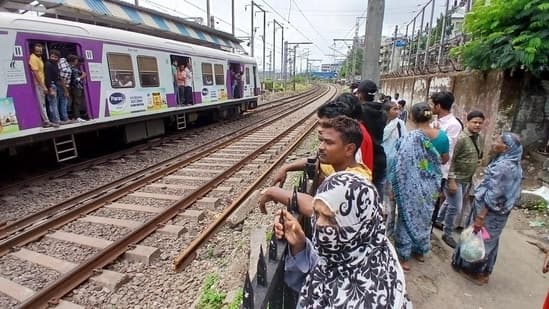
The fatal stabbing of 22-year-old Mayank Ramesh Lohar aboard a Mumbai local train has renewed scrutiny of security arrangements across the city's suburban railway network, with commuter groups...
The fatal stabbing of 22-year-old Mayank Ramesh Lohar aboard a Mumbai local train has renewed scrutiny of security arrangements across the city's suburban railway network, with commuter groups arguing that the incident exposed vulnerabilities they have been warning about for years.Lohar, a retail chain employee, was allegedly killed by fellow passenger Roshan Babu Suvarna inside a first-class compartment of a Western Railway train on Tuesday night following an argument.Investigators said the accused escaped as the train reached Borivali station, jumping onto the platform before the train came to a complete halt.For passenger associations, the episode has become a stark example of what they describe as weak surveillance, inadequate manpower and easy access to stations in a network that carries nearly 8 million commuters every day.Demands that have been pending for yearsIn the aftermath of the murder, a coalition of passenger groups led by the Mumbai Railway Pravasi Sangh (MRPS) has decided to revive a set of security demands first submitted to railway authorities nearly seven years ago.The key demands are:An independent security audit of the Mumbai Suburban Railway network.Mandatory round-the-clock operation of all installed baggage scanners and metal detectors.Deployment of AI-powered Smart CCTV systems linked to a centralised command centre.A significant increase in RPF and other security personnel inside trains, on platforms and on foot overbridges.Installation of modern weapon-detection systems at major stations.Installation of emergency panic alert systems and creation of rapid-response teams for passenger protection.Fast-tracked implementation of automatic door-closing coaches to improve safety and control access.Regular station-wise security reviews with strict accountability for lapses.Creation of a dedicated Mumbai Suburban Passenger Safety Mission under the direct supervision of the Railway Board.According to MRPS president Madhu Kotian, the latest incident has amplified frustration among commuters who believe their concerns have not received adequate attention from railway authorities.Members of the association have “expressed anger over the railway administration’s lackadaisical attitude of not taking their demand of plugging the holes in the suburban rail system seriously”, he said.“We have been demanding unwanted entry and exit points at railway stations to be plugged, along with the ongoing expansion works. Amrit Bharat revamp which is in progress can very well include this work,” Kotian added.The demand for baggage screening has gained prominence because the accused allegedly carried the knife inside the station and train without being detected.Security force stretched thinPassenger groups say infrastructure upgrades alone will not address the problem unless vacancies in the Government Railway Police (GRP) and Railway Protection Force (RPF) are filled.Kotian argued that the existing force is heavily overstretched, making effective monitoring of stations and trains difficult.“The force is overworked. There is a need to fill vacancies that run into thousands. Even after filling out the vacancies, the ratio between passengers and security personnel will be stark,” he said.Questions over response after the attackThe manner in which the accused allegedly escaped has also triggered questions about on-ground security deployment.Siddhesh Desai, vice-president of MRPS, said eyewitnesses reported seeing the accused moving around the station premises even after the attack, raising concerns about surveillance and emergency response mechanisms.“Apart from the killing, equally alarming were eyewitness accounts stating that the accused continued to roam the station premises after the murder, with no security personnel around to nab him. It calls to question the effectiveness of the existing security infrastructure, surveillance systems and emergency response mechanisms,” he said.Desai argued that security equipment already installed at major stations is often not utilised effectively. Despite the presence of baggage scanners, metal detectors and CCTV cameras at several railway hubs, he said, “they only serve as window dressing”.Rajiv Singhal, a member of the Zonal Railway Users Consultative Committee, echoed those concerns, alleging that security personnel stationed at platforms are “often seen sitting at platforms immersed in their mobile phones”.