India Passport Proof Citizenship Authority Mha Mea
Indian Express
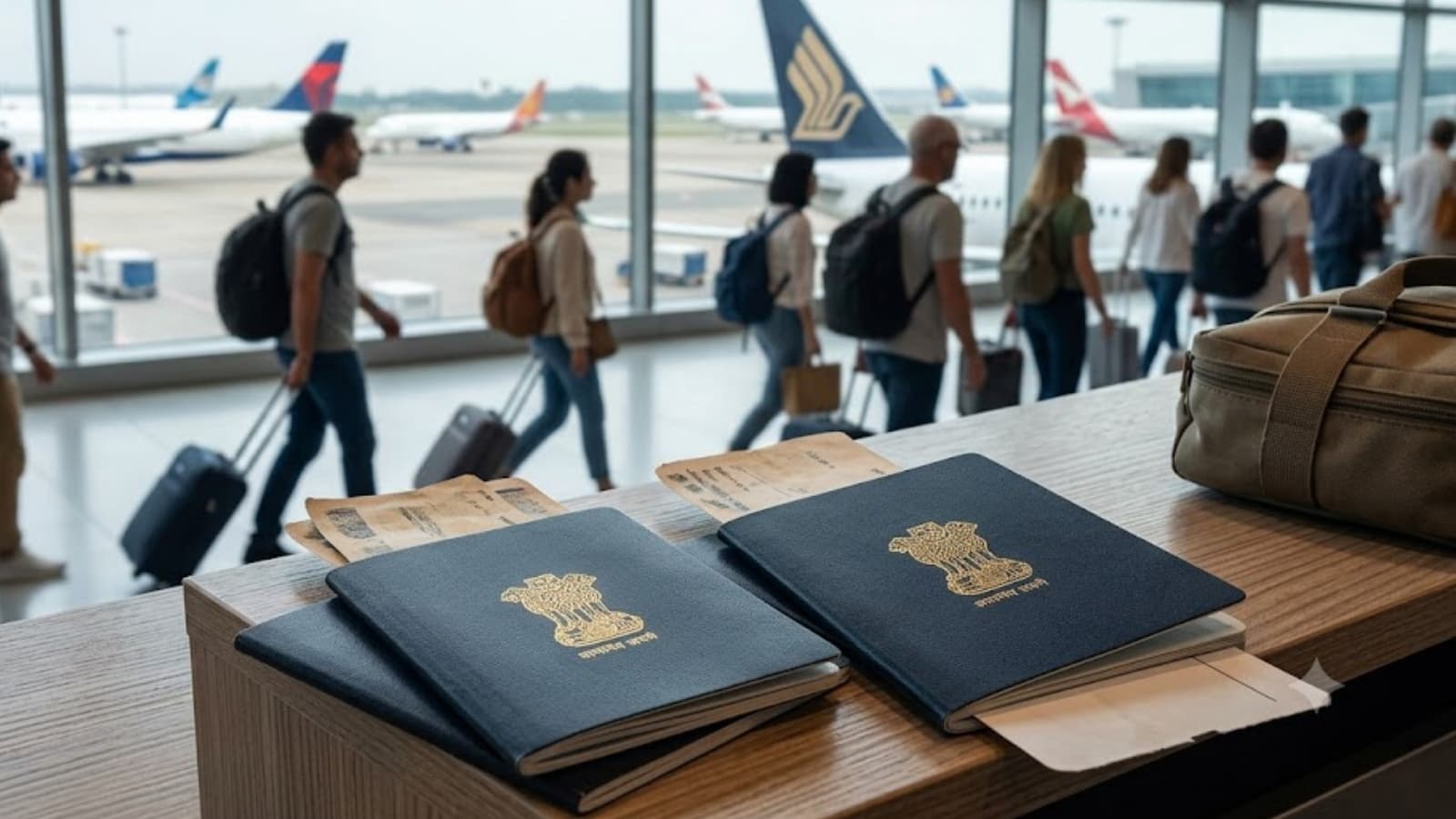
The Ministry of External Affairs (MEA) recent note that an Indian passport is primarily a travel document and not conclusive proof of citizenship has prompted broader questions about nationality and...
The Ministry of External Affairs’ (MEA) recent note that an Indian passport is primarily a “travel document” and not conclusive proof of citizenship has prompted broader questions about nationality and identity. Reacting to the MEA statement, Rajya Sabha member Kapil Sibal asked what constitutes proof of citizenship for Indians.
In simple terms, while the MEA issues passports, it is the MHA that frames citizenship rules and decides citizenship-related matters under Indian law.
It is often assumed that because obtaining a passport requires extensive documentation and police verification, it automatically becomes proof of citizenship. Sikri agreed that passports are issued only after rigorous checks but stressed that their legal purpose remains different.
“A passport serves as a travel document and a document of nationality for international travel, but it is not, in itself, a legal document that confers citizenship,” she told The Indian Express.
When an Indian traveller presents a passport at a foreign immigration counter, the document is accepted because it has been issued by the Government of India. “The passport establishes that the holder is travelling under Indian nationality and that the Government of India has verified the person’s credentials before issuing it,” she said.
However, it does not independently create or grant citizenship, which refers to a legal status arising from facts such as birth, parentage, domicile or naturalisation.
One reason the controversy has gained traction is that passports are routinely used to establish nationality abroad in a practical sense. Sikri said that when travellers present an Indian passport at immigration counters overseas, foreign governments accept it because it has been issued by the Government of India.
However, foreign governments do not determine who is or is not an Indian citizen. They rely on India’s legal framework and documentation standards for the narrower purpose of travel.
Sikri noted that passports can also be revoked if they are found to have been obtained fraudulently. In such cases, Indian authorities can cancel the document and initiate legal action, underscoring the fact that citizenship status and passport issuance are governed by separate legal processes.
Travel industry expert Rahul Lekhi said the MEA’s clarification has puzzled many citizens because of its practical association with nationality. “Passports are not issued casually. Applicants must provide various documents and undergo verification before receiving one,” he said.
Lekhi also noted that at airport check-in counters and immigration desks, travellers are routinely identified by the passport they carry. “When you are asked to state your nationality while travelling internationally, it generally corresponds to the passport you hold,” he said. “That is why many people find it difficult to separate the concepts of passport, nationality and citizenship.”
According to Sikri, questions about which documents legally establish Indian citizenship fall squarely within the jurisdiction of the MHA.
Sikri said that the MEA’s role is limited to issuing passports after conducting a series of checks, including police verification, proof of residence, Aadhaar verification and scrutiny of supporting documents.
Himakshi Panwar is an experienced lifestyle journalist with over eight years of comprehensive experience across diverse editorial verticals. Armed with both a Bachelor's and Master's degree in Journalism, she applies a rigorous foundation in reporting, research, and long-form storytelling to her professional output. Career Trajectory & Experience Himakshi has cultivated her expertise through various roles in the media landscape, covering a broad spectrum of subjects. Her career has been marked by a commitment to in-depth feature writing, a focus that was significantly shaped and refined during her tenure as a travel reporter. This trajectory has allowed her to transition seamlessly across different beats while maintaining a high standard of editorial excellence. Expertise & Focus Areas Himakshi’s reporting is distinguished by a commitment to nuanced, detailed, and often long-form narrative journalism. Her core areas of focus include: Lifestyle & Culture Covering a broad range of topics within the lifestyle vertical with an engaging, well-researched approach. Political Science & South/Southeast Asia Applying her academic interest to her work, with a specific focus on the complex political landscapes of South and Southeast Asia. Investigative Feature Writing A preference for long-form pieces, often involving meticulous fact-checking and sifting through official government sources to ensure accuracy and depth. Authoritativeness & Trust The foundation of Himakshi's credibility rests on her formal academic training (Bachelor's and Master's in Journalism) and her veteran status in the field. Her commitment to thorough research, particularly the proactive use of primary sources like government websites for verification, ensures that her reporting is objective, reliable, and trustworthy. Readers can depend on her work for detailed, accurately reported features. Find all stories by Himakshi Panwar here. ... Read More