C Raja Mohan Elon Musk Robotics China India Ai Race
Indian Express
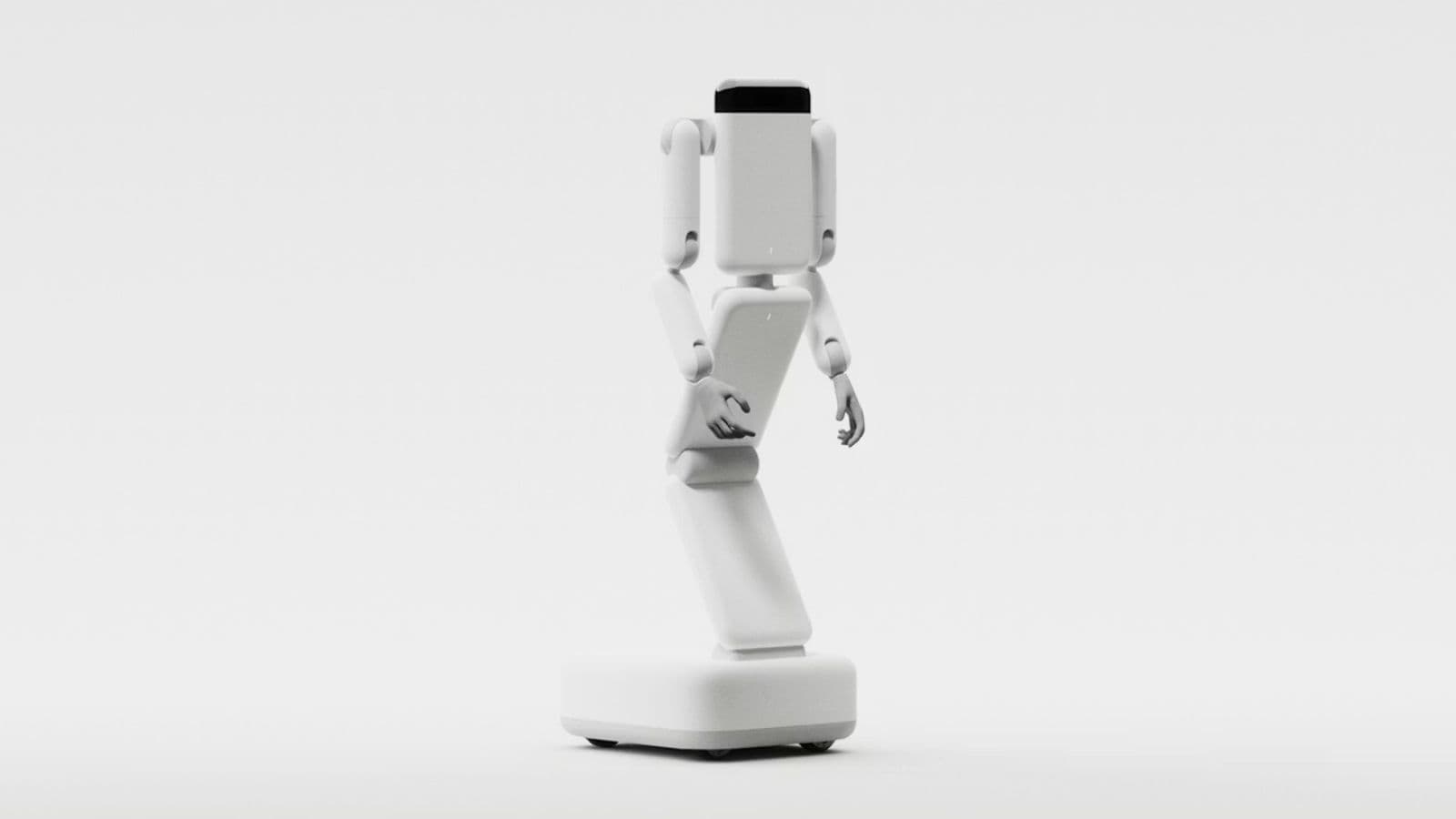
Elon Musk s vision of amazing abundance imagines a world in which goods and services become plentiful and inexpensive, thanks to the unfolding technological revolution.
Elon Musk’s vision of “amazing abundance” imagines a world in which goods and services become plentiful and inexpensive, thanks to the unfolding technological revolution. The idea sounds fanciful, but it has a long lineage. Civilisations have long dreamt of magical sources of plenty — the Akshay Patra of Indian mythology, the cornucopia of the ancient Greeks. Karl Marx, too, believed that advancing productive forces could eventually liberate humanity from drudgery, but the obstacle was in the exploitative structure of social relations.
Musk’s bet is narrower than Marx’s. He is convinced that the tech revolution at hand could produce societies of “universal high income”. Whether this seductive vision is real or not, the tech transformation is here and is called “embodied intelligence” or “physical AI”.
Digital AI generates answers to questions and is moving towards the simulation of reality, but it remains locked inside your computer. “Embodied intelligence” — robots, often built in vaguely human form and known as humanoids, that can sense their surroundings, make decisions, and use mechanical limbs to act on them — promises to step into the factory, the hospital ward, and the battlefield. Musk’s bet is that such humanoid robots could become the most consequential product ever made, doing for production what the computer did for information.
This is not fantastical futurism. Industrial robots have populated factories for decades. The new ambition is to make them adaptable enough, by empowering them with AI, to work in spaces designed for humans rather than machines. That ambition is fast becoming one of the defining strategic contests of this century, and it increasingly runs through Washington and Beijing.
America still leads in frontier artificial intelligence, advanced chip design, and the software architecture that will eventually serve as the brain of any humanoid robot. China has built something different: An industrial ecosystem to mass-produce the body. According to the International Federation of Robotics, China accounted for 54 per cent of all industrial robot installations worldwide in 2024 — some 2,95,000 units, the highest annual total ever recorded by any single country — and its operational stock crossed two million, by far the largest in the world. China is fast becoming for robotics what it already is for solar panels, batteries, and rare-earth processing: The world’s dominant manufacturing platform.
For now, China dominates the global humanoid robot market, producing roughly 85 per cent of all humanoids worldwide. According to The New York Times, Chinese firms like Unitree and AgiBot have begun mass production, and US companies are determined to catch up. Musk plans to begin pilot production of the Optimus 3 humanoid robot soon. He hopes to scale to high-volume manufacturing in the coming years, eventually expanding to a 10-million-unit-per-year production line at a Texas Gigafactory.
India’s place in this race remains modest. The country installed 9,100 industrial robots in 2024, a seven per cent rise on the previous year, but that places it only sixth in the world by annual installations — well behind not just the United States, Japan, and China but also South Korea and Germany. India’s overall robot density of around 10 continues to trail the global average of 132 robots per 10,000 manufacturing workers. It is a fraction of South Korea’s extraordinary 1,200. If America and China are contesting leadership in embodied intelligence, India is a mere spectator.
But the stakes for India could hardly be higher. For three decades, the country’s comparative advantage has rested on an abundance of cheap labour. (It is a different matter if we have actually leveraged it for collective benefit.) The age of embodied intelligence puts a big question mark over that asset. The very resource that once seemed to favour India risks becoming a constraint in a world where manufacturing competitiveness depends increasingly on robotics rather than on wage differentials.
Self-reliance rhetoric is no substitute for strategy here. Unlike China, India cannot isolate its robotics ambitions from the world; its near-term task is to combine international collaboration with the patient building of domestic research, design, and manufacturing capability. There are grounds for some optimism. SSI Mantra, India’s first indigenous surgical robotic system, has already conducted telesurgeries across thousands of kilometres, demonstrating that Indian engineers can compete at the technological frontier when talent, demand, and regulation align. Several other companies, like GreyOrange, are pressing ahead with robotics development. The challenge lies in building industrial-scale robotics.
The Indian government can and should set incentives, fund research, and shape regulation. But policy cannot substitute for actions at the firm level. GoI’s Draft National Robotics Strategy has been around since 2023 and would eventually turn into a robotics mission. But if Indian industry waits for a state-led mission to drive the robotics revolution, it may find, as it has in other technologies before, that the revolution has already happened elsewhere.
Musk’s “amazing abundance” may remain a distant horizon or be realised only in part. The race to build the machines that might get the world there, however, has already begun. India’s place in it will be decided mainly by the appetite of Indian capital to invest, innovate, and take risks at the scale the moment demands.
The writer is contributing editor on international affairs for The Indian Express. He is also associated with the Motwani-Jadeja Institute of American Studies, Jindal Global University and the Council on Strategic and Defense Research, Delhi