The landscape decides where people want to stay. For many decades, Shilimb, located beside the Pawna Dam backwaters in Mawal taluka of Pune district, was a village that ambitious young people wanted to escape. Tucked into the rocky terrain of the Western Ghats, its slopes were inhabited by grasses, ghosts and wildlife.
A geological wonder – natural potholes – indicated that a river flowed here but that was hundreds of years ago. Ramesh Appa Jagtap, who owned a 12 acre plot, was among those who packed his bags and clambered across the broken path that led from the village to a world of bigger possibilities.
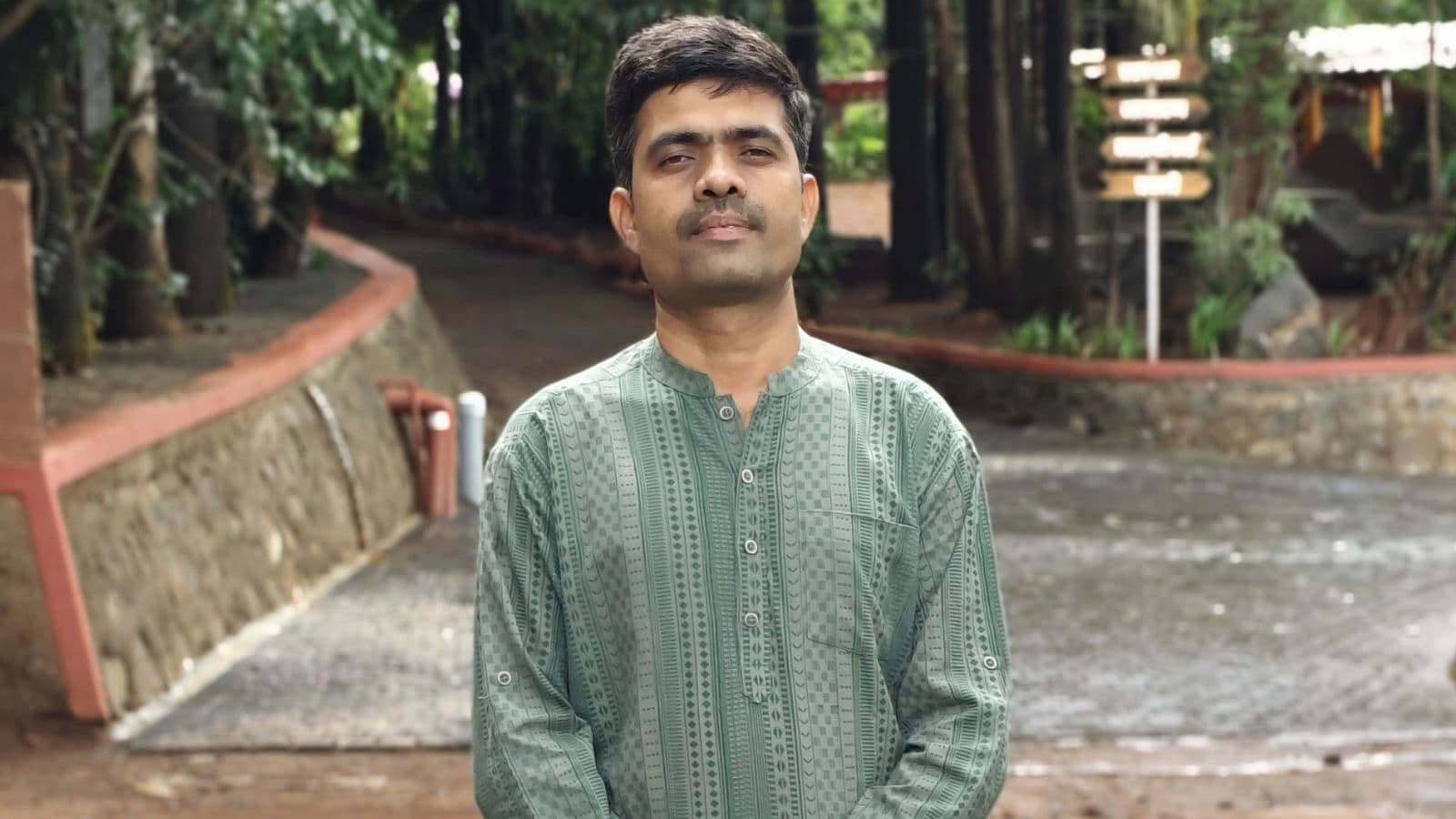
A school dropout, Ramesh came to Pune and brought up his sons by delivering LPG cylinders and vegetables from Marketyard on his tempo. “When we were able to stand on our feet, our father decided to travel the opposite direction. At an age when most parents choose to rest, he began to toil on his native soil. His aim was to revitalize the rocky terrain,” says Rahul Jagtap. He adds that to stop water from running off the slopes, Ramesh and the locals built stone-wall barriers. “Slowly, water began to work with the land and create a forest ecosystem,” says Rahul.
It is in the shade of large trees and fields that the family has founded Anjanvel Agro Tourism, which aims to go beyond the usual serving of rural life for city dwellers and offer another pristine experience – the chance to watch natural and astronomical phenomenon. Anjanvel’s greatest quality is the darkness that its clients never find in cities that suffer from light pollution. It became one of the pillars of the agro-tourism startup’s business model.
According to market research experts IMARC, “The India agritourism market size was valued at $ 1,388.74 million in 2025 and is projected to reach $ 5,78,678.16 million by 2034, growing at a compound annual growth rate of 17.18 per cent from 2026-2034”. A part of the growth is being fuelled by the Ministry of Tourism that has recognised the potential of rural tourism in the country and formulated the “National Strategy and Roadmap for the Development of Rural Tourism in India”.
In 2021, the government admitted that there was poor profiling of rural products and offerings; inadequate tourism supporting infrastructure in rural areas; not enough resource allocation and a lack of rural tourism awareness skills. There was also “a lack of reliable data and statistics”.
Against such odds, enterprises, such as Anjanvel, are building niche products. Every time there is a celestial event, such as a meteor shower, Anjanvel weaves it into their attractions. When the spectacular Geminid meteor showers took place in December last year, groups of guests spent hours at a clearing watching the pitch black sky explode with nature’s fireworks. A scientist or astronomy buff is present to inform and guide the guests and there are strict rules, such as to switch off cellphones. When C/2025 A6 (Lemmon), a light green comet, was briefly visible over Maharashtra last year, Anjanvel offered guests a chance to see this rare phenomenon. The Leonid showers have become an annual attraction for the business.
Add to this local attractions, such as the Sahyadri tracks, Tikona Fort, Bhushi dam and Devrai art village. “Guests are also surprised when they are served wild vegetables that they cannot find in cities,” says Rahul. With the Prime Minister announcing that travellers should explore hidden nooks of India, Anjanvel is stepping up its social media campaigns. “We would like to popularise this part of India to people in other cities as well,” says Rahul.