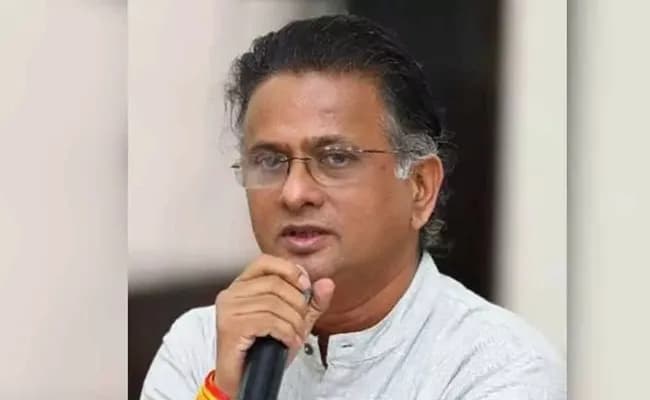
Former Jana Sena leader and environmental activist Bolisetti Satyanarayana has approached the Andhra Pradesh High Court by filing a Public Interest Litigation (PIL) challenging the proposed Google AI Data Centre project in Visakhapatnam, raising concerns over environmental clearances, public consultation and ecological impact.
Satyanarayana said he supports the development of Visakhapatnam as a major IT and digital hub, but argued that economic growth should not come at the cost of environmental protection and legal compliance.
According to him, the proposed project site is located approximately 860 metres from the boundary of the Kambalakonda Wildlife Sanctuary.
He questioned whether all mandatory environmental permissions and statutory clearances had been obtained before the project was taken forward.
The petitioner argued that projects of such magnitude require transparency and public consultation.
He said his PIL seeks judicial scrutiny of several aspects related to environmental safeguards and public interest.
Satyanarayana also cited international examples, claiming that environmental concerns have led authorities in some jurisdictions to impose restrictions on large-scale data centre development.
He alleged that approvals had been granted for massive data centre projects proposed by Google-Adani and Reliance, with a combined capacity of nearly 4 gigawatts, or 4,000 MW, raising concerns about their long-term impact on local resources.
According to him, large data centres require enormous quantities of electricity, water and land.
He warned that such facilities could place significant pressure on Visakhapatnam’s water resources, groundwater reserves and power infrastructure.
He further referred to studies highlighting environmental concerns associated with data centres, including high energy consumption, dependence on fossil-fuel-based electricity generation, air pollution from backup diesel generators and extensive water requirements for cooling thousands of servers operating round the clock.
Satyanarayana also raised concerns about noise pollution from cooling systems and generators, potential impact on public health and the conversion of green zones into industrial areas.
He argued that increased electricity demand from large data centres could place additional stress on the power grid and eventually raise costs for ordinary consumers.
Advocating sustainable alternatives, he suggested that data centres should rely more heavily on solar and wind energy and adopt advanced water-recycling technologies.
He maintained that residents of Visakhapatnam should be fully informed and consulted before decisions are taken on projects that could significantly influence the city’s future.