Donald Trump Strait Hormuz Tolls Iran Ceasefire Deal
Indian Express
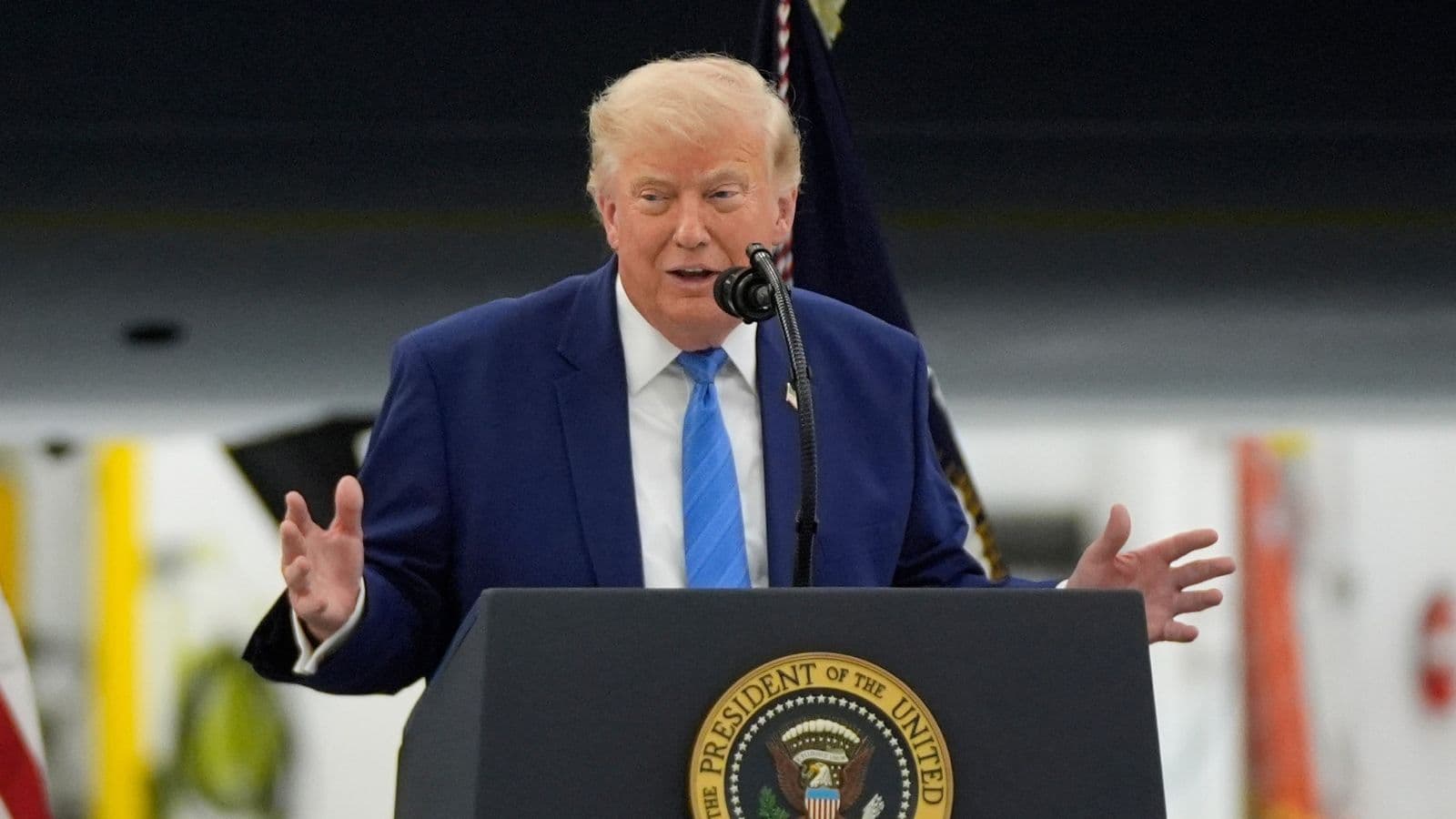
US President Donald Trump has warned that Washington could impose tolls on ships transiting the Strait of Hormuz if a final deal to end the Iran war is not reached within the 60-day ceasefire window.
“There will be NO TOLLS in the Hormuz Strait for 60 days during the Cease Fire Period, and there will be NO TOLLS after the 60 day period has expired, unless they are imposed by and for the United States of America, should the deal not be completed,” he said in a Saturday post on Truth Social.
He added the tolls would be “for services rendered as the Guardian Angel to the countries of the Middle East for purposes of both past, present, and future reimbursement of costs.”
Hours later, Iran’s Khatam al-Anbiya Central Headquarters said it would close the strait again, citing what it called continued Israeli strikes in Lebanon despite an agreed ceasefire there, and accusing Washington of failing to honour the first article of the US-Iran ceasefire memorandum. The statement was carried by Iran’s state broadcaster IRIB. US Central Command disputed the claim shortly after, without offering further detail.
The toll question stems from a US-Iran memorandum of understanding reached after a recent ceasefire, which left open whether Tehran will retain control over the strait long-term. Under the current arrangement, ships can transit toll-free for 60 days while Iran and its Gulf neighbours negotiate a longer-term framework a gap that could allow Tehran, not Washington, to impose fees once the window lapses.
Trump had earlier this week insisted the strait would remain “toll-free during the first 60 days and thereafter,” a claim that appears to sit in tension with Saturday’s post, which conditions the toll-free status explicitly on a deal being finalised.
JD Vance told Fox News on Saturday morning that reopening the strait had been a top priority that “has now happened,” citing what he called a record 16 million barrels moved through the waterway in the previous 24 hours. That claim sits uneasily against Iran’s same-day closure announcement, underlining how unsettled control of the strait remains even after a ceasefire was reached.
US and Iranian officials are due to begin technical-level talks in Geneva from Sunday. The American delegation includes Vance, special envoy Steve Witkoff and Trump’s son-in-law Jared Kushner. Under the interim framework, the two sides have 60 days to negotiate terms covering Iran’s nuclear programme a deadline Trump has said he doesn’t view as rigid, “as long as they’re behaving.”
The Express Global Desk at indianexpress.com which delivers authoritative, verified, and context-driven coverage of key international developments shaping global politics, policy, and migration trends. The desk focuses on stories with direct relevance for Indian and global audiences, combining breaking news with in-depth explainers and analysis. A major focus area of the desk is US immigration and visa policy, including developments related to student visas, work permits, permanent residency pathways, executive actions, and court rulings. The Global Desk also closely tracks Canada’s immigration, visa, and study policies, covering changes to study permits, post-study work options, permanent residence programmes, and regulatory updates affecting migrants and international students. All reporting from the Global Desk adheres to The Indian Express’ editorial standards, relying on official data, government notifications, court documents, and on-record sources. The desk prioritises clarity, accuracy, and accountability, ensuring readers can navigate complex global systems with confidence. Core Team The Express Global Desk is led by a team of experienced journalists and editors with deep expertise in international affairs and migration policy: Aniruddha Dhar – Senior Assistant Editor with extensive experience in global affairs, international politics, and editorial leadership. Nischai Vats – Deputy Copy Editor specialising in US politics, US visa and immigration policy, and policy-driven international coverage. Mashkoora Khan – Sub-editor focusing on global developments, with a strong emphasis on Canada visa, immigration, and study-related policy coverage. ... Read More