2 Pilgrims Killed 5 Injured As Rain Triggered Rockfall Strikes Gujarats Pavagadh Hill
Indian Express
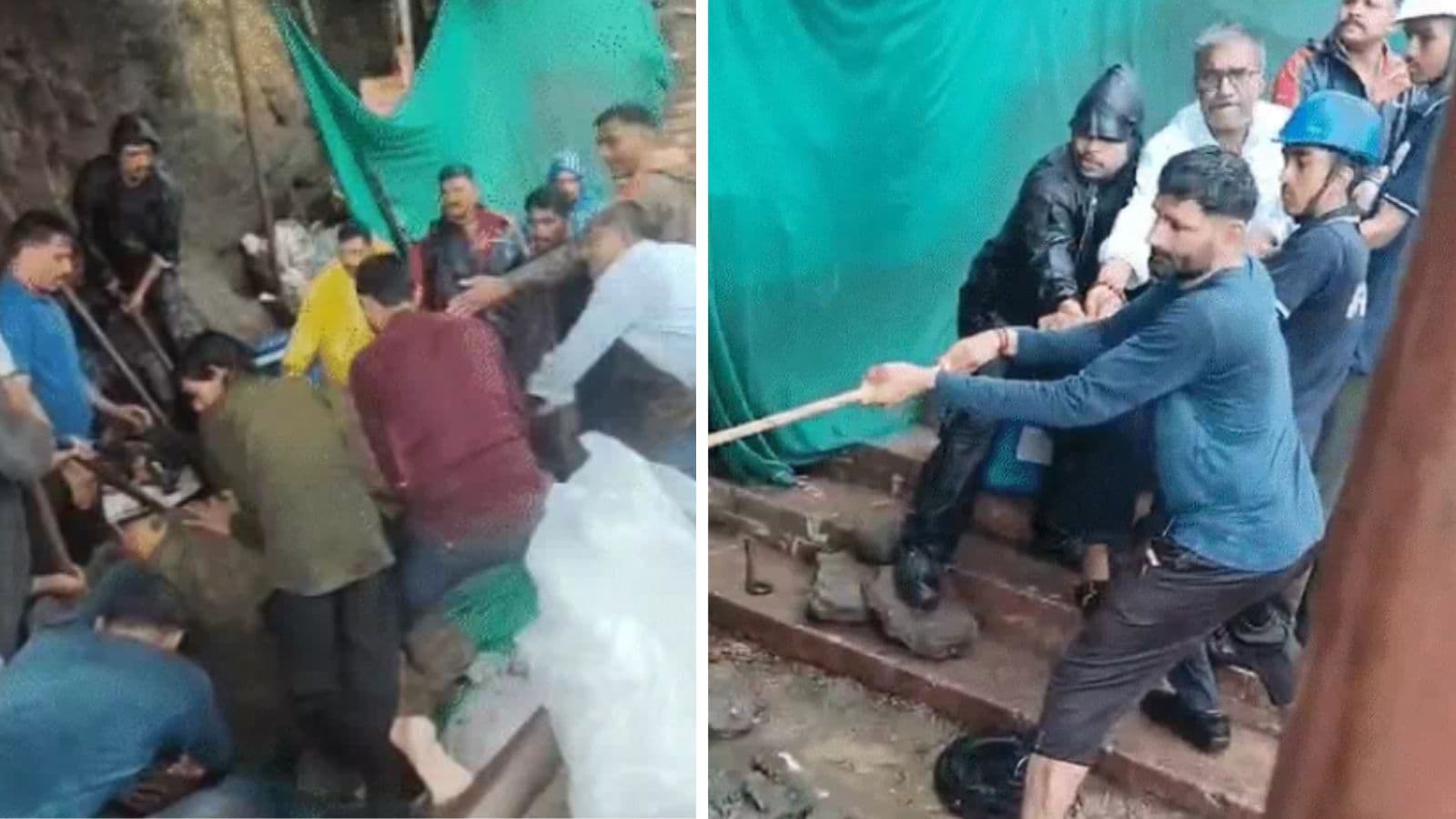
Two pilgrims were killed and five others grievously injured in Gujarat after a massive rockfall, triggered by heavy rainfall, struck a pilgrimage route near Patiyapul on Pavagadh Hill early on Friday. Rescue operations are currently underway to remove the land
slide debris and rescue those trapped underneath the boulders.
According to preliminary information, the landslide took place around 6 am when large boulders rolled down near Patiyapul, trapping several pilgrims who had arrived early for worship at the Kalika Mata temple.
The police said that the primary cause of the accident seems to be soil erosion and the sudden collapse of large rocks from the hillside, as the area has been receiving heavy rain for the past few days, resulting in the landslide and increased water flow on the hill.
Rescue teams from the ropeway service at Pavagadh rushed to the site immediately and retrieved two bodies. The police said the bodies have been sent for post-mortem. The five injured people have sustained multiple fractures, the police said, adding that they were provided emergency medical assistance and shifted to the Government Hospital in Halol.
The local police and Fire and Rescue Services Department, as well as the village sarpanch, joined the rescue efforts and coordinated with emergency responders at the scene. Officers of the Pavagadh police station have also reached the location to assist in rescue operations and manage the situation.
According to preliminary information, the victims and injured persons are residents of Surat and Ahmedabad. However, officials said that their identities and other details will be confirmed only after a thorough investigation.
The incident has raised concerns about visitor safety arrangements in the Pavagadh Hill area, particularly with the onset of the monsoon. The pilgrimage destination at the summit of Pavagadh Hill sees lakhs of devotees arriving on important ritualistic days of the month, in all seasons.
Aditi Raja is an Assistant Editor with The Indian Express, stationed in Vadodara, Gujarat, with over 20 years in the field. She has been reporting from the region of Central Gujarat and Narmada district for this newspaper since 2013, which establishes her as a highly Authoritative and Trustworthy source on regional politics, administration, and critical socio-economic and environmental issues. Expertise: Core Authority & Specialization: Her reporting is characterized by a comprehensive grasp of the complex factors shaping Central Gujarat, which comprises a vast tribal population, including: Politics and Administration: In-depth analysis of dynamics within factions of political parties and how it affects the affairs in the region, visits of national leaders making prominent statements, and government policy decisions impacting the population on ground. Crucial Regional Projects: She consistently reports on the socio-economic and political impact of infrastructure projects in the region, especially the Statue of Unity, the Sardar Sarovar Project on the Narmada River, the Mumbai-Ahmedabad High Speed Rail bullet train project as well as the National Highway infrastructure. Social Justice and Human Rights: Her reporting offers deep coverage of sensitive human-interest topics, including gender, crime, and tribal issues. Her reports cover legal proceedings from various district courts as well as the Gujarat High Court (e.g., the Bilkis Bano case remission, POCSO court orders, Public Interest Litigations), the plight of tribal communities, and broader social conflicts (e.g., Kheda flogging case). Local Impact & Disaster Reporting: Excels in documenting the immediate impact of events on communities, such as the political and civic fallout of the Vadodara floods, the subsequent public anger, and the long-delayed river redevelopment projects, Harni Boat Tragedy, Air India crash, bringing out a blend of stories from the investigations as well as human emotions. Special Interest Beat: She tracks incidents concerning Non-Resident Gujaratis (NRIs) including crime and legal battles abroad, issues of illegal immigration and deportations, as well as social events connecting the local Gujarati experience to the global diaspora. ... Read More