Man Served Rs 200 Watermelon Juice No Price Display Wins Rs 20000
Indian Express
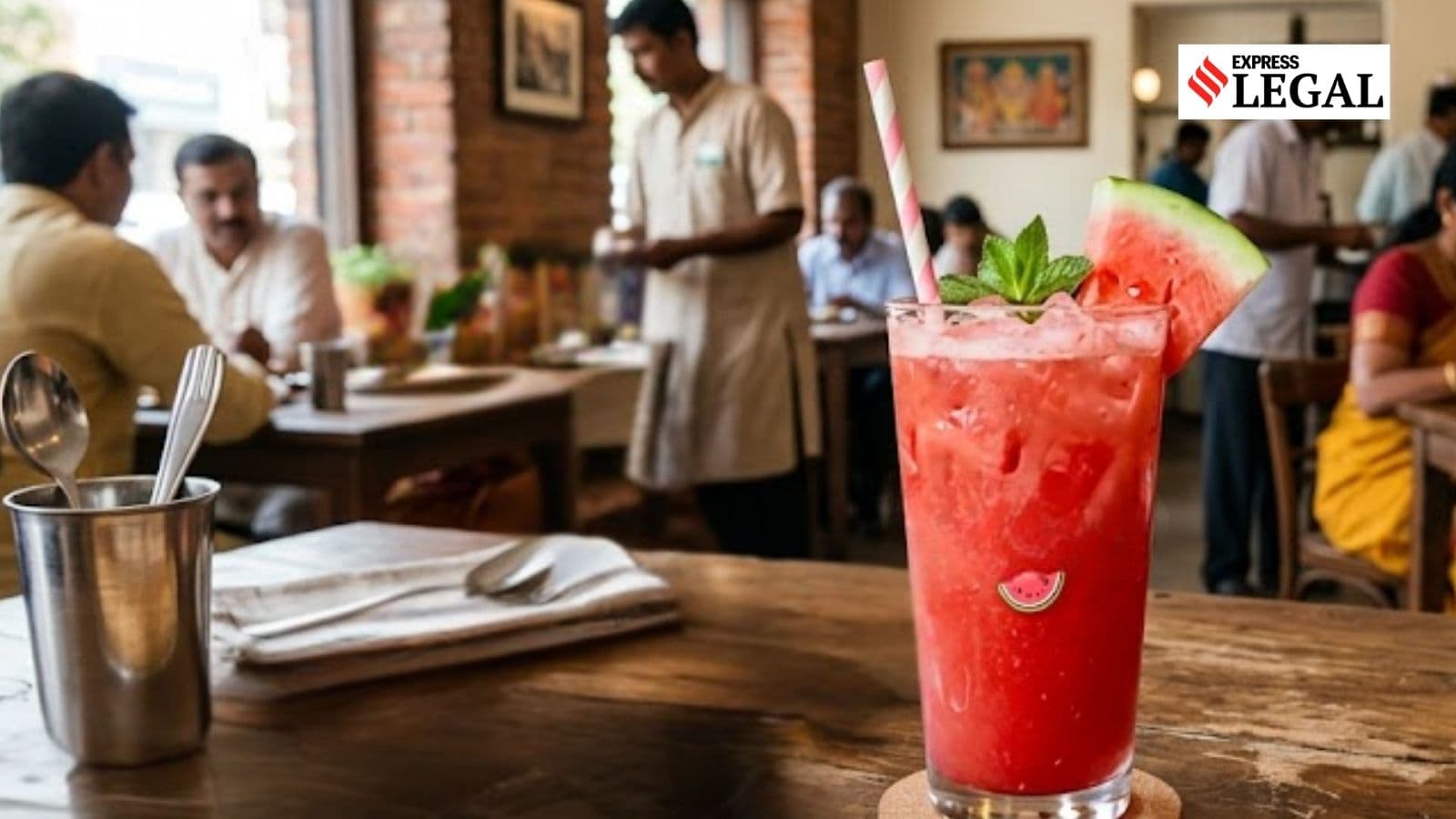
After a restaurant in Kerala unfairly charged a customer Rs 200 for a glass of watermelon juice without disclosing the price in advance, a consumer court has directed it to pay Rs 20,000 as compensation for the inconvenience and mental agony as well as the lit
igation expenses incurred by the complainant.
A bench of president S K Sreela and member Stanley Harold of the consumer commission in Kollam observed that while a restaurant has the right to determine its prices, it has a corresponding obligation of making such prices known to consumers before they place their orders, and this restaurant had failed to do so, amounting to a deficiency in service.
“The opposite party is found to have committed deficiency in service and indulged in an unfair trade practice by failing to disclose the price of the watermelon juice to the complainant before serving the same, thereby depriving the complainant of an informed choice, the June 15 order noted.
The commission noted that the complainant was charged an exorbitant amount for a glass of watermelon juice compared to the prevalent rates in other hotels in the district, and that the price was not disclosed to him at the time of placing the order, which amounts to unfair trade practice and deficiency in service.
It observed that D Light House, despite receipt of notice, failed to appear before the court and did not file any version; consequently, the complaint proceeded ex parte.
The commission noted the material produced by the complainant, which included the bill issued by the restaurant, showing that an amount of Rs 200 and GST were charged for one glass of watermelon juice, and the GST rules on the pricing and other particulars of the establishment, obtained under the Right to Information (RTI) Act.
The court noted that in the present case, the complainant had specifically asserted that the price of the watermelon juice was not disclosed to him before the item was served.
It was observed that the restaurant, which alone owned the relevant records, including the menu card, has chosen not to appear before the commission and has not produced any material to establish that the price of Rs 200 for a glass of watermelon juice was displayed in the menu or otherwise communicated to the complainant before the sale.
The commission said that the records further reveal that the establishment was operating as a hotel and restaurant under GST registration. However, the correspondence produced by the complainant regarding star classification did not conclusively establish the exact classification status of the opposite party’s hotel.
The core issue before the commission was not whether the hotel was a three-star establishment but whether the consumer was informed of the price before the service of the item.
In the absence of any rebuttal evidence from the opposite party, the commission is liable to draw an adverse inference against it, and accept the complainant’s contention that the price was not disclosed remains unchallenged, and that the amount charged for the watermelon juice was not made known to him before the service of the item.
Failure to disclose the price of an item before its supply amounts to an unfair trade practice as well as a deficiency in service within the meaning of the Consumer Protection Act, the commission said.
It highlighted that the opposite party could not be permitted to charge a consumer an undisclosed amount and thereafter justify the same.
The ruling underscores that a consumer cannot be deprived of their right to claim when they have produced all the documents in favour of their case.
In this case, the commission’s direction to pay compensation reaffirms the consumer’s entitlement to redress the grievance of survival.
Aggrieved consumers may contact the consumer helpline in their respective states (Kerala helpline: 1800-425-1550) or call the National Consumer Helpline at 1915 for assistance.
Somya Panwar works with the Legal Desk at The Indian Express, where she covers the various High Courts across the country and the Supreme Court of India. Her writing is driven by a deep interest in how law influences society, particularly in areas of gender, feminism, and women’s rights. She is especially drawn to stories that examine questions of equality, autonomy, and social justice through the lens of the courts. Her work aims to make complex legal developments accessible, contextual, and relevant to everyday readers, with a focus on explaining what court decisions mean beyond legal jargon and how they shape public life. Alongside reporting, she manages the social media presence for Indian Express Legal, where she designs and curates posts using her understanding of digital trends, audience behaviour, and visual communication. Combining legal insight with strategic content design, she works on building engagement and expanding the desk’s digital reach. Somya holds a B.A. LL.B and a Master’s degree in Journalism. Before moving fully into media, she gained experience in litigation and briefly worked in corporate, giving her reporting a strong foundation. ... Read More