25 Years Of Gadar Bigger Dhurandhar Rrr Sunny Deol Ameesha Patel Broken All Box Office Records Had It Released Today
Hindustan Times
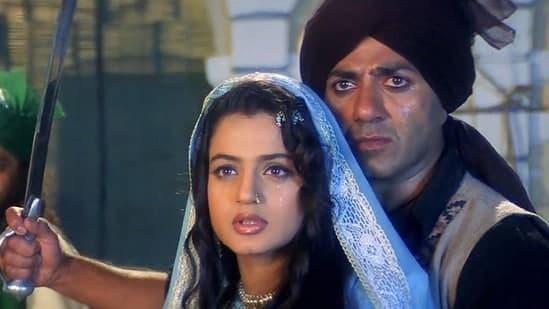
15 June 2001 is a red-letter day for Indian cinema. Two big Hindi films released in theatres that day
. This phenomenon is nothing new. There have been several ‘clashes’ at the box office over the decades that films have released in the country. But the two that clashed that day succeeded, not at the expense of each other but with each other. Long before Barbenheimer was a meme on the internet, Bollywood had its Gadar-Lagaan moment.
And while Lagaan has enjoyed continued cultural relevance (and international acclaim), many forget that it was Gadar that was the bigger hit of the two. In fact, so obscene was Gadar’s success that translating it into today’s terms would yield almost unimaginable box office collections. As the Anil Sharma blockbuster completes 25 years, we take a look at the ‘gadar’ it would have created had it released in 2026.
Directed by Anil Sharma and starring Sunny Deol in the middle of his second purple patch, Gadar released on June 15, 2001 on 350 screens and yet managed ₹1.40 crore net on its opening day. It was a time when screen count increased as days progressed (provided the film did well). Gadar expanded exponentially by word of mouth, rising to ₹9.28 crore net in its first week and continuing to run in dozens of halls in the north for months. By the time it ended its run months later, it had amassed ₹76.88 crore net in India and a staggering ₹133 crore gross worldwide. Its record of 5 crore ticket sales in India still remains a record for Bollywood in the 21st century, with even Dhurandhar 2 not being able to surpass it.
Just how big a hit Gadar was can be gauged by the fact that it earned more than 2X Lagaan, which was a superhit in its own right, and even beat the domestic earnings of Kabhi Khushi Kabhie Gham, the other blockbuster of the year. That K3G, with the combined superstardom of Shah Rukh Khan and Amitabh Bachchan, lost to Gadar speaks volumes of its mania.
There are several ways one can go about while adjusting a film’s box office earnings for another time. In case of Gadar, one easy way would be to adjust its total earnings for inflation (using figures from the Reserve Bank of India). But inflation adjustment merely calculates the change in purchasing power of an individual over time. A better metric would be how much the average ticket prices have risen in the 25 years since the film’s release. Also interesting to note would be that Gadar would face a challenge of the diminishing single-screens in the country. In 2001, Gadar made 73% of its domestic collections from single-screen theatres. There were an estimated 15000 single-screens in India then. Today, there are just over 5000. The film would have to rely on multiplexes to fill that gap (10000 screens there), just as modern mass entertainers like Gadar 2, Border 2, and Jawan have.
Gadar had an average ticket price of just over ₹20 across single screens and multiplexes. In 2024, a research by Ormax Media put the current average ticket price in India at ₹90-110 for single screens and over ₹200 for multiplexes. Big releases often charge premium rates with almost no Indian film in recent times selling tickets for an average price lower than ₹200 (Dhurandhar 2 has an ATP of over ₹300). A conservative ₹200 average ticket price gives Gadar a domestic haul of ₹850 crore net ( ₹1060 crore gross), one of the highest-ever for an Indian film. This is bigger than the domestic collections of all-time blockbusters such as Jawan ( ₹640 crore), RRR ( ₹782 crore), and Dhurandhar ( ₹840 crore). In fact, only three Indian films would stand ahead of it - Dhurandhar 2, Baahubali 2, and Pushpa 2.
Adjusting the overseas collections of Gadar 2 is a trickier exercise given how the landscape for Indian films has changed in the 25 years since its release. In 2001, Indian films hardly found wide release outside the US. And there too, it was largely Shah Rukh Khan who managed to hold sway. Judging by the average ticket price of $5.35 in 2001, Gadar sold just under 200k tickets internationally for its $1 million gross. Today, the average ticket price of $16.20 would take this haul to over $3 million. However, Gadar earned almost all of its overseas share from the US. It accounted for barely 3% of its worldwide gross. Today, where many more markets have opened up for Indian films, the percentage has increased. A good reference would be Gadar 2, the sequel, which earned 10% of its total haul from overseas. Adjusting the US gross and wider base gives Gadar a potential overseas gross of $10 million. This takes the film’s worldwide gross in 2026 to a staggering ₹1150 crore, higher than the collections of Kalki 2898 AD and Jawan, but behind RRR and Dhurandhar, both of which had strong overseas runs.
Whatever way we choose to look at Gadar’s box office performance, one thing is undeniable. The film was responsible for bringing back mass action to Hindi cinema in an era that was increasingly moving towards family dramas and the mid-budget multiplex films. It took a Salman Khan renaissance nine years later to complete the loop with Wanted and Dabangg. But Gadar is where the seeds were sown.