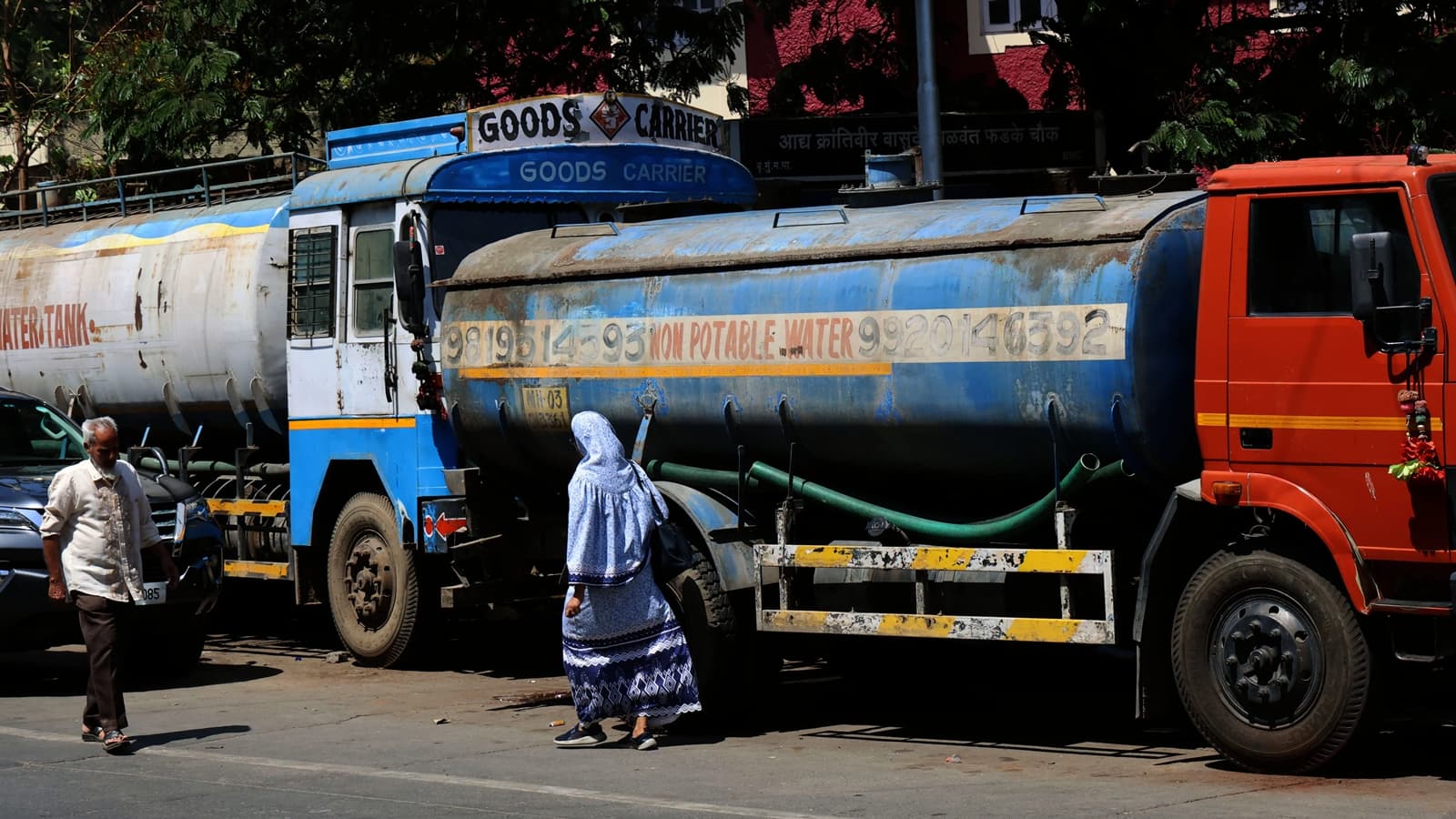
Amid the city s ongoing water shortage, the Brihanmumbai Municipal Corporation (BMC) is eyeing to introduce a new water tanker policy that seeks to introduce a radical change through digitisation of
Amid the city’s ongoing water shortage, the Brihanmumbai Municipal Corporation (BMC) is eyeing to introduce a new water tanker policy that seeks to introduce a “radical change” through digitisation of the potable water tanker procurement process in Mumbai.
To curb unauthorised trips, the civic body is charting a revised policy to introduce OTP-based bookings and digitally monitor the process of supplying and transporting potable water through the civic-owned as well as licensed tankers.
Senior officials privy to the developments said that the intent behind the digitisation of the system is to achieve more transparency in the process through which tankers fill potable water from the civic body’s water filling points.
According to officials, BMC controls 33 potable water filling points across the city through which water is supplied to the civic fleet of water tankers and over 200 licensed water tankers which are authorised to supply potable water.
“With the new policy, we seek to address the present gaps by introducing a system of online approvals for procurement of water tankers by societies and others availing the system. We are looking into the possibility of introducing an OTP-based system of booking. Once the permission is issued, an OTP will be sent to the customer on the basis of which tankers will be allowed to extract water from the water filling points,” a senior official told The Indian Express.
Additionally, the new water tanker policy seeks to digitally monitor the process of approvals granted as well as the water extracted from the civic approved water filling points for water tankers.
“Similar to the desilting dashboard, a digital portal will be launched through which permissions will be granted and the entire process will be monitored.”
The civic body has charted a draft of the new water tanker policy with officials from the hydraulic department slated to present the policy before the municipal commissioner, Ashwini Bhide. “However, the draft policy is a work in progress and we are still ascertaining the exact process of digital booking,” said an official.
According to the BMC’s existing water tanker policy, residential societies experiencing water shortage can approach the Assistant Engineer (Water Works) at the ward level with a request for additional allotment of potable water through the tankers.
After the application is received, the ward staff checks the validity of the request, and accordingly issues a challan to its water tankers who then extract water from the civic-run filling points on the basis of the challan.
The challan is typically issued to the civic fleet of 33 water tankers as well as licensed water tankers which are authorised to supply potable water.
The in-charge of the filling points maintain a register with records of meter reading on a daily basis and tally the same with the total quantum of water supplied through tankers.
“At present, however, when a permit (challan) is issued, water tankers can make multiple trips and procure water several times. Now, when an OTP system is introduced, tankers will be allowed to extract the whatever only on the basis of the valid OTP,” the official added.
Speaking to The Indian Express, senior officials said that the revised water tanker policy seeks to regulate and enhance monitoring of the existing water tankers who make unauthorised trips to fill water from the filling stations.
The efforts to enhance vigilance of the system comes at a time when the city is reeling under a 10 per cent water cut owing to depleting lake stocks.
“With the IMD revising its monsoon forecast to 90 per cent of the actual average, we are also looking into the possibility of inadequate water if there is below average rain over the lake catchment area. While we are closely monitoring the situation, we are also eyeing to immediately enforce strict monitoring at the water tanker filling points to avoid unauthorised use,” said a BMC official.
Adding to the woes, the Mumbai Water Tanker Association (MWTA), whose tankers provide non potable water, launched an indefinite strike on its operations starting June 8.
The MWTA is the apex body of tankers that supply water between 200 million liters daily (MLD) and 2,000 MLD to various residential, industrial and commercial units. These tankers extract water from wells which are owned by private parties.
Nayonika Bose is a Senior Correspondent with The Indian Express’ Mumbai bureau. While in the early stages of her career, her focused reporting on local governance and community welfare already demonstrates clear Expertise and Trustworthiness in covering essential civic issues impacting Mumbai's residents. Expertise & Authority (E-E-A-T) Specialized Focus: Nayonika's reporting is dedicated to civic and community issues, providing readers with highly relevant, ground-level information about the functionality and administration of India's largest metropolitan area. Core Coverage Areas: Her articles highlight a strong focus on the fundamental quality of life and public safety in Mumbai, including: Civic Infrastructure: Reports on critical failures and initiatives related to public works, such as the recurring problem of unauthorized building collapses in Navi Mumbai, the construction of new infrastructure projects (like the Dahisar-Bhayandar Link Road and the Mahalaxmi cable-stayed bridge), and the maintenance of essential city services (e.g., manhole cover theft). Urban Governance & Crisis Management: Provides detailed coverage of the Brihanmumbai Municipal Corporation's (BMC) response to major crises, particularly during the monsoon (e.g., heavy rainfall, water cuts, and public health concerns like dengue and malaria) and large-scale public safety incidents (e.g., the hoarding collapse fallout). Community Welfare & Rights: Reports on key social issues, including the financial aid scheme for persons with disabilities, the struggles of Mumbai's hawkers protesting eviction drives, and the dangers faced by workers due to the continuation of manual scavenging in water tanks. Cultural & Heritage Reporting: Covers significant community stories, including the restoration of British-era fountains and the history of institutions like the 126-year-old Chinchpokli cemetery, showing a breadth of interest beyond pure administration. Tweets @nayonikakb ... Read More