India Japan Energy Ai Partnership 10 Trillion Yen Investment
Indian Express
In the wake of global energy supply disruptions, India and Japan Thursday came out with a joint statement on energy resilience during the visit of Japanese Prime Minister Sanae Takaichi, expressing...
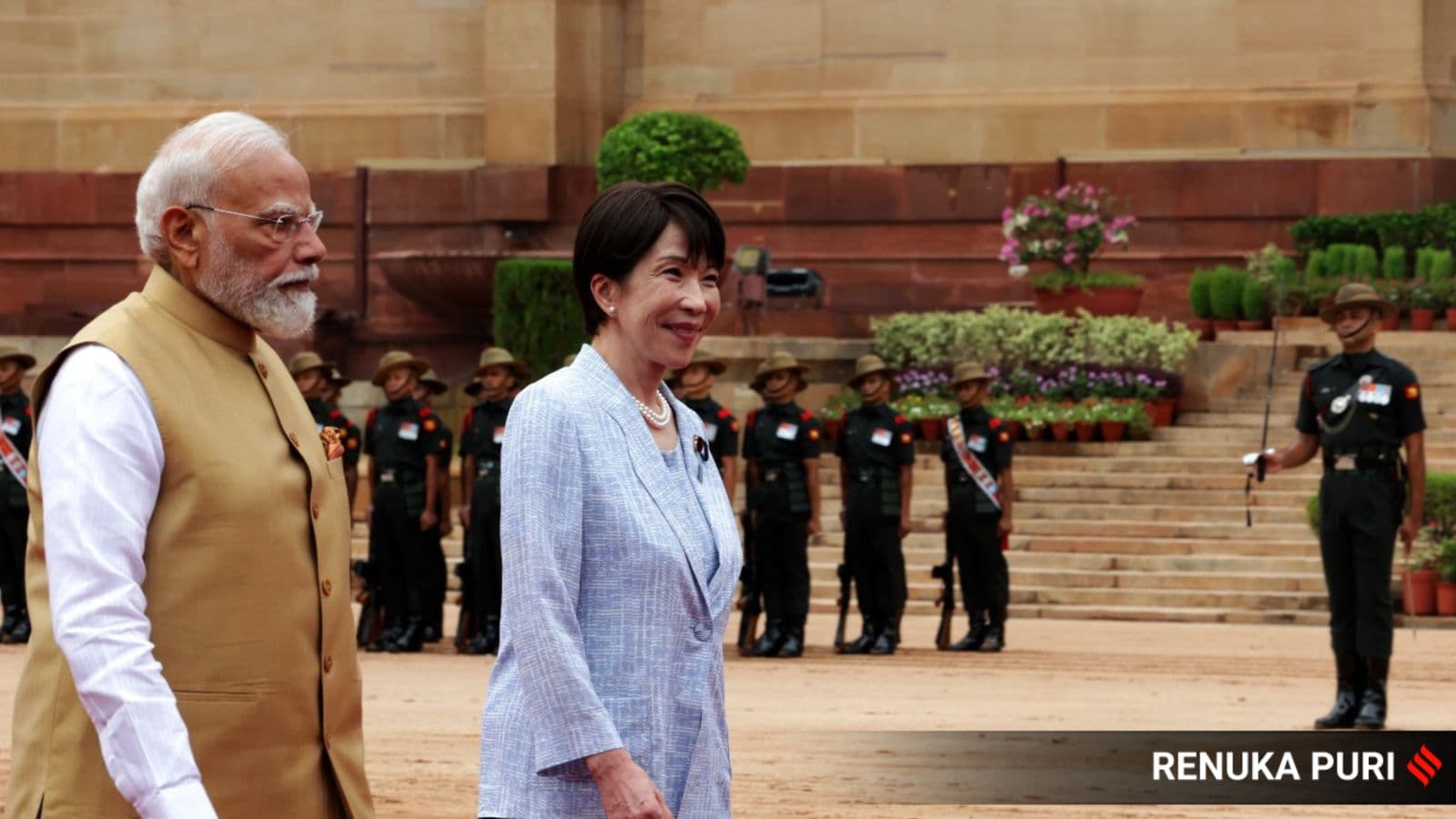
In the wake of global energy supply disruptions, India and Japan Thursday came out with a joint statement on energy resilience during the visit of Japanese Prime Minister Sanae Takaichi, expressing their shared intention to work together as responsible powers and major energy-consuming countries in Asia.
The two sides also advanced cooperation “to enhance the resilience and competitiveness of both countries in the field of AI”. The aim is to bring about innovation and growth in both countries, in order to build a safe, secure, trustworthy, inclusive, human-centric, sustainable, accountable, and innovation-oriented AI ecosystem, the joint statement on AI said.
Towards energy resilience, both sides highlighted the importance of regional initiatives to strengthen energy resilience, such as India’s support for energy security in South Asia and Japan’s Partnership On Wide Energy and Resources Resilience (POWERR Asia).
Following discussions between Modi and Takaichi, the Ministry of Petroleum and Natural Gas and the Japanese Ministry of Economy, Trade and Industry will cooperate on the strategic stockpiling ecosystem.
“Cooperation will focus on mechanisms related to national stockpiling systems and reserves, including industry stockpiles; and coordination regarding arrangements with producing countries, besides emergency response and market stabilisation,” said a statement by the Ministry of External Affairs (MEA).
The two sides reaffirmed the importance of cooperation to address shared challenges of energy availability and affordability, through supply assurance, enhancing resilience and creating mechanisms to mitigate volatility, thereby strengthening the voice of oil and gas-consuming countries, the MEA said.
The joint statement on energy resilience also highlighted the importance of resilient, self-reliant, and efficient maritime transport of oil and gas as a critical pillar of energy security for both countries.
New Delhi and Tokyo will also hold discussions under the India-Japan Joint Working Group on Petroleum and Natural Gas under the aegis of the India-Japan Energy Dialogue. Through this platform, the two sides will share up-to-date knowledge and experience and explore mutually beneficial opportunities for cooperation.
In the AI domain, the joint statement said the two leaders concurred in cooperating to build resilient and growth-oriented economic ecosystems in alignment with India’s MAHASAGAR and Japan’s updated “Free and Open Indo-Pacific (FOIP)”.
“To this end, they committed to strengthen AI cooperation between India and Japan, with like-minded countries and partners, to support resilient and inclusive AI development in the Indo-Pacific and the Global South,” it said.
Modi and Takaichi also welcomed the vision of ‘AI for All’ advocated by the New Delhi Declaration adopted at the India AI Impact Summit in February this year, and reaffirmed their commitment to aim for AI to benefit all humanity, for inclusive and sustainable development, and to improve public services delivery, the MEA said.
Meanwhile, in the economic sector, India and Japan aimed to deepen their trade and strategic partnership by setting a target of mobilising 10 trillion yen in Japanese investment into India over the next decade.
Modi said the investment partnership between the two countries was gaining momentum, with 120 new business agreements signed over the past year and Japanese investments worth around $10 billion committed to India.
Takaichi said that cooperation between the two countries included co-creation of economic growth of both India and Japan through investment and innovation collaboration.
“This is economic growth. I am committed to realising a strong economy and aiming to enhance Japan’s supply capability and technological capabilities through investment in 17 strategic areas. Prime Minister Modi launched Viksit Bharat, a national goal to become a developed nation by 2047 and is strongly driving India’s growth. In this way, we share the goal of making our countries strong and prosperous through investments in the future,” she said.
Divya A reports on travel, tourism, culture and social issues - not necessarily in that order - for The Indian Express. She's been a journalist for over a decade now, working with Khaleej Times and The Times of India, before settling down at Express. Besides writing/ editing news reports, she indulges her pen to write short stories. As Sanskriti Prabha Dutt Fellow for Excellence in Journalism, she is researching on the lives of the children of sex workers in India. ... Read More