Discarding The Watery Layer That Sits On Top Of Your Yoghurt Gastroenterologist Explains Why You Shouldnt
Hindustan Times
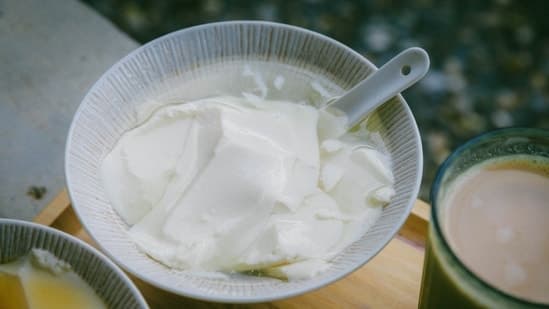
You reach for a tub of yoghurt, peel back the lid, and are greeted by a thin, watery layer floating on top. Instinct kicks in you assume it's a sign the yoghurt has spoiled, wrinkle your nose, and...
You reach for a tub of yoghurt, peel back the lid, and are greeted by a thin, watery layer floating on top. Instinct kicks in – you assume it's a sign the yoghurt has spoiled, wrinkle your nose, and pour the liquid straight down the sink. It's a scene that plays out in countless kitchens, but that habit is based on a common myth. Far from being something to discard, that clear layer may be packing some of its biggest health benefits that come from eating yoghurt.
According to Dr Salhab, the watery layer on top of your yoghurt isn't a sign that it has gone bad. It's actually whey – a protein-rich liquid that naturally separates from the yoghurt during the fermentation process. This separation is completely normal and a natural part of how yoghurt is made. He notes, “That watery layer isn’t spoiled yogurt. It’s whey, a natural part of the yoghurt-making process.”
Dr Salhab explains that whey is packed with protein, along with a range of essential vitamins and minerals. In fact, he describes it as one of the most nutrient-dense components of yoghurt. By pouring off the watery layer, you're not just discarding liquid – you're also throwing away many of the valuable nutrients that make yoghurt such a wholesome food.
The gastroenterologist highlights, “Whey contains protein along with vitamins and minerals, making it one of the most nutritious parts of the yoghurt. Pouring it down the sink means you’re throwing away nutrients that came with your yoghurt.”
Dr Salhab recommends the simplest solution: just stir the watery layer back into the creamy yoghurt before eating. Doing so preserves its nutritional value while enhancing the yoghurt's smooth, creamy texture. He notes that this applies to all types of yoghurt, including Greek, probiotic, and flavoured varieties. The liquid naturally separates over time – particularly when the yoghurt has been stored in the refrigerator – so there's no need to pour it away.
The gastroenterologist highlights, “The easiest thing to do is simply stir it back in before eating. It makes the yoghurt creamier and helps keep all of the nutrition together. The same idea applies to many other yoghurts as well. That liquid naturally separates over time, especially if the yoghurt has been sitting in the refrigerator. It’s completely normal. So the next time you open a container and see liquid on top, don’t dump it. Grab a spoon, stir it in, and enjoy all of the protein and nutrients your yoghurt has to offer.”
Note to readers: This article is for informational purposes only and not a substitute for professional medical advice. It is based on user-generated content from social media. HT.com has not independently verified the claims and does not endorse them.
Eshana Saha is a fresh face in lifestyle and cultural journalism, bringing a refined, multidisciplinary perspective to the intersection of entertainment, fashion and holistic wellbeing. With less than a year of professional experience, she has quickly adapted to high-pressure editorial environments and currently works full-time with HT Media. Prior to this, she interned for nearly six months with Hindustan Times’ entertainment and lifestyle vertical, where she gained hands-on experience in digital reporting, trend analysis and editorial storytelling. Based in New Delhi, Eshana specialises in comprehensive coverage of major cultural moments — from international film press tours to the curated aesthetics of global fashion showcases, award shows and music-centred events. She holds a Bachelor’s degree in English from St Xavier’s University, Kolkata, and a Master’s degree in English from the University of Delhi, equipping her with a strong academic foundation and a keen ability to deconstruct complex cultural trends into clear, high-impact narratives. Beyond the red carpet, Eshana has developed a growing focus on health and wellbeing reporting. She bridges the gap between celebrity-driven trends and practical, evidence-informed lifestyle advice, ensuring her work remains both aspirational and grounded in editorial rigour. She has extensively covered the health implications of Delhi’s air pollution crisis, while also playing a key role in amplifying expert-led insights on women’s health and mental wellbeing, helping translate complex medical perspectives into informed, impactful public awareness. An artist at heart, she explores multiple creative forms — from visual arts and music to culinary experiments — and brings a creative’s eye for nuance, texture and detail to every story. Whether analysing runway dynamics or examining emerging wellness movements, she remains committed to accuracy and the highest standards of contemporary journalistic ethics.Read More