Researchers Studied 20 French Solar Farms Beneath The Panels Pollinators Fell 76 And Plant Pollinator Interactions Plunged 86
E
Economic TimesVerified Publisher
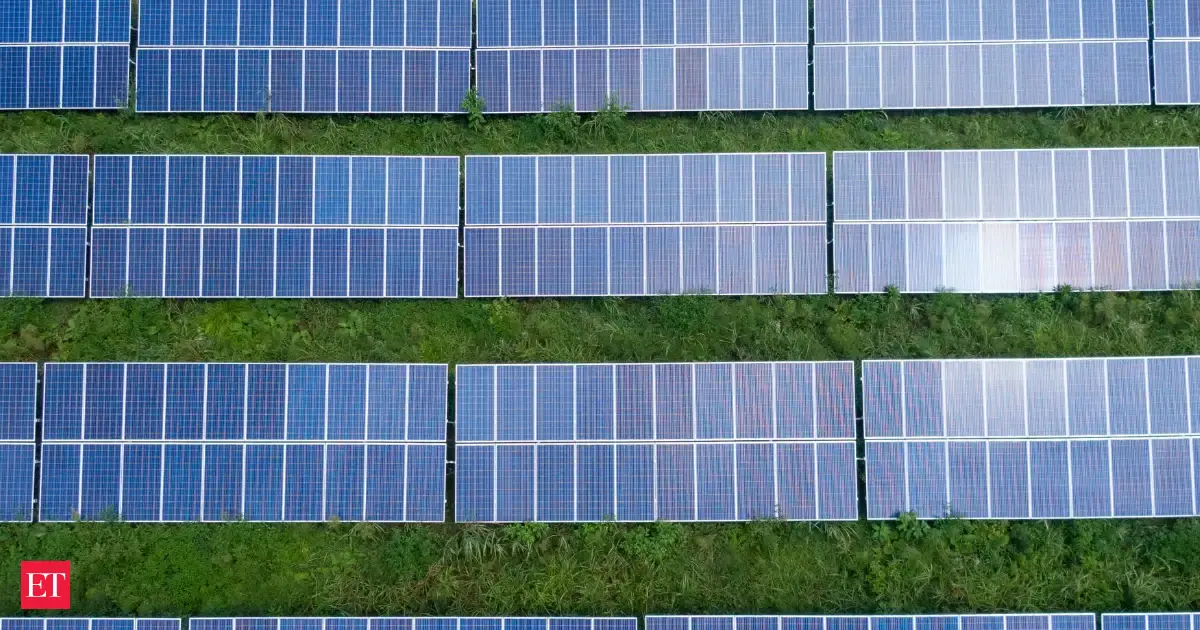
Solar energy is often seen as the good guys in the climate story. But a new study takes a closer look at what happens on the ground once the panels are in place. A 2025 study in the journal Biological Conservation found that areas directly under solar panels had a 76% drop in numbers of pollinators and a striking 86% decline in plant-pollinator interactions, compared to nearby unshaded open land. The researchers surveyed 20 solar parks in southern France.The findings arrive at a critical moment. Global solar capacity has been
. A 2025 study in the journal Biological Conservation found that areas directly under solar panels had a 76% drop in numbers of pollinators and a striking 86% decline in plant-pollinator interactions, compared to nearby unshaded open land. The researchers surveyed 20 solar parks in southern France.The findings arrive at a critical moment. Global solar capacity has been expanding rapidly, with ground-mounted solar farms increasingly built on open land that was previously grassland or agricultural fields, habitats that already support pollinator communities. Solar park construction typically involves vegetation removal, and the panels physically displace existing plant life during installation and cast persistent shade over the ground beneath them, suppressing the flowering plants that pollinators depend on. At a landscape scale, solar parks may also act as a physical barrier for butterflies, beetles, and flies, fragmenting the habitat they move through. That combination, habitat loss during construction, shading beneath panels, and landscape-level fragmentation, makes the question of how solar farms are designed and managed ecologically significant, not just an afterthought.What the scientists actually didLed by Arnaud Lec'hvien and colleagues from French universities and research institutes, the research team did not just guess the impact. They compared three areas within every solar park: the area underneath the panels, the inter-rows (gaps between the rows of panels), and the area that is always sunny. Researchers recorded the number of pollinators, including bees, hoverflies, and butterflies, and how often they visited flowers in each area. That matters because pollinators do more than make gardens pretty. They help most flowering plants reproduce and support the food chains that farms and ecosystems depend on.The numbers behind the buzzThe findings were clear. In the shadowed area underneath the solar panels, where sunlight does not reach for most of the day, pollinator visitation and interactions were significantly lower compared to the open areas. By contrast, the inter-row area, the partially shaded strip between panel rows, fell between the two extremes: better than under the panels but not as good as the areas that got full sun.The pattern is consistent with the role of sunlight in supporting flowering plants. For bees and other pollinators, flowering plants are their source of sustenance, and these flowering plants need sunlight for photosynthesis and reproduction. Solar panels create microclimatic conditions in the shade where they are installed by changing light and moisture levels in this area. Fewer flowers means fewer pollinators with a reason to stop by.133319617Why shade and mowing matterOne thing that stood out in the study is how the park itself is managed. Researchers compared plots that were grazed by animals to plots that were mowed and found that grazing reduced pollinator numbers more than mowing did. That suggests it’s not just the panels themselves that determine how much wildlife survives around and under them, but how solar companies manage the land. The result suggests that solar park operators can influence outcomes through land management. Simple changes, such as switching from heavy grazing to mowing or leaving strips of wildflowers untouched, can reduce the impact on local pollinators.Solar power doesn't have to cost us beesThis study shouldn't be read as an argument against solar power. A study titled ‘Solar park management and design to boost bumble bee populations’ in Environmental Research Letters notes that solar parks can become pollinator refuges if managed and designed with wildlife in mind. Specifically, the study showed that solar sites with wildflower meadows hosted almost twice as many bumble bees foraging and nesting as those where wildflowers were only provided in narrow strips. This suggests that land use does not automatically harm insects; the impact depends on how the land is managed.This isn't just a European conversationThe idea of pairing solar development with pollinator habitat already has a foothold in the US. Several states, including Minnesota, Illinois, and Maryland, have adopted voluntary pollinator-friendly solar standards or scorecards that give solar developers guidance, and in some cases incentives, for planting native, low-growing wildflowers and grasses underneath and around ground-mounted panels instead of standard turf grass. The broader practice of combining solar energy production with compatible land uses, including pollinator habitat, livestock grazing, or crop growing, is often called agrivoltaics, and it's an active area of research at several US land-grant universities. These programs are still relatively new, and adoption varies widely by state, but they suggest the tension this French study documents isn't a problem without precedent for solving, just one that requires deliberate planning rather than defaulting to bare ground or mowed turf under panels.A broader review in Conservation Letters makes a similar point, saying that while solar development can alter habitats for plants, insects and other wildlife, careful design and mitigation measures can minimize many of these impacts. The authors of that review note that robust, comparative data on solar farms and biodiversity is still relatively sparse, which is precisely why studies like the French one are so valuable.The takeaway for a warming worldSolar panels are expanding globally, including in France, but their land-use impacts still need careful management. However, these findings underscore that “green” energy projects impact the real ecosystem, and we need to consider that, not just celebrate. The solution is not a choice between solar power and pollinators. It is more about designing solar parks to let sunlight reach some patches of ground, using mowing instead of heavy grazing, and planting pollinator-friendly vegetation in the sunnier strips between and around the panels. These measures do not slow the clean-energy transition. They just make sure bees, butterflies, and the plants that rely on them aren't collateral damage in the process.