Mumbai Monsoon Tree Fall Crisis July Imd Wind Speed Bmc Data Deaths
I
Indian ExpressVerified Publisher
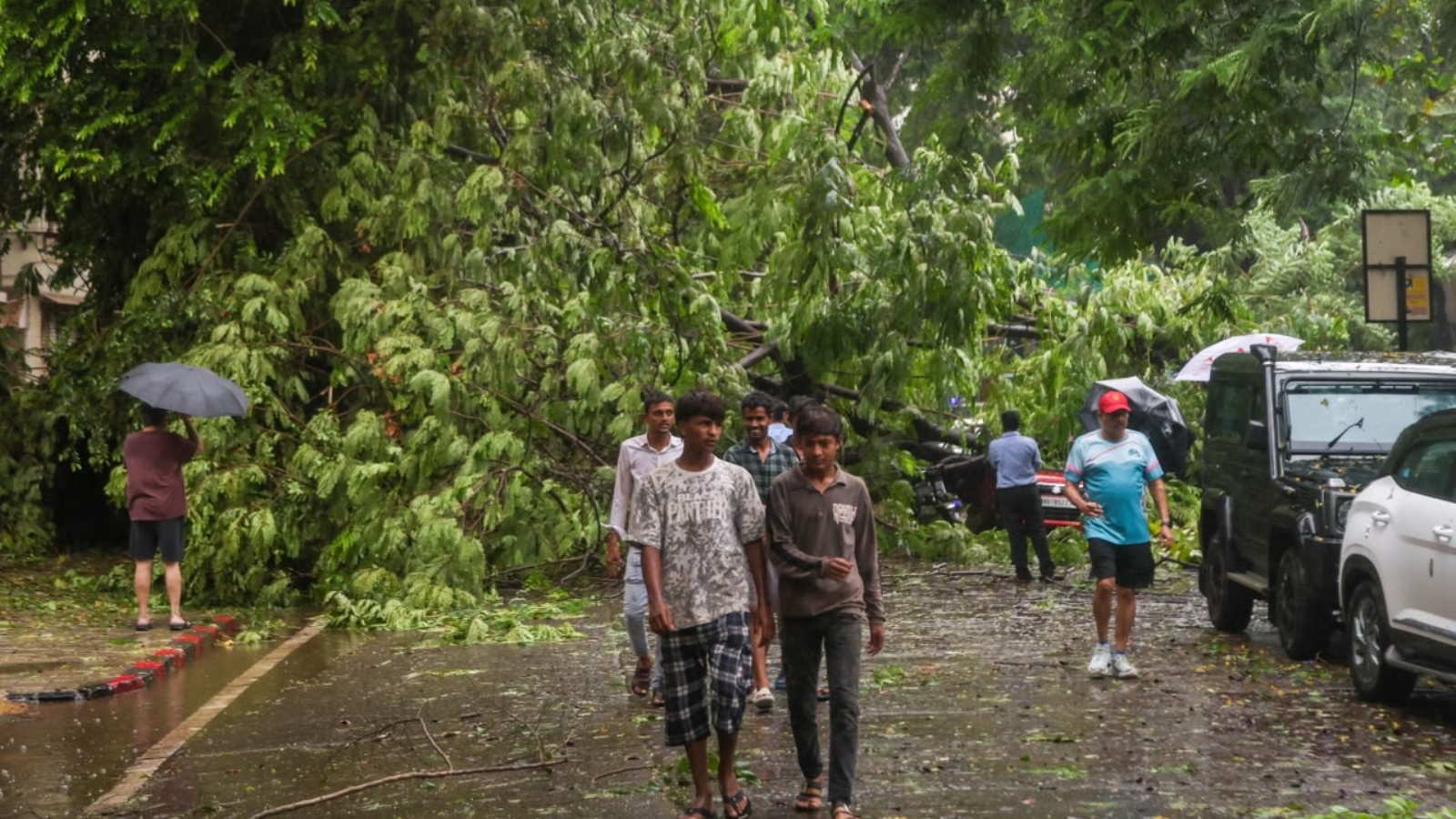
Mumbai s tree fall crisis has spiralled into an unprecedented public safety emergency, with 1,100 trees collapsing in the first six days of July, already 29 per cent more than the 855 tree fall incidents reported during the entire monsoon in 2025 and far excee Mumbai s tree fall crisis has spiralled into an unprecedented public safety emergency, with 1,100 trees collapsing in the first six days of July, already 29 per cent more than the 855 tree fall...
Mumbai’s tree fall crisis has spiralled into an unprecedented public safety emergency, with 1,100 trees collapsing in the first six days of July, already 29 per cent more than the 855 tree fall incidents reported during the entire monsoon in 2025 and far exceeding the full monsoon totals of 653 in 2024 and 687 in 2023. The latest spell of heavy rain and gale force winds alone brought down 523 trees in the past 24 hours, killing one person and injuring at least 10 others.
The scale of destruction comes as Mumbai has endured three consecutive days of intense rainfall accompanied by exceptionally strong winds. The Brihanmumbai Municipal Corporation (BMC) attributed the surge in tree fall incidents to unusually high wind speeds triggered by an active monsoon depression.
According to the India Meteorological Department (IMD), average wind speeds across Mumbai between Sunday and Monday ranged between 72 kmph and 78 kmph, nearly three times the city’s normal monsoon wind speed of 20 to 30 kmph.
“During any normal rainy day, the wind speed ranges between 20 kmph and 30 kmph. However, in the past 48 hours, we have seen the wind speed going three times over its normal range because of the intense monsoon depression that is currently active. This system will remain for another 24 hours before gradually weakening,” Sushma Nair, scientist at IMD Mumbai, told The Indian Express.
BMC data show that of the 523 tree fall incidents reported in the past 24 hours, 188 occurred in the western suburbs, 185 in the island city and 150 in the eastern suburbs.
The IMD recorded the highest wind speed of 77 kmph in the western suburbs, followed by 75 kmph in the eastern suburbs and 72 kmph in the island city.
The city had already recorded 164 tree falls between July 4 and 5, 103 between July 3 and 4, while wind speeds since July 1 had consistently remained between 50 kmph and 60 kmph before crossing the 70 kmph mark on Sunday.
Chief Minister Devendra Fadnavis said wind speeds exceeding 75 kmph had resulted in the uprooting of trees.
“Mumbai has recorded its monthly quota of rainfall within just four days along with gusty winds. This is an unprecedented situation. Citizens are requested to stay indoors,” Fadnavis said after reviewing the situation at the State Emergency Operations Centre.
Civic officials said the volume of complaints has stretched the city’s response machinery, with ward offices receiving more than 20 tree fall complaints every hour over the past 24 hours.
“The real challenge arises when an entire mature tree collapses. We have to cut and remove it branch by branch, which takes considerable time and disrupts traffic. Our teams have been working round the clock for the past week,” a senior official from the BMC’s Tree Authority said.
According to the BMC disaster management cell, seven people were injured after a tree fell on a residential building at Amboli in Jogeshwari in the early hours of Monday. Four of the injured, Rinku Kanojia (25), Mayank Kanojia (12), Sumit Khade (20) and Sanjeevani Jhaade (48), were admitted to Cooper Hospital, while three others sustained minor injuries.
In Worli’s BDD Chawl area on Sunday evening, Rajendra Chavan (54) and Jagannath Sorte (63) were injured after a large tree branch fell on them. In another incident in Goregaon West, 28 year old Deepak Mali was injured after a tree crashed onto the autorickshaw he was travelling in.
The latest fatality comes barely a week after 11-year-old Vihaan Srivastava was killed when a peepal tree crashed onto his school bus in Chembur on June 30. On Sunday, 63 year old Yunus Kundawala died after a tree branch fell on him in Kurla.
Pratip Acharya is a seasoned journalist based in Mumbai reporting for The Indian Express. With a career spanning over a decade, his work demonstrates strong Expertise and Authority in critical urban issues, civic affairs, and electoral politics across Eastern and Western India. Expertise & Authority Current Role: Journalist, The Indian Express (IE), reporting from Mumbai. Core Authority: Pratip's reporting focuses sharply on local democracy and development, specializing in: Urban Governance and Civic Affairs: Providing in-depth analysis of municipal decision-making, city planning, and local infrastructure, essential for informed urban reporting. City Politics and Environment: Covering the political dynamics of Mumbai and surrounding areas, alongside critical environmental challenges impacting the metro region. Electoral Coverage (High-Stakes Experience): He has extensive experience in high-stakes political reporting, having covered major elections, establishing his Trustworthiness in political analysis: National: Lok Sabha elections in 2014 and 2019. State: West Bengal Assembly elections in 2016 and Maharashtra Assembly elections in 2019. Major Assignments (Ground Reporting): Pratip demonstrated commitment during crises by conducting ground reporting throughout the Covid-19 pandemic since its breakout in 2020, offering first-hand accounts and analysis of the public health crisis. Experience Extensive Experience: Starting his career in 2014, Pratip has built his foundation across multiple prominent English dailies: Started at The Times of India in Kolkata (2014). Relocated to Mumbai (2016) and worked with The Free Press Journal and Hindustan Times before joining The Indian Express. Pratip Acharya's diverse experience across major publications, coupled with his specialized focus on the intricate details of urban governance and a track record of covering major electoral and health crises, establishes him as a trusted and authoritative source for news from India's critical metropolitan centres. ... Read More