Clear Present Threat Gauhati High Court Police Press Release
I
Indian ExpressVerified Publisher
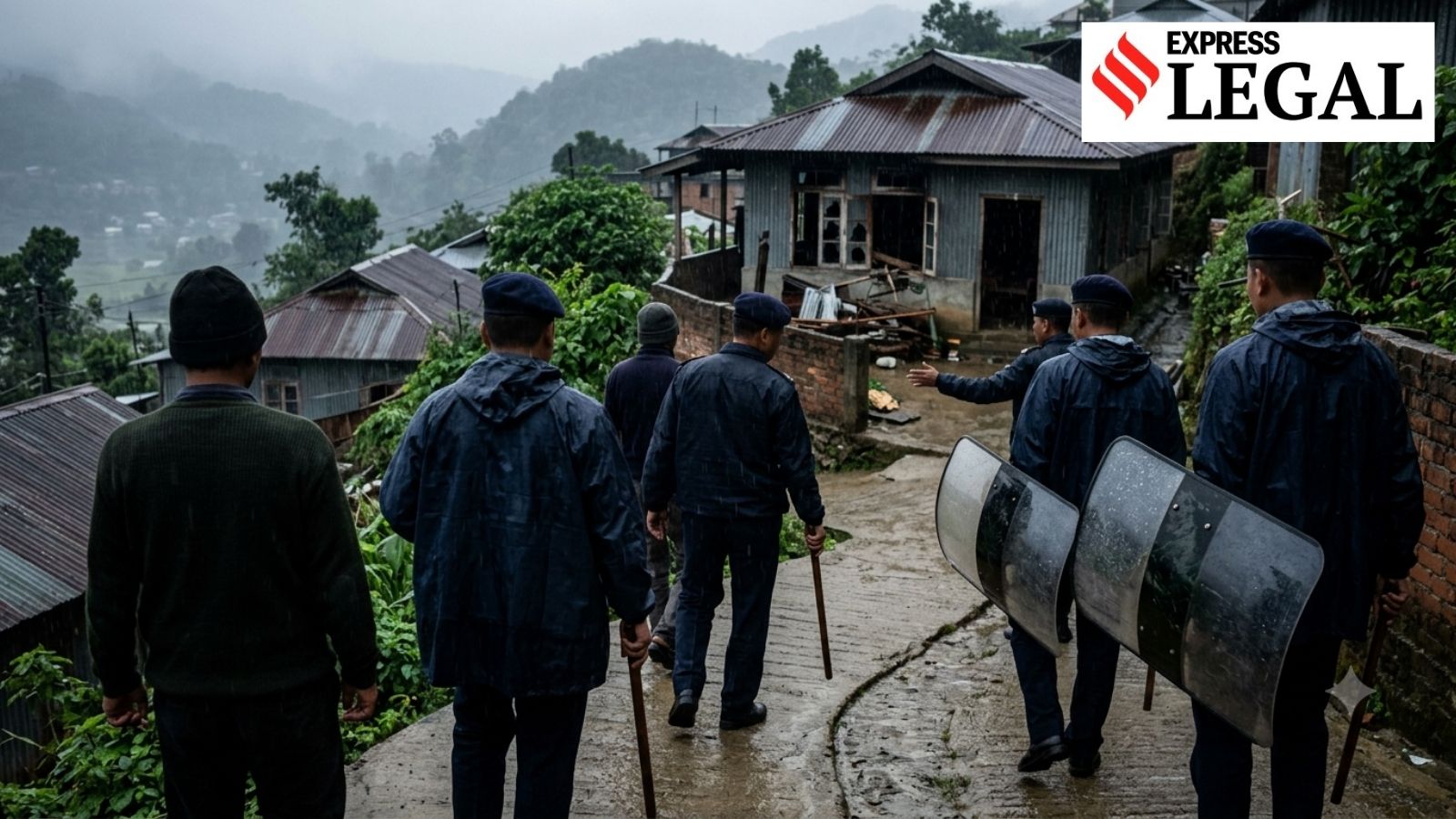
Observing that there was a clear and present threat to the life and property of the family of a man whom police had named as the principal accused in the murder of a young girl after his death, the Gauhati High Court has ordered the recall of a Mizoram Police Observing that there was a clear and present threat to the life and property of the family of a man whom police had named as the principal accused in the murder of a young girl after his death, the...
Observing that there was a “clear and present threat to the life and property” of the family of a man whom police had named as the principal accused in the murder of a ‘young girl’ after his death, the Gauhati High Court has ordered the recall of a Mizoram Police press release on the investigation, holding that it breached the “Police Manual for Media Briefing”.
Strangely, records showed that the man had died on December 16, 2025 before the police released a statement on January 27 this. Following the press release, a mob allegedly resorted to violence and attacked his family on the same day.
Justice Rajesh Mazumdar was hearing a petition filed by the man’s wife, challenging an eviction notice issued by three local organisations in a locality in Mizoram, alleging inaction by the authorities during the mob violence and seeking compensation of Rs 7.61 lakh for damage to her property. The court will next consider the matter on December 4, along with the claims commissioner’s report.
“There was a clear and present threat to the life and property of the family of the ‘accused’, which, the petitioner insists, was instigated by the Press Release…The press release complained of in this writ petition violated the Protocol laid down in the “Police Manual for media briefing” (supra), and in view of the admitted position that the petitioner and her family had to face the wrath of a mob, in connection with which an FIR had been registered and some accused have also been identified,” the court said on August 27.
It added, “The fact that the law-enforcing agencies have expressed their failure to maintain law and order in the face of an angry mob is, to say the least, most unfortunate…The personal property of the petitioner and her family, including the construction materials and the scooter of her daughter, had been set ablaze. The public outrage was to the extent that the petitioner and her family had to leave the household premises where they were staying on rent.”
On January 27, Mizoram Police issued a press statement on the murder investigation, saying the girl was pregnant and that suspected blood stains found inside the vehicle used to take the petitioner’s husband to hospital matched her blood. It identified him as the “principal accused responsible for the murder of the deceased girl”.
The high court said the release disclosed investigative details beyond the permissible scope of a police media briefing, including call-detail records, the victim’s SIM numbers, details of the body’s recovery and its stage of decomposition, as well as forensic findings.
“The protocol laid down by the police manual was violated when disclosure beyond the permissible factors had been made,” the court said, adding that the release disclosed “evidence theories, forensic details and investigative tactics”.
The court said the press release put the public on notice that the petitioner’s husband “might have had some connection to the death of the victim”, and that the disclosure “had admittedly and obviously led to public outrage and mob violence”.
The state said a suo motu FIR was registered on January 29 over the mob violence, and several accused were identified, but arrests had not been made due to the volatile situation. The court noted that none had been chargesheeted or sent for trial.
“The fact that the law-enforcing agencies have expressed their failure to maintain law and order in the face of an angry mob is, to say the least, most unfortunate,” the court said.
It also noted that despite the police saying they were outnumbered, “no indication has been given as to the steps which were initiated or attempted to be taken for affording protection.” The eviction notices were later withdrawn.
For the compensation claim, the court appointed an additional district and sessions judge as ‘Claims Commissioner’. The judge has been directed to process the claim and submit recommendations to the registry within three months. The investigating officer handling the mob-violence FIR was directed to follow the Supreme Court’s guidelines, while the superintendent of police was ordered to monitor the case weekly.
Vineet Upadhyay is an Assistant Editor with The Indian Express (Digital), where he leads specialized coverage of the Indian judicial system. Expertise Specialized Legal Authority: Vineet has spent the better part of his career analyzing the intricacies of the law. His expertise lies in "demystifying" judgments from the Supreme Court of India, various High Courts, and District Courts. His reporting covers a vast spectrum of legal issues, including: Constitutional & Civil Rights: Reporting on landmark rulings regarding privacy, equality, and state accountability. Criminal Justice & Enforcement: Detailed coverage of high-profile cases involving the Enforcement Directorate (ED), NIA, and POCSO matters. Consumer Rights & Environmental Law: Authoritative pieces on medical negligence compensation, environmental protection (such as the "living person" status of rivers), and labor rights. Over a Decade of Professional Experience: Prior to joining The Indian Express, he served as a Principal Correspondent/Legal Reporter for The Times of India and held significant roles at The New Indian Express. His tenure has seen him report from critical legal hubs, including Delhi and Uttarakhand. ... Read More