Question Great Nicobar Project Nicobarese Shompen
Indian Express
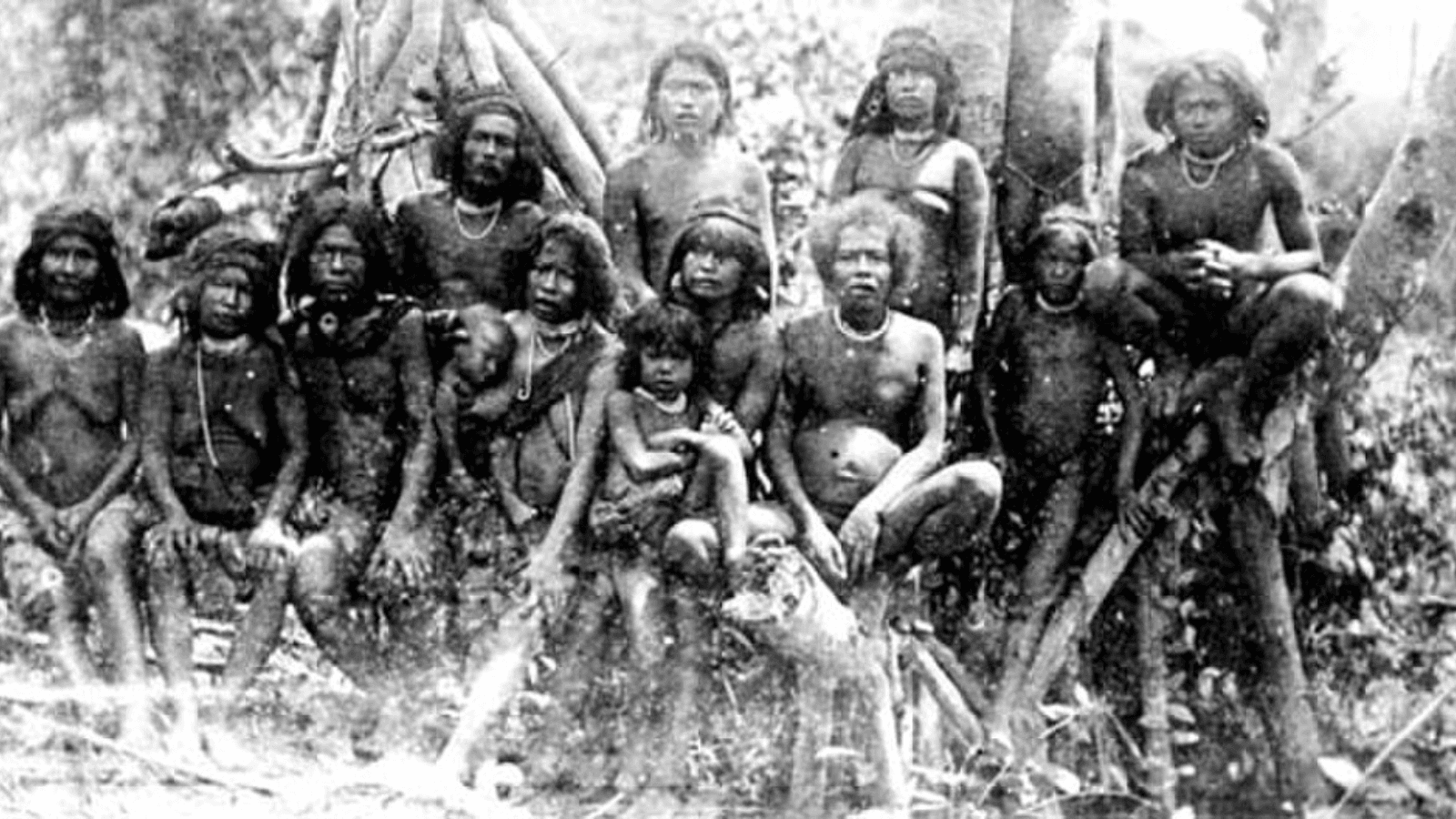
Lost in the debate surrounding the Great Nicobar Island project is a fundamental question: Is what can be justified necessarily just?
A short Bengali poem by the late Binoy Majumdar can be paraphrased thus: “When some explorers ‘discovered’ an island, they found people already living there. If the island was ‘undiscovered’, how could it be inhabited? And if people were already living there, how could the explorers ‘discover’ it?”
Perhaps the maverick mathematician-poet was examining the colonial Doctrine of Discovery — the idea that the first European nation to “discover” a territory in the Americas acquired exclusive rights over it. Around the same time, British colonists in Australia treated hundreds of Aboriginal nations as inhabitants of terra nullius — nobody’s land.
In India, Lord Dalhousie’s Waste Land Rules enabled the takeover of vast tracts of “unproductive” forests and commons beginning in the 1850s. The Land Acquisition Act, 1894, made the government’s decision the final word for a public purpose, pushing railways, mines and plantations across forested tribal regions, such as Chota Nagpur, Santhal Parganas and Central Provinces.
Few would dispute that each of these policies was profoundly unjust and immoral, if not outright criminal, by today’s ethical and legal standards. Even fewer would argue that the world is worse off because of the railways, industries and cities that emerged from those interventions. But that is no reason to repeat them.
The Rs 90,000-crore Great Nicobar Island project spanning 166 sq km at the southernmost tip of the archipelago includes an international container trans-shipment port, an integrated township, a civil-military airport, a power plant and luxury tourism facilities.
Many have demonstrated otherwise but, for a moment, let us accept that the defence installation’s location is non-negotiable, that the trans-shipment port can be financially viable, that the sprawling township is necessary, that the geological risks are manageable, and that the project’s strategic importance is paramount.
But even if every justification is taken at face value, none answers the more important question: Is the project just? By its own submission, the plan requires 73 sq km of tribal reserve areas. On its balance sheet, the project has provided for adding 77 sq km of peripheral land to make up for the loss. The indigenous people are not to be dispossessed, merely displaced.
In 1823, the US Supreme Court Chief Justice John Marshall weighed in on indigenous rights: “The rights of the original inhabitants were, in no instance, entirely disregarded; but were necessarily diminished.”
That was US President Andrew Jackson’s message to Congress in 1830. Two centuries have passed since. Today, ancestral rights of indigenous groups to their ancestral land are well established. The United Nations acknowledges that respecting their self-determination and traditional territories is essential to prevent exploitation and displacement.
We do not need to look far to know what risks our civilisation poses to the indigenous people. Contact with outsiders has historically exposed these isolated communities not only to unfamiliar diseases — such as measles, tuberculosis, syphilis and respiratory infections — but also to substance abuse, social disruption, economic dependency and sexual exploitation.
Since the arrival of British settlers in the 1850s, the Great Andamanese population fell from an estimated 35,00-60,000 to fewer than 650 in just five decades. Today, less than a hundred survive on Strait Island.
A similar fate befell the Onge on Little Andaman. The hunter-gatherers could not adjust to forced settlement, and many died of alcoholism, depression and suicide.
“Our manifest destiny is to overspread the continent allotted by Providence for the free development of our yearly multiplying millions,” wrote American political columnist John O’Sullivan in support of annexing indigenous land in 1845. Nearly two centuries should have been time enough to leave behind such impulses.
The doctrine of public trust demands the state to hold vital natural resources — such as air, water, forests, coasts — in trust for the benefit of the public, not only of the present generation but of those yet to come. That intergenerational promise must also extend to our past — or what survives of it, not because of us but despite us. We are duty-bound to protect their right to simply exist where they are, as they are.
Indeed, public interest may sometimes justify imposing the cost of a larger good on a few. But not when those few are the very last survivors of our war on old ways of life.
The writer is associate editor, The Indian Express. jay.mazoomdar@expressindia.com
Jay Mazoomdaar is an investigative reporter focused on offshore finance, equitable ... Read More