Dinesh Trivedi Bangladesh Envoy Cabinet Rank Significance
Indian Express
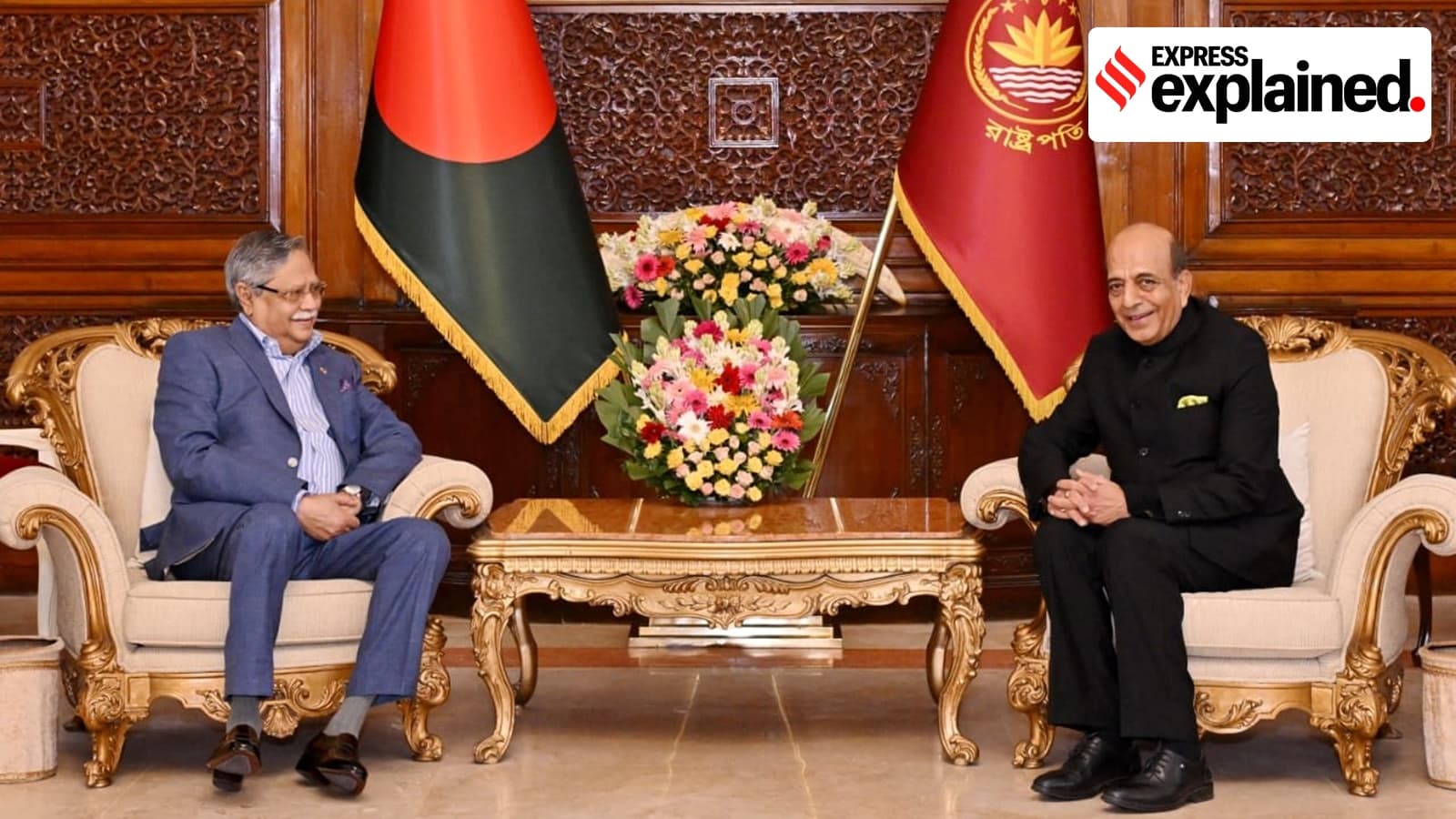
India has sent former Union minister and BJP leader Dinesh Trivedi as its High Commissioner to Bangladesh, marking the first time in the NDA government s 12-year tenure that a political leader has...
India has sent former Union minister and BJP leader Dinesh Trivedi as its High Commissioner to Bangladesh, marking the first time in the NDA government’s 12-year tenure that a political leader has been appointed an envoy. Trivedi has also been given the rank of a Union cabinet minister.
Veena Sikri, former High Commissioner of India to Bangladesh, explained the significance of the move. She spoke to Yashee.
Dinesh Trivedi is a political appointee, which means someone who is not a career diplomat [an Indian Foreign Service officer] being chosen for the envoy position. Along with that, he has also been given cabinet rank status, an important distinction.
There have been a number of political appointee envoys, though fewer under Prime Minister Narendra Modi. The present ambassador to the USA, Vinay Mohan Kwatra, was till recently foreign secretary, but was sent as ambassador to the USA after retirement, so that is considered a political appointee. There is former Army chief General Dalbir Singh Suhag, who was appointed High Commissioner of India to Seychelles in 2019.
Under PM Modi, this is the first time that a cabinet rank has been given to a political appointee, though there have been cabinet rank ambassadors in Congress governments.
Soon after Independence, Vijaya Lakshmi Pandit was an ambassador with cabinet rank. After that, TN Kaul was given cabinet rank when he went as ambassador to Moscow. Dr. Karan Singh was given cabinet rank when he went as ambassador to USA, and DP Dhar was given cabinet rank when he went a second time as ambassador to Moscow.
The purpose of giving cabinet rank is twofold. First, it indicates a direct line to the Prime Minister. As a member of the Union cabinet, you will have direct access to the Prime Minister, and not have to go through the hierarchy of foreign secretary or foreign minister.
Second, the indication is to the country where the ambassador is accredited. In this case, the signal is very clear to Dhaka that this person is held in very high political esteem by the Prime Minister of India. His functioning in that country will be of a very special kind, meeting only cabinet rank ministers or the Prime Minister of the country, and any message the High Commissioner conveys would be known to be coming straight from the Prime Minister of India. It gives a special status, and it is expected that Bangladesh would accept and recognise that.
Does this elevation have practical implications or is it more symbolic? How would a cabinet minister ambassador be treated differently from a regular ambassador?
The special status would be in terms of protocol. When that person is arriving at the airport or traveling within the country, they must have special status like the country would give to its own cabinet ministers.
Ambassadors in any country are given security and care, but when you have a person with cabinet rank, you will give a higher status in terms of security and in terms of arranging meetings, just like for a cabinet minister of your own country.
India-Bangladesh ties have been in a state of flux for some time; what do you make of India’s decision to send a politician rather than a career diplomat to Dhaka at this point?
It signifies India’s ‘Neighbourhood First’ foreign policy. For Prime Minister Modi to give cabinet rank to the High Commissioner to Bangladesh indicates a high level of importance attached to this policy. He would like to make sure that the government of Bangladesh, led by Tarique Rahman, would also recognise the signal and respond likewise in terms of giving the highest importance to policy towards India.
India-Bangladesh relations have been going through a very difficult time primarily because in August 2024, Prime Minister Sheikh Hasina was ousted in a coup. After the new interim regime under Muhammad Yunus came to power, our government expressed interest in continuing the relationship, but this was not reciprocated. Under his 18-month interim regime, Yunus changed project decisions, policy decisions, and special decisions in favour of India.
The expectation has been that Rahman would look at restoring the earlier positive and dynamic trade, investment, and project development relations, but so far, there has been no indication of that. Rather, his visit to China and the joint statement issued raises many more questions.
Yashee is a Senior Assistant Editor at The Indian Express, and she heads the Explained Desk. With over 12 years of experience in mainstream journalism, she specializes in translating intricate geopolitical shifts, legal frameworks, and historical narratives into accessible insight. Having started her career with Hindustan Times and later contributing to India Today (DailyO), Yashee brings a veteran’s perspective to contemporary analysis. She holds a Bachelor’s degree in English Literature from the historic Presidency College, Kolkata, and a postgraduate diploma from the Asian College of Journalism (ACJ), Chennai. Her work provides readers with the deep context needed to navigate a complex world. ... Read More