Tiger Trackers Rajaji Reserve Park Paonta Sahib Forests
Indian Express
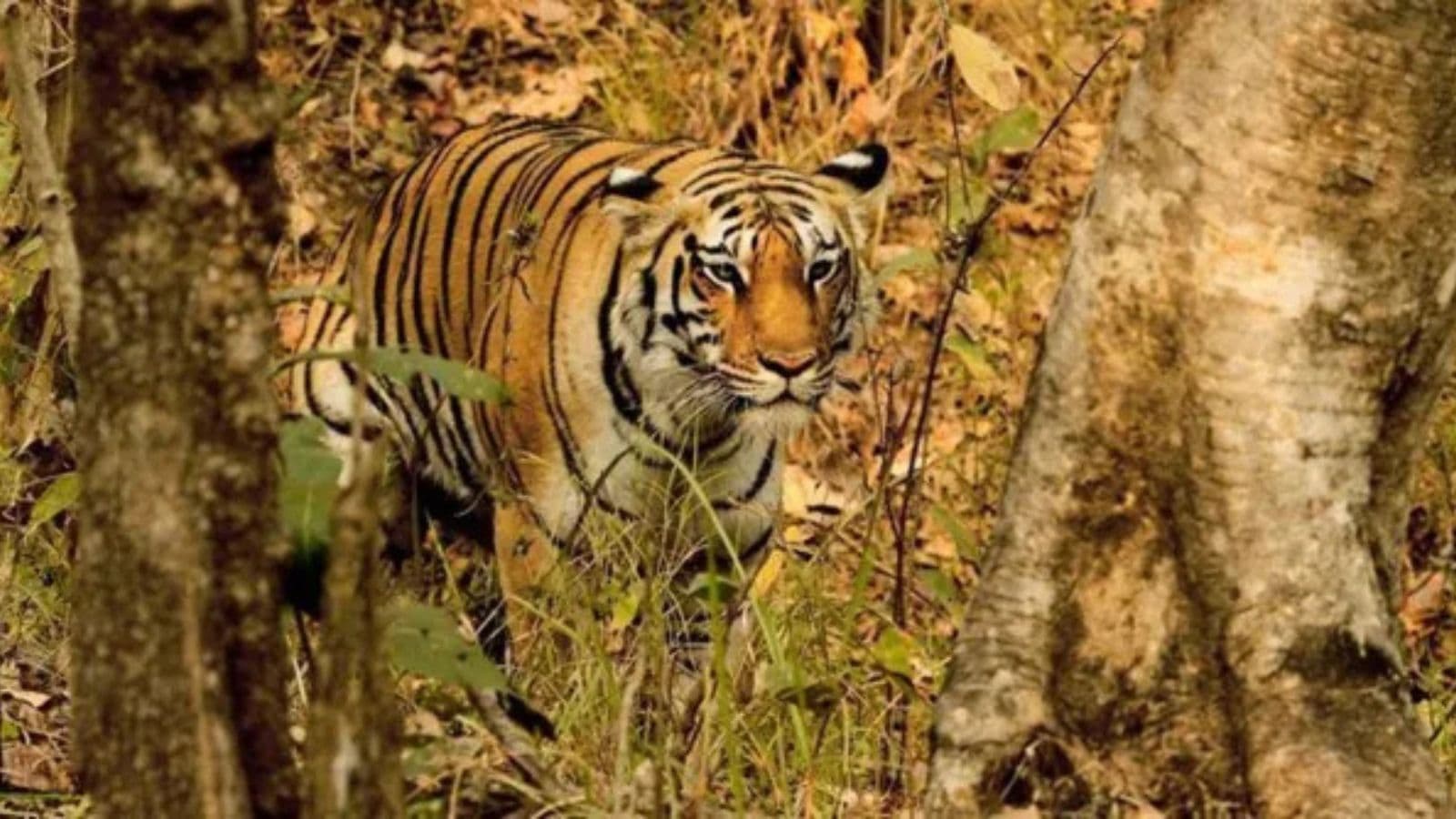
A tiger-tracking team from the Rajaji Tiger Reserve had visited the Himachal forests to conduct a scientific assessment, after a camera trap captured a big cat in the Paonta Sahib forests.
Experts and officials believe that it could be the tigress missing from the neighbouring Rajaji Tiger Reserve and National Park in Uttarakhand, for more than a year.
The team, comprising three persons, installed five to six additional high-resolution camera traps in the Paonta Sahib forests, as well as in areas adjoining Rajaji Tiger Reserve.
Officials familiar with the development said the team had visited the area last week. The team was shown photographs of pugmarks believed to belong to the tiger. However, the images were too unclear to be matched with those of the tigress that has remained untraced in the reserve.
Assistant Conservator of Forests (ACF), Paonta Sahib, Aditya Sharma, confirmed the development.
Meanwhile, the reserve director, Koko Rose, has decided to visit the Paonta Sahib forest, along with senior officials, to inspect the landscape, which closely resembles that of the national park.
Koko told The Indian Express, “We sent a team of our tiger trackers to Paonta Sahib and installed our own high-resolution camera traps. What we learned from the visit is that the landscape of Paonta Sahib and the national park in Uttarakhand is very similar. The Yamuna River and several small rivulets pass through both areas. I have decided to visit the forest areas in Himachal personally within a week.”
He also said, “Another reason to visit this area is the heavy interstate movement of wild animals through the 12-km-long elevated corridor on the Delhi-Dehradun highway. These movements require close interstate coordination… will include training of field staff, close monitoring of wildlife movement, quick sharing of information and implementation of safety measures. The interstate movement of Asian elephants from Uttarakhand to Himachal Pradesh to Haryana, and vice versa, is well documented.”
Forest officials in Himachal Pradesh are yet to ascertain the tiger’s gender.
Apart from the pugmarks, officials have also found claw marks on trees near the camera trap, indicating that the animal may have been frequenting the area for at least two to three days. Tigers leave claw marks on trees, along with urine and anal gland secretions, to mark their territory, officials said.
Notably, on June 14, a camera trap captured a tiger in the Khara block of the Paonta Sahib Forest Range in Sirmaur. The image provided the first concrete evidence of a tiger’s presence in the area, following months of claims by residents of Tokka and Lie villages, which are located about 7-8 km from the forest block. While the aerial distance between Khara and Rajaji Tiger Reserve is estimated to be only 30-40 km, the road distance is around 85 km. The two regions share a contiguous forested landscape, making interstate wildlife movement a distinct possibility.
In February 2023, a tiger was captured on a camera trap in Simbalbara National Park for the first time, marking the park’s first recorded tiger sighting.
Forest officials believe the latest sighting could indicate that the forested landscape of Paonta Sahib is increasingly emerging as an important wildlife corridor connecting Himachal Pradesh, Uttarakhand and Haryana.