Refugee Sons Who Carried Canada Into Fifa World Cup Last 16
Indian Express
Debeah Davies remembers the guns not the crack of them, but their presence as a fact of daily life in Monrovia, the way they organised everything. You ate according to them
Debeah Davies remembers the guns — not the crack of them, but their presence as a fact of daily life in Monrovia, the way they organised everything. You ate according to them. You moved according to them. You knew whether your children would survive according to them.
When the Second Liberian Civil War came to his family’s doorstep, Debeah and Victoria fled to Buduburam, a refugee camp in Ghana. They built a life in a tin hut not much larger than a minivan. Their fourth-youngest child was born there, on November 2, 2000, and given the name Alphonso.
Less than one percent of the world’s refugees are resettled every year. In 2005, Debeah’s family were among that fraction. A country called Canada said yes. They went to Edmonton, where a shy boy with broken English started kicking a ball with the other boys because that was the one language everyone already spoke.
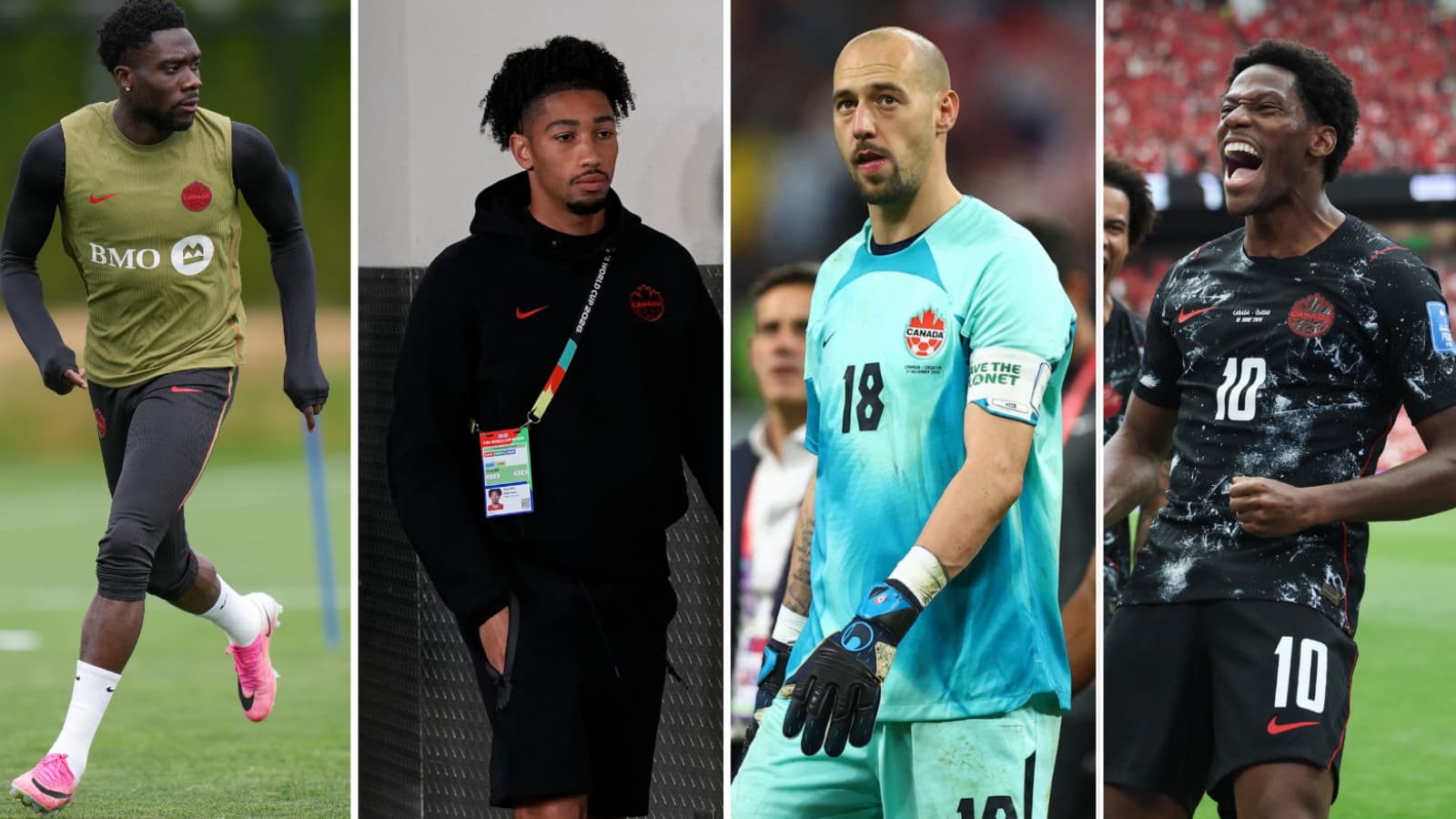
On Sunday, at Los Angeles Stadium, Alphonso Davies — captain of Canada, Champions League winner, UNHCR Goodwill Ambassador, former resident of the Buduburam refugee camp — made his first appearance at this World Cup, having missed the group stage with a hamstring injury. He came on, and Canada were transformed. They won 1-0, Stephen Eustaquio — who had lost both parents within the previous 12 months — scoring in the 92nd minute. They are in the Round of 16 for the first time in their history.
In goal that night was Milan Borjan, whose family fled the Croatian War of Independence and settled in Canada when he was 13, first in Winnipeg, then Hamilton. After Canada’s win over the United States in January 2022, he put it simply: “Canada gave my family everything. When somebody gives you that much love, you have to return it.”
Ten days ago in Vancouver came a moment that tells one everything about this team. Nathan Saliba — 22, from Montreal, his father Claude having played football back in Haiti — had just scored Canada’s fourth goal in a 6-0 win over Qatar, their first ever World Cup victory. He ran to the corner and held up a jersey with the number 8 on it. The number wasn’t his. It belonged to Ismael Kone, stretchered off 40 minutes earlier with a broken tibia and fibula.
Kone was born in Abidjan. He was seven when his mother Suzanne Diomande landed at Montreal’s Trudeau airport with her most prized possession in tow: her seven-year-old boy. “I came to give a good life first of all to my son,” she told CBC Sports.
He grew up in Montreal, learned to play at a neighbourhood park, and became one of the best midfielders in this tournament before a knee-high tackle ended his World Cup. He was the player of the match before they carried him off.
Jonathan David scored a hat-trick that evening. Haitian parents, Brooklyn birth, Port-au-Prince childhood, Ottawa youth football, rejected by Salzburg and Stuttgart, taken a chance on by Belgian club Gent. His mother Rose died of cancer before he was 20. He was already in Belgium by then. Years later, scoring an 84th-minute winner for Lille against Bordeaux, he ran to the sideline where someone handed him a pink rose. He pressed it to his face and held it up to the crowd — her name and her flower.
After the Qatar match, on Granville Street in Vancouver, the crowd was so thick one couldn’t move. A Qatari supporter, Abdullah Alajji, had flown 16 hours to watch his team. He walked through the red-clad crowd in his white robes and told people around him it was the worst match Qatar had ever played.
This is the team that did that to a city. Men from Liberia, Serbia, Haiti, Ivory Coast, Portugal, Nigeria, England, and every province of Canada — including a 20-year-old from Montreal who simply emailed his way onto the roster. This football squad looks like nothing that has represented Canada on a major sporting stage before — and for millions of Canadians who arrived carrying their family’s football story, that is not a small thing.
Debeah Davies said once that Canada had done a lot for his family. Every time his son steps on the pitch, it’s for them.
His family’s hut in Buduburam was not much larger than a minivan. You cannot fully repay a debt like that.