Son Neednt Pay Maintenance Parents Financially Stable Court
Indian Express
The Calcutta High Court has set aside the direction asking a man to pay a Rs 10,000 monthly sum to his parents, observing that they were pensioners and had substantial assets while being financially...
The Calcutta High Court has set aside the direction asking a man to pay a Rs 10,000 monthly sum to his parents, observing that they were pensioners and had substantial assets while being financially independent.
Justice Krishna Rao was hearing the son’s plea contending that he was already paying health insurance for his parents, and there was no compulsion for him to maintain a “close relationship” with them under the relevant law.
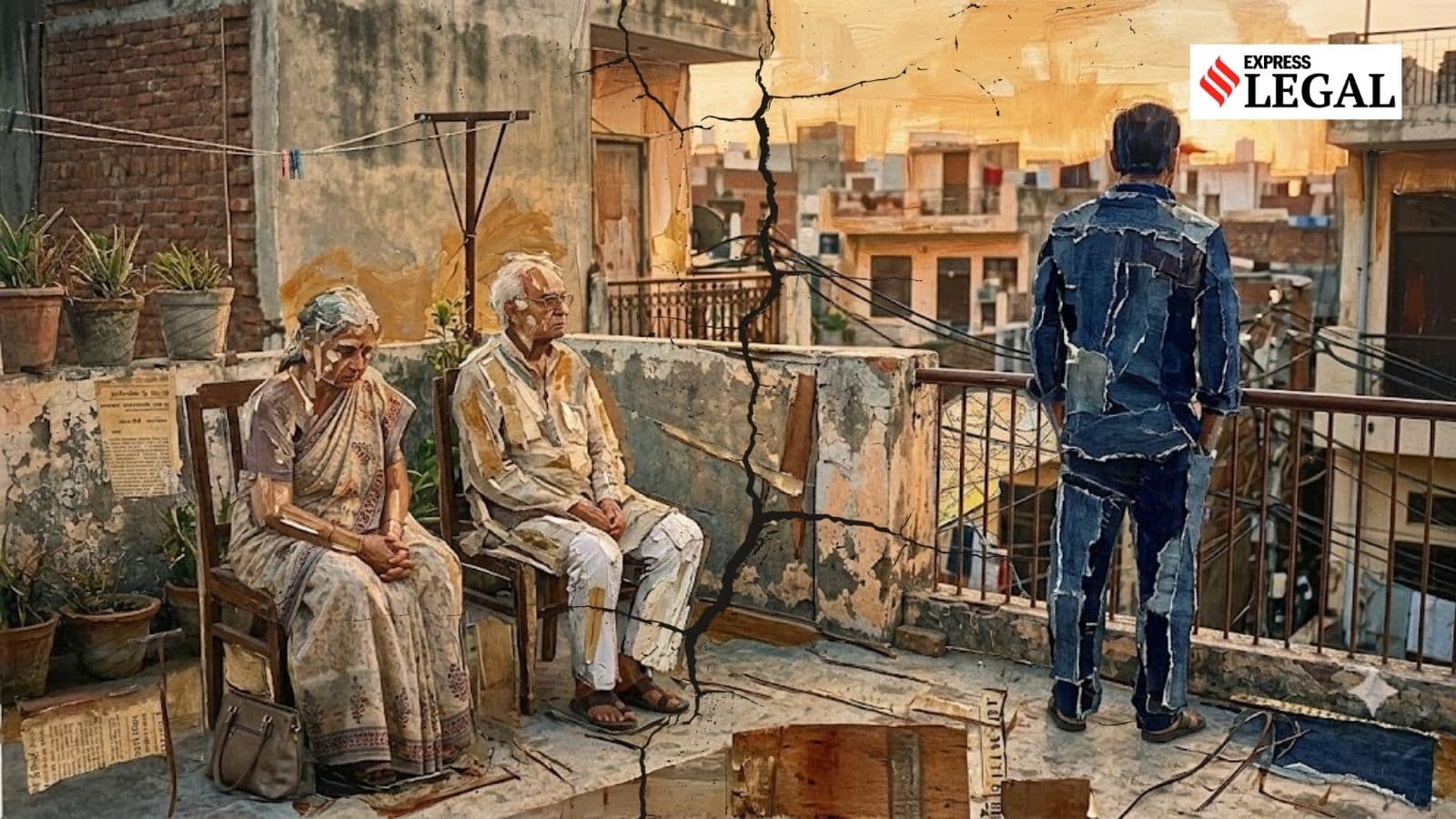
The court observed that the parents’ primary grievance was not financial support, but that their only son had cut off contact, had not visited them for the past 13 years, and they wanted him to care for them and spend time in their old age.
“As regards the prayer made by the respondent nos. 3 and 4 (parents), the same cannot be granted…as the same is not within the purview of the provisions of the Act of 2007,” the bench added.
“The petitioner being the son… is maintaining the health policies for his parents, which is linked to the petitioner’s Health Insurance Policy…and is having a moral duty to take care of his old age parents, thus the petitioner is directed to see that the respondent nos. 3 and 4 shall get proper treatment for their healthy life,” the June 25 order noted.
The petitioner had filed a petition challenging two orders dated June 7, 2024 and June 10, 2024, passed by the district magistrate, South 24 Parganas, directing him to pay Rs 10,000 under the Maintenance of Welfare of Parents and Senior Citizens Act, 2007, to his parents from July 2024.
The petitioner’s parents had complained before the sub-divisional officer (SDO) in 2019, seeking maintenance, and the SDO had directed the petitioner to provide basic amenities for his mother and father, i.e., medical treatment, and also directed for keeping a close liaison with his parents from time to time.
However, the high court, in 2023, set aside the SDO’s direction and ordered the parents to file a fresh application. The parents approached the SDO, but their application was again rejected in 2024. They moved an appeal before the district magistrate, who allowed it and asked the son to pay a Rs 10,000 monthly sum. The son challenged it before the high court.
Senior advocate Krishnaraj Thaker and advocates Pubali Sinha Chowdhury, Shwetank Ginodia and others, appearing for the petitioner, submitted that parents themselves have admitted having substantial properties, income and savings. Despite the admission, the appellate authority has passed the order directing the petitioner to pay Rs 10,000 as monthly maintenance.
The counsel submitted that, under sub-section 2 of Section 9 of the Maintenance and Welfare of Parents and Senior Citizens Act, 2007, the maximum amount of Rs 10,000 was permissible, but the court cannot direct the physical presence of the petitioner. Additionally, it was argued that the petitioner has been maintaining the health insurance policies for his parents, which are separately paid and linked to the petitioner’s Health Insurance Policy.
On the other hand, the parents appeared in person and stated that the petitioner was their only son, and, through their dedication, efforts, and professional sacrifices, raised him to be highly educated. According to the parents, the son went to a premier school in Kolkata and obtained degrees from IIT and IIM
The parents highlighted that the petitioner’s mother was about 79 years old and had undergone various surgeries as she suffers from serious medical conditions, including heart diseases, arthritis and a high-risk ovarian cyst requiring surgery, while the father (81 years) was suffering from prostate cancer, Chronic Kidney Disease (CKD) and Chronic Obstructive Pulmonary Disease (COPD).
The parents alleged that their son had cut off all contact by blocking their phone numbers and email, had not visited them for 13 years, and had distanced them from their most adorable only grandson by not allowing them to keep in contact with him or to be a part of his life, particularly by his mother.
The parents expressed that at this stage of life, they are unable to keep up with the exhausting process of litigation, and only want their son to spend time with them, along with medical assistance of Rs 5,000 each per month.
The court held that the parents being financially independent did not require monetary relief. Therefore, the court rejected the appellate authority’s order directing the son to pay Rs 10,000 per month as maintenance.
The court also observed that the parents’ request for directions requiring their son to regularly contact or visit them could not be granted because such relief does not come under the purview of the provisions of the Maintenance and Welfare of Parents and Senior Citizens Act, 2007.
However, noting that the son had already been maintaining his parents’ health insurance, the court said that he had a moral duty to take care of his old-age parents.
Somya Panwar works with the Legal Desk at The Indian Express, where she covers the various High Courts across the country and the Supreme Court of India. Her writing is driven by a deep interest in how law influences society, particularly in areas of gender, feminism, and women’s rights. She is especially drawn to stories that examine questions of equality, autonomy, and social justice through the lens of the courts. Her work aims to make complex legal developments accessible, contextual, and relevant to everyday readers, with a focus on explaining what court decisions mean beyond legal jargon and how they shape public life. Alongside reporting, she manages the social media presence for Indian Express Legal, where she designs and curates posts using her understanding of digital trends, audience behaviour, and visual communication. Combining legal insight with strategic content design, she works on building engagement and expanding the desk’s digital reach. Somya holds a B.A. LL.B and a Master’s degree in Journalism. Before moving fully into media, she gained experience in litigation and briefly worked in corporate, giving her reporting a strong foundation. ... Read More