Pride Day 2026 How Genderfluid Jewellery Is Moving Beyond Men S And Women S Sections
Hindustan Times
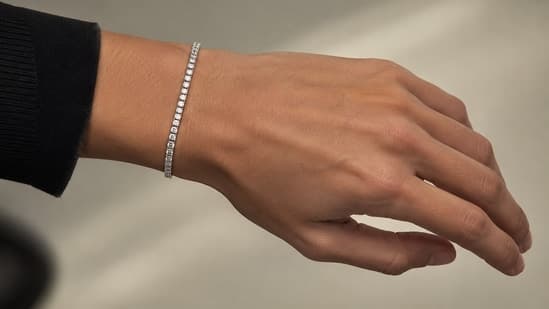
To put it plainly, androgynous jewellery essentially refers to unisex pieces that can be worn by people regardless of gender identity.
Most of the time, rugged or chunky designs are reserved for men, while dainty, ornate ones are meant for women. But with growing conversations around inclusive fashion, a change in jewellery design is also being observed.
For those who are keen on androgynous designs but do not know where to get started, HT Lifestyle asked Disha Shah, founder of DiAi Designs, common questions, around jewellery free from the gender code, that address doubts many buyers may have.
Differentiating the men's and women's jewellery design, the expert said, “Conventionally, women's jewellery was built around layered for occasion wear, ornate designs, while men's jewellery stayed functional and minimal to a regular ring, a plain wrist band, nothing more.” Aside from these, she also mentioned that weight, scale, and intent of each category were defined largely by gender. But gender-fluid jewellery breaks away from all these.
Disha described that such a design is different because it does the most important thing: it does not ask who is wearing the piece.
When jewellery has an overt femininity or masculinity attached to it, the piece by itself decides for the wearer and how they are expected to feel. This is why she reasoned that pieces such as a tennis necklace or a simple band ring feel timeless, as they move away from rigid gender associations and can be interpreted freely by anyone who wears them.
So genderfluid is a gender identity, whereas androgynous style is how they present themselves.
For beginners experimenting with jewellery designs and pieces rooted in genderfluid expression, Disha suggested starting with easy pieces which do not require heavy styling:
You have gotten a recommendation for understated jewellery that is prominent enough to stand out without any effortful styling. But there are some which require some amount of styling. Disha urged to stick to some central pieces, too many can compete for attention. Keep one central piece and build around it.
“A chunky, chain bracelet worn on its own carries visual weight without feeling costumey, or a solitaire pendant worn over the neckline reads as intentional rather than overwhelming and bold. What makes these pieces work is context and restraint. While the instinct to keep it minimal when starting out is understandable, one bold piece given space always reads as confident,” she added.
Disha shared that designs are becoming more inclusive as demand for classic pieces such as signet rings, stackable bands and convertible pendants grows across genders. The marketing of jewellery also plays an integral role in how a piece is received and who it is perceived to be meant for.
Further, she also elaborated that many brands are attempting to place inclusivity and identity at the centre of their campaigns.
When asked which unconventional items from their product categories is seeing a rise in demand, Disha said, "On the design side, DiAi Designs is seeing demand for our most popular and fast-growing pieces, our men's mangalsutra.”
A mangalsutra is conventionally associated only with married women, so men's mangalsutra demonstrates that jewellery's acceptability is becoming more inclusive, and the traditional ones are being redesigned for men.