Beijing Citic Tower Plane Crash China Zun Skyscraper Censorship Pilot Killed
Indian Express
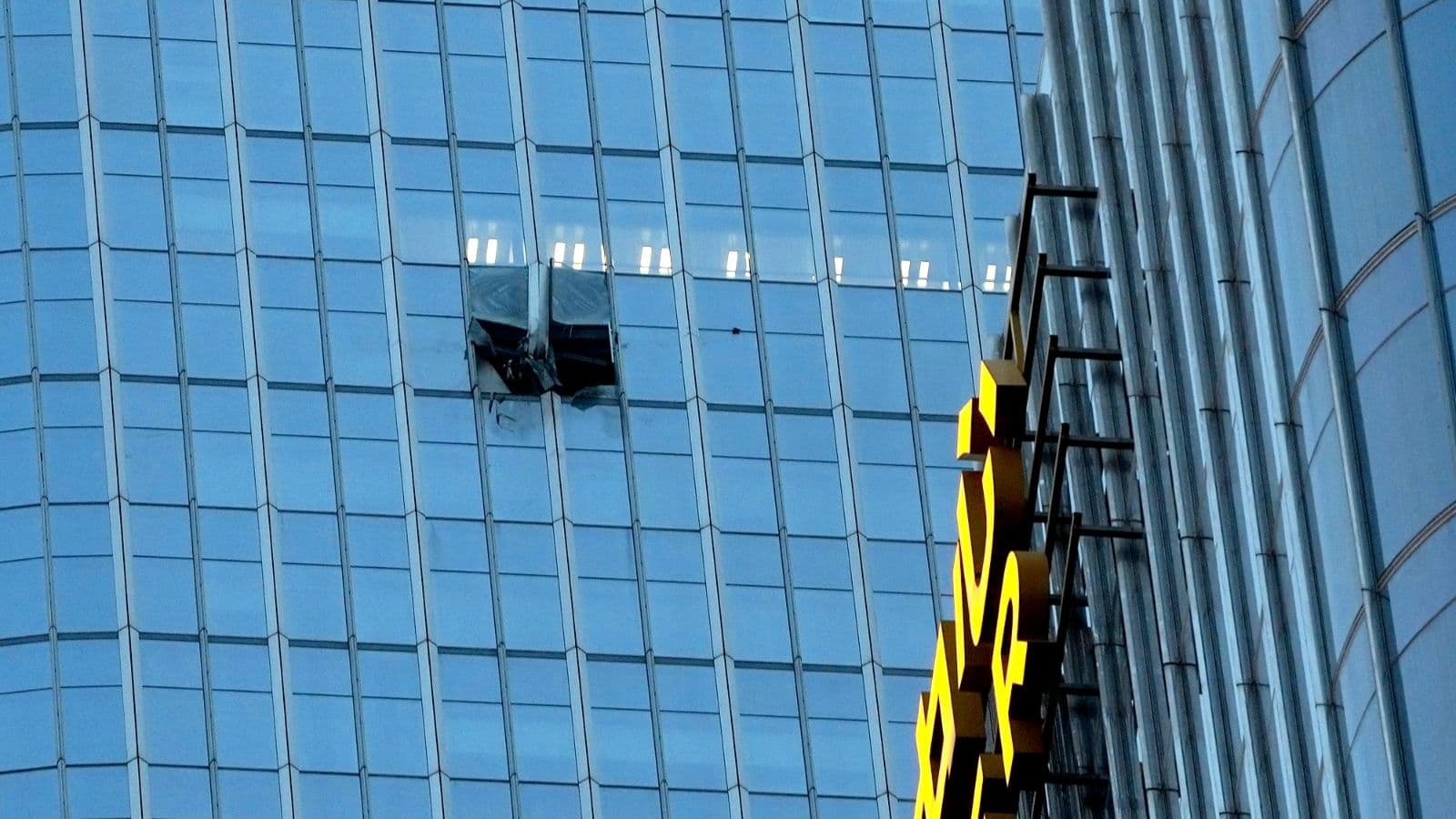
A light aircraft crashed into Beijing s tallest skyscraper during Friday evening rush hour, killing the pilot and injuring 13 people, in an incident that has raised questions over aviation security...
A light aircraft crashed into Beijing’s tallest skyscraper during Friday evening rush hour, killing the pilot and injuring 13 people, in an incident that has raised questions over aviation security in China’s tightly controlled capital and criticism over the authorities’ delayed public response.
The single-engine aircraft struck the upper floors of the CITIC Tower — also known as China Zun — and debris, shattered glass and parts of the aircraft rained onto the streets below.
The aircraft’s sole occupant, the pilot, died in the crash. Chinese authorities confirmed on Saturday that 13 people on the ground were injured and said an investigation into the incident was underway. Officials, however, have not disclosed whether the crash was accidental or deliberate.
According to a report by CNN, in the immediate aftermath of the crash, Chinese authorities did not publicly acknowledge the incident. The outlet also reported that videos and eyewitness posts showing the collision rapidly disappeared from Chinese social media platforms, while state-run media refrained from reporting on the event despite the crash occurring near the headquarters of China’s national broadcaster.
The lack of official information created uncertainty for nearly a day, with details regarding casualties and the circumstances of the crash remaining unclear until Beijing-affiliated media released a brief statement on Saturday.
According to CNN, searches related to the plane crash on the Chinese social media platform Weibo returned no relevant results after online posts were removed. It is a well-established practice in China to restrict information surrounding incidents considered politically or socially sensitive.
Security measures around the skyscraper were significantly tightened following the crash.
According to Reuters, moments after the crash, police closed several roads leading to the building in Beijing’s central business district, while officers prevented bystanders from taking photographs and directed people to stay away from the area.
A witness, cited by Reuters, had also seen a missing glass panel on one of the tower’s upper floors, indicating the point of impact. However, the outlet reported that police officers asked its journalists to depart from the scene. Asked why they had to leave, a police officer had reportedly said: “We all know why!”
CNN similarly reported that access to the surrounding area was heavily restricted on Saturday, with only employees able to prove they worked nearby being allowed through police checkpoints.
The incident has also prompted questions over how a small civilian aircraft was able to fly through one of the world’s most tightly controlled airspaces.
CNN reported that Beijing imposes strict restrictions on low-altitude flying, requiring approvals from both the Civil Aviation Administration of China and the People’s Liberation Army Air Force for light aircraft operations. Recreational drone activity has also been effectively prohibited under recently introduced regulations.
Preliminary online flight-tracking data cited by CNN appeared to show the aircraft deviating significantly from its expected route after departing Beijing’s Shifosi Airport, although authorities have not confirmed the accuracy of those records.
Images circulating online before being removed reportedly suggested the aircraft may have been a domestically manufactured Sunward SA60L Aurora light sport plane operated by a local aviation company offering pilot training and recreational flight services, the CNN report said.
The CITIC Tower, commonly known as China Zun, is Beijing’s tallest building and serves as the headquarters of the state-owned conglomerate CITIC Group. The skyscraper also houses offices of major corporations, including Alibaba, and is located close to several foreign embassies and international financial institutions.
Investigators have yet to explain how the aircraft entered one of the world’s most tightly controlled airspaces. Until authorities release more details, the crash is likely to fuel further questions over aviation oversight and transparency in China.
The Express Global Desk at indianexpress.com which delivers authoritative, verified, and context-driven coverage of key international developments shaping global politics, policy, and migration trends. The desk focuses on stories with direct relevance for Indian and global audiences, combining breaking news with in-depth explainers and analysis. A major focus area of the desk is US immigration and visa policy, including developments related to student visas, work permits, permanent residency pathways, executive actions, and court rulings. The Global Desk also closely tracks Canada’s immigration, visa, and study policies, covering changes to study permits, post-study work options, permanent residence programmes, and regulatory updates affecting migrants and international students. All reporting from the Global Desk adheres to The Indian Express’ editorial standards, relying on official data, government notifications, court documents, and on-record sources. The desk prioritises clarity, accuracy, and accountability, ensuring readers can navigate complex global systems with confidence. Core Team The Express Global Desk is led by a team of experienced journalists and editors with deep expertise in international affairs and migration policy: Aniruddha Dhar – Senior Assistant Editor with extensive experience in global affairs, international politics, and editorial leadership. Nischai Vats – Deputy Copy Editor specialising in US politics, US visa and immigration policy, and policy-driven international coverage. Mashkoora Khan – Sub-editor focusing on global developments, with a strong emphasis on Canada visa, immigration, and study-related policy coverage. ... Read More