Netherlands Knockouts Dominance Fifa World Cup Morocco Streak
Indian Express
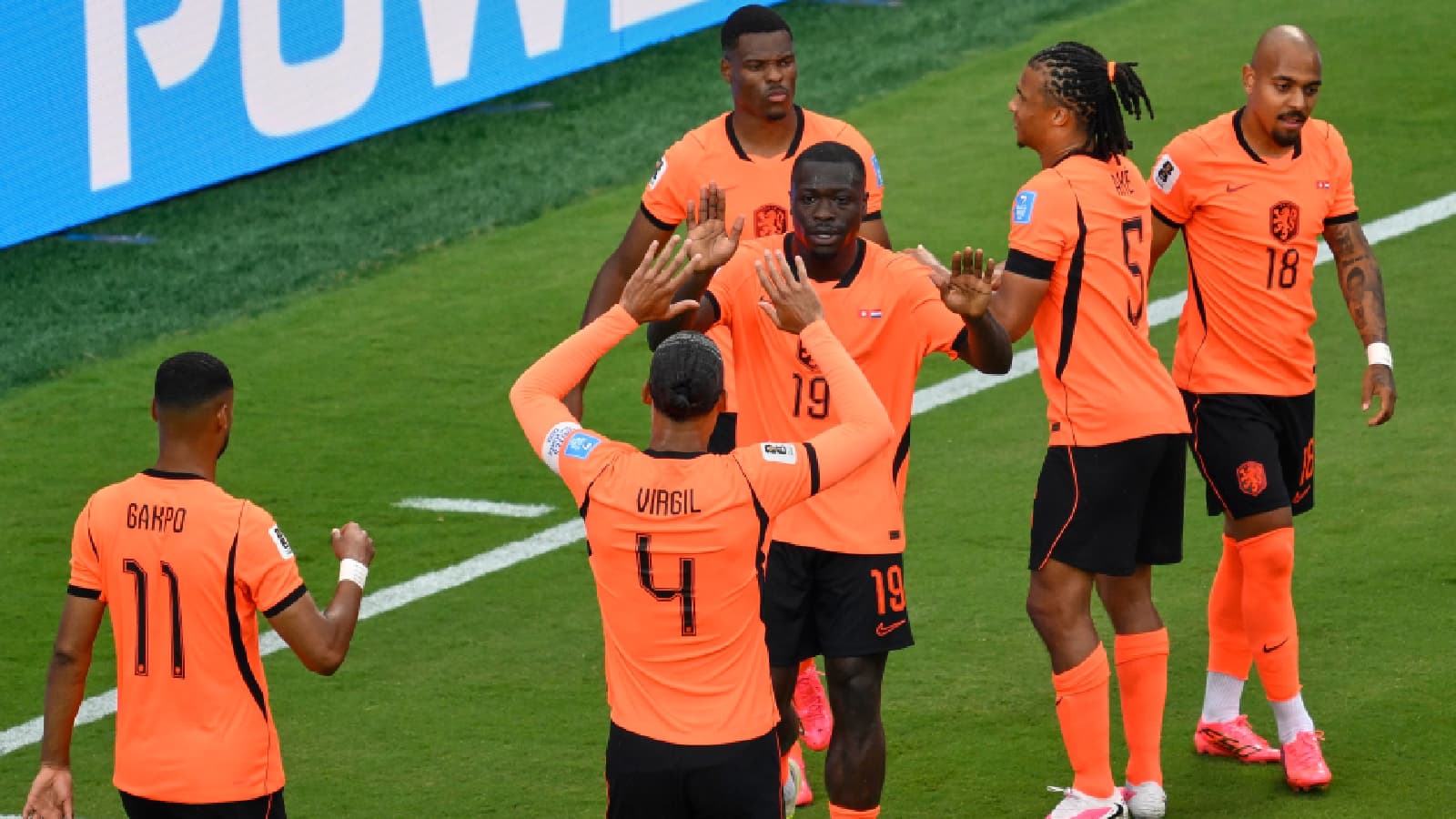
Kansas City was drenched in fluorescent orange. For Tunisia, already eliminated after conceding nine goals in two games, this was a chance to finish with something
. They were given 180 seconds before that hope began to fade.
The Netherlands needed only to avoid being overtaken by Japan’s goal difference against Sweden to top Group F. They did not need to win. They won anyway.
Denzel Dumfries drove a low ball across the face of goal in the third minute. Ellyes Skhiri, Tunisia’s captain, got there first and turned it into his own net, the 12th own goal of this tournament, equalling the most ever recorded at a World Cup. Before the seventh minute it was two. Virgil Van Dijk headed a Reijnders free kick across the box and Brian Brobbey, reacting quickest, half-volleyed his third goal of the tournament past a helpless Aymen Dahmen. Two-nil in seven minutes. Given what had happened to Tunisia across this tournament, that was no surprise.
They had sacked coach Sabri Lamouchi after their opening 5-1 loss to Sweden, the first time in World Cup history a team has fired its coach after just one game. Hervé Renard was brought in. They then lost 4-0 to Japan. This was the seventh coach Tunisia have had since the 2022 World Cup. That level of instability does not produce coherent football, and it has not here.
Brobbey has been the revelation of this Dutch campaign. The Sunderland striker was on the bench for the opening draw with Japan. Koeman started him against Sweden and he scored twice inside seventeen minutes. He did it again here. Physical, precise, clever with his back to goal, he gives the Netherlands a focal point they have spent years searching for. Van Dijk called him “so strong” after the Sweden game. Three goals in three games.
Order was restored in the 62nd minute through Jan Paul Van Hecke, the centre back who completed his £52 million move from Brighton to Tottenham just a week before this game. Reijnders delivered the corner, Van Hecke met it firmly, Ben Slimane got a deflection on it, and the ball nestled into the top corner. Ten goals across three group games. Koeman was not entirely satisfied. After the Sweden win he had pointed to a loss of tempo and defensive lapses that let Tunisia back into the game. Those concerns resurfaced here, specifically at set pieces. Against Morocco, who are sharper and more physical than either Sweden or Tunisia, the same lapses will cost more.
Morocco await at Monterrey on June 29. They reached this stage the hard way, coming from behind twice against Haiti in Atlanta, a 4-2 win built on Hakimi’s goal and assist, Saibari’s equaliser in stoppage time, and two second-half goals from substitutes. Before that, a 1-1 draw with Brazil and a 1-0 win over Scotland. Hakimi said afterward: “We didn’t start well, but we used our mentality to turn it around. The next match will be difficult.”
He is right. Morocco were semi-finalists in 2022. The Netherlands have reached the Round of 16 in every World Cup they have entered since 1974. One of those records ends in Monterrey.
Brobbey has three goals and a point to prove. Koeman has ten goals and a set piece problem. Morocco have Hakimi and a squad that has made life difficult for better sides than the Netherlands all tournament. One of them will matter more on June 29.