Pahalgam Terror Attack Nia Chargesheet Pakistan Based Handler
Indian Express
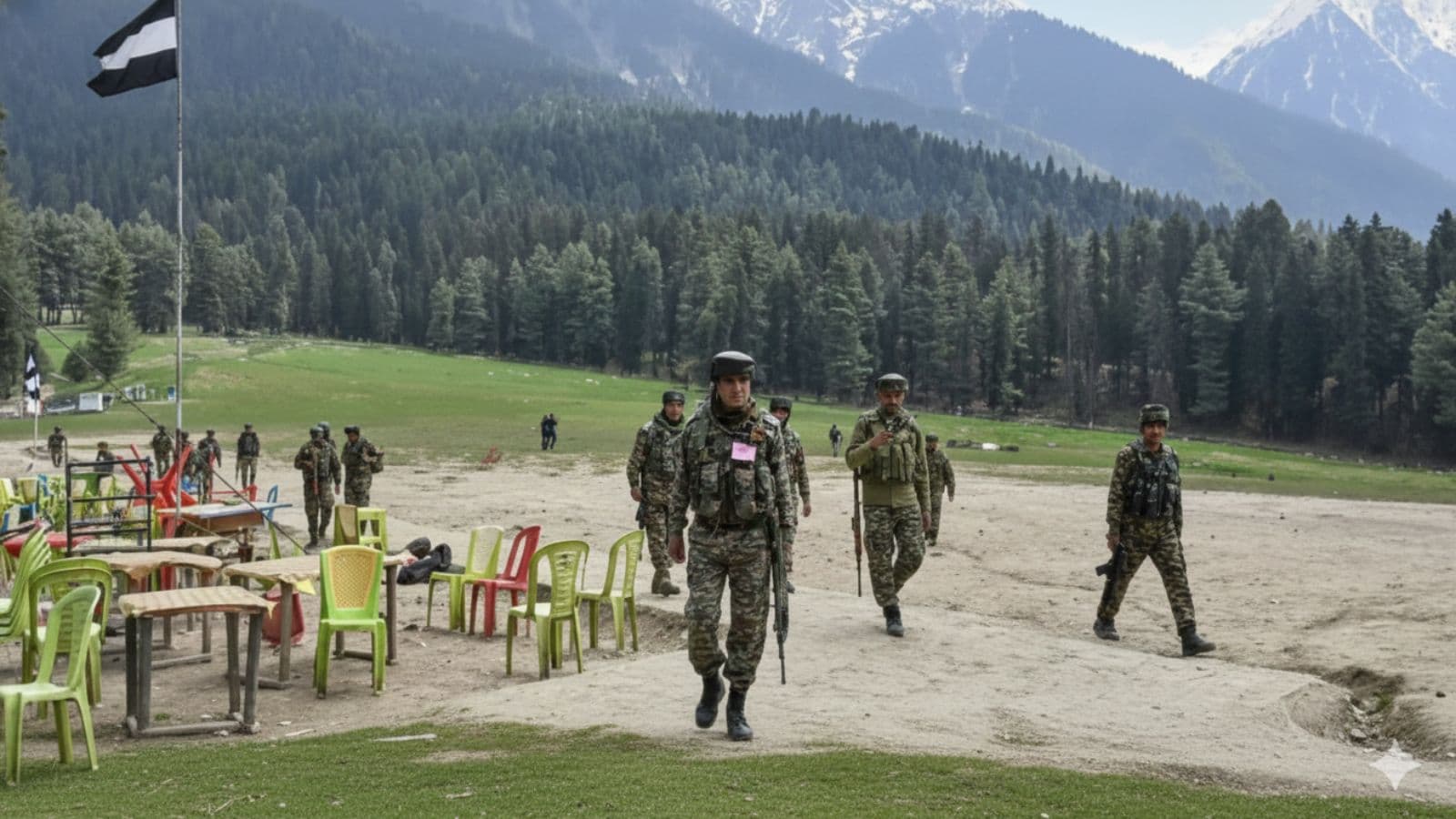
The plan to attack tourists at Baisaran valley in Kashmir s Pahalgam was active around April 15 last year, as per digital records recovered from terrorists killed after the attack.
The plan to attack tourists at Baisaran valley in Kashmir’s Pahalgam was active around April 15 last year, as per digital records recovered from terrorists killed after the attack. This revelation, The Indian Express has learnt, figures in the National Investigation Agency chargesheet filed in connection with the April 22, 2025 attack which left 25 tourists and a local ponywallah dead.
The agency’s probe, it is learnt, notes that the phone of a terrorist killed during ‘Operation Mahadev’ in the Srinagar area on July 28, 2025, “contained two map screenshots time-stamped April 15 and 16, depicting locations near Baisaran”.
The screenshots indicate the points were plotted in a mobile app, “consistent with coordinates being received from the (Pakistan-based) handler Sajid Jatt”, the NIA is learnt to have said. “These timestamps show the conspiracy was live at least from April 15 onwards.” The GPS-based mobile app in question is used for hiking and mountain expeditions, but was used by terrorists to share and track coordinates.
Three terrorists — Faisal Jatt alias Suleman, Habeeb Tahir alias Jibran, and Hamza Afghani — were killed on July 28 in the Dachigam forests near Srinagar.
According to the NIA probe, the three visited a dhok (a mud hut constructed in the upper reaches of the Valley and used by shepherds in the summer) of local resident Parvaiz Ahmad on April 21. Parvaiz and his uncle, Bashir Ahmad Jothad, stand accused of providing food and shelter to the terrorists a day before the attack.
“The analysis of the extracted data of the two mobile phones revealed several photos of terrorists, screenshots of chats with the terrorist handler, namely Ali Sajid alias Ali Bhai, giving directions to the said terrorists and navigational data for further movements, screenshots of the app showing coordinates of locations near Baisaran Park, Pahalgam,” the NIA is learnt to have said. Sajid, a Pakistani national, has been named as the commander of the proscribed terrorist outfit, Lashkar-e-Taiba, and its proxy, The Resistance Front.
Detailing his involvement in the attack, the NIA is learnt to have pointed out that even while being located in Pakistan, Sajid “conceived, coordinated and directed the Baisaran operation by maintaining a clandestine encrypted communication network, pushing coordinates and logistic tasks (drone drop), issuing relocation orders, and controlling route navigation.” The module executed these orders while conducting the attack.
A protected witness, who identified Faisal’s body, is learnt to have told investigators that he had encountered Faisal along with three other terrorists in September 2024. The four, as per his recorded statements, spoke Punjabi and Urdu. “They were talking about one Sajid Jat and a location sent by him in Gogal Dara Jungle where a drone would drop a consignment,” the NIA is learnt to have said. The witness told investigators he was forced to take them to that location, “where a drone dropped a yellow-colored packet that contained 20 pistols, Rs 15 lakh, and triangle-shaped bombs.”
The investigation “clearly established” that two phones recovered from the terrorists “were sold in Pakistan”. The probe is also learnt to have highlighted the use of specialised apps to “communicate on their mobile phones with overground workers (OGWs)”.
The agency also noted Baisaran’s remote location and the lack of CCTV covering its expanse made it a target for the terrorists. The NIA questioned over 1,100 witnesses during the investigation. The chargesheet was filed before the Special NIA Court in Jammu in December 2025.
Naveed Iqbal is a Senior Assistant Editor at The Indian Express, and reports from Jammu and Kashmir. With a career spanning over 15 years in frontline journalism, Naveed provides authoritative reporting on the region’s transition, governance, and the socio-political implications of national policies. Expertise Regional Specialization: Based in the Srinagar and New Delhi bureaus, Naveed has spent over a decade documenting the unique challenges of Jammu and Kashmir. Her reporting is distinguished by deep contextual knowledge of the region's post-Article 370, statehood debates, and local electoral politics. Key Coverage Beats: Her extensive body of work covers: Politics & Governance: Tracking the National Conference (NC), PDP, and BJP dynamics, including in-depth coverage of J&K’s first Assembly sessions and Rajya Sabha polls following the reorganization of the state. Internal Security & Justice: Providing rigorous reporting on counter-insurgency operations, terror module investigations, and judicial developments involving political detainees and constitutional rights. Education & Minority Affairs: Highlighting systemic issues such as quota rows in J&K, public service commission reforms, and the challenges faced by minority communities. ... Read More