Chandigarhs Heritage Furniture Pulled From Paris Auction After Last Minute Diplomatic Push
Hindustan Times
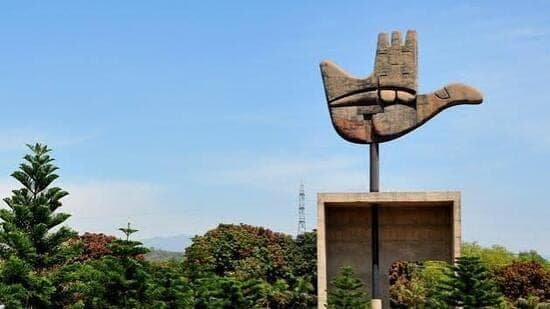
In a swift diplomatic win, the controversial auction of Chandigarh s heritage furniture in Paris was halted just a day before it was to go under the hammer, after the UT administration wrote to the...
In a swift diplomatic win, the controversial auction of Chandigarh’s heritage furniture in Paris was halted just a day before it was to go under the hammer, after the UT administration wrote to the Ministry of External Affairs (MEA), requesting intervention.
The escalation to the MEA, on the directions of UT administrator Gulab Chand Kataria and active intervention by chief secretary H Rajesh Prasad, had come after two historically significant furniture pieces – linked to Panjab University (PU) and Post Graduate Institute of Medical Education and Research (PGIMER) – were listed for sale by French auctioneer François Epin, with estimated values ranging between €4,000 and €7,000 (roughly ₹4,30,132 and ₹7,52,801).
A press statement issued by administration on Wednesday read, “Today, the MEA was informed that, following the intervention of the Embassy of India in France, the items concerned have been withdrawn from the auction.”
The administration has maintained that the furniture forms an integral part of Chandigarh’s modernist legacy envisioned by Le Corbusier and his collaborators. With the Capitol Complex recognised as a UNESCO World Heritage Site, officials stressed that the unauthorised sale of such artefacts raises serious legal and ethical concerns.
The markings, officials said, establish a direct institutional link, raising suspicion that the items were illegally removed and trafficked abroad. The administration warned that their presence in an overseas auction market points to possible theft, unauthorised disposal and unlawful export of protected heritage property.
In a strongly worded communication to the MEA, Chandigarh sought immediate suspension of the auction, verification of provenance, and recovery of the artefacts through diplomatic channels.
The episode has once again exposed the persistent leakage of Chandigarh’s iconic furniture into international markets.
A report by the Government College of Art, Sector 10, flagged multiple missing items from official inventories, underscoring gaps in preservation and monitoring.
In 2012, the Chandigarh Heritage Inventory Committee stated there were 12,793 heritage items, originally designed by Corbusier, Pierre Jeanneret, and other architects involved in the city’s planning during the 1950s and 1960s. Many of these items are housed in the Government Museum and Art Gallery, Sector 10, while a large stock of chairs and tables remains in the Punjab and Haryana secretariat, Vidhan Sabha, and the Punjab and Haryana high court.
While the administration has thanked the MEA and the Indian Embassy in France for their timely intervention, the incident has again spotlighted systemic lapses in safeguarding public heritage. French authorities themselves had earlier pointed to Chandigarh’s weak enforcement, with several theft cases still pending and little progress on investigation. In 2024, police commissioner, police attache, French Embassy in India, Fabrice Cotelle said, “UT administration has not taken any steps to stop the pilferage of heritage furniture from Chandigarh to other countries.”