Anurag Kashyap Bandar Bobby Deol Sanya Malhotra Consent
Indian Express
Men are the unlikely victims of our age: In the post-MeToo, post- woke times, Anurag Kashyap has tapped into an emerging consensus with Bandar. And he s done it well
Men are the unlikely victims of our age: In the post-MeToo, post-“woke” times, Anurag Kashyap has tapped into an emerging consensus with Bandar. And he’s done it well. That’s what makes Bandar’s message so dangerous.
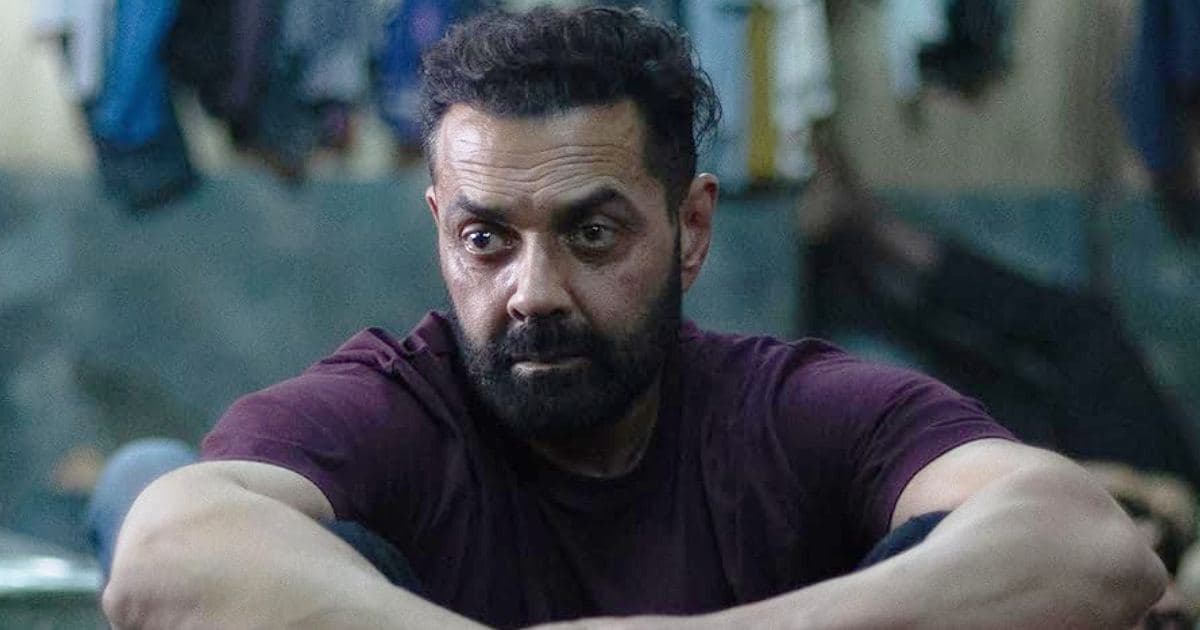
In the film’s final scene, a hardened Samar Mehra (Bobby Deol) sits reigning over undertrials in the prison he was thrown into years ago, and asks the latest inmates: “Toh bata, kya lagta hai, maine kiya ke nahi kiya?” (So tell me, do you think I did it?) Within that question hides the case for the man (men) “falsely accused” of rape. Having the audience confront what’s left of Samar and his humanity after years in a disabling, violent, and corrupt prison system is the film’s way of forcing a verdict of innocence. It fails.
The crisis in our justice system is a fact; no one should endure what people face behind bars. But the existence of a brutal prison system is not a license for absolution or proof of innocence. The film doesn’t bother asking; it more or less tells the audience: Samar is not a rapist. Is that true, though?
Bandar seems to suggest that two things can be true. It asks you to sympathise with Samar’s plight while acknowledging that rape culture is real. That texture makes it harder for the audience to dismiss Samar’s pain. In fact, although he is no saint, Samar seems to be a classically progressive guy himself, maybe even a feminist. How can a guy like him rape somebody, right?
By giving Samar a complex personality, the film, in fact, shows that rapists are not cartoonish monsters who exist in a vacuum. They look and talk like an everyman, which is what makes them more dangerous. It is a reality many women have lived, dealing with men who wear progressivism as a costume in public and rip it off in private. This is not to say he is a rapist, but that his seemingly progressive outlook does not preclude him from being one.
The story is told only from Samar’s perspective. We have only his word on whether the rape accusation is fake. Inside the prison, more men claim they were falsely accused: They are well-rounded characters who get to make their case on camera. The same decency is not extended to any of the “lying” women, though. The only woman who even gets to have a face and voice is Gayatri (Sapna Pabbi). Ultimately, there is no way for us to conclusively know that the rape accusation is fake, despite the film’s treatment of that as fact.
What Gayatri puts Samar through is indefensible: After a hook-up, she starts stalking and harassing him, and according to Samar, after she realises that she has been spurned, she files a “false” rape case against him. But what led her to the police station is framed, basically, as “b**ches be crazy” (Talk about the “cartoon villain” treatment). Gayatri’s behaviour in the aftermath is weaponised as evidence that she wasn’t raped, when research has consistently shown that victims of sexual assault, often in an attempt to cope using denial, can harbour affection for their rapists. But exploring any angle that has sympathy for Gayatri’s side of the story — or moves beyond the myth that an imperfect woman can’t be a victim — would require her to be afforded much more humanity and personhood than Kashyap has given her.
The film wants to seem aware of rape culture. Yet, one of the main symptoms of this culture — a refusal or inability to understand consent — seems to elude the story. How does one ascertain the “fakeness” of a rape allegation in such a climate? Does a society in which Himanshu Jangra made loud and proud “jokes” of rape to a laughing audience know what constitutes sexual violation?
In India, women, in and out of the bedroom, are met with entitlement as the status quo. Prevailing attitudes in society, reinforced by politics and policy, still dictate that women owe their families honour, their partners sacrifice and obedient service, and their cultures quiet submission. A country that refuses to socially or legally recognise rape within marriage makes its priorities clear: The woman can be forsaken to uphold Indian tradition. It is clear: Our institutions and dialogue do not advocate for women. This is hardly a culture that can be trusted to debate and deliberate on the testimonies of the victimised.
Even in the worst-case scenario, a powerful, privileged man getting falsely accused of rape and facing the consequences is an anomaly. And even the anomaly can’t be compared to the reality of a system in which a majority of “real” rape cases still go unreported and unbelieved, and reported ones rarely see convictions. This is why it is hard not to see Kashyap’s choice of script as an endorsement of a rising belief that men are persecuted in a system that seeks more justice and equality for women — a belief entirely unsupported by facts and figures.
While laying bare the cruelties of the Indian justice system, Kashyap could have panned his camera to the other side too — one in which women try to navigate a punishing and patriarchal legal reality, where the trauma of rape is compounded by ostracisation and social stigma. He could have explored how privileged men should carry themselves in a culture that isn’t interested in holding them accountable, that teaches them entitlement to women’s bodies.
Bandar does none of that. Despite projecting progressiveness, it actively fans the flames of the “men are victims” narrative. Despite having the potential to be, this film is not a diagnosis of the current moment; it is but a symptom. Ultimately, it looks like Bollywood’s great liberal director undertook a multi-crore exercise in vindicating privileged men who are victimised by a “believe all women” society. The feminist, indeed.
The writer is sub-editor, The Indian Express. sukhmani.malik@expressindia.com
Sukhmani Malik is a journalist and sub-editor at The Indian Expres... Read More