Cost Of Compliance Safeguards Can Be Bypassed With Suvidha Shulk
Hindustan Times
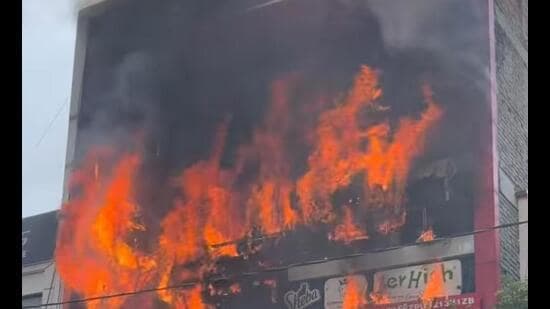
LUCKNOW The Aliganj fire tragedy in Lucknow that claimed 15 lives has once again exposed glaring gaps in the enforcement of safety norms in commercial establishments.
LUCKNOW The Aliganj fire tragedy in Lucknow that claimed 15 lives has once again exposed glaring gaps in the enforcement of safety norms in commercial establishments.
While stringent safety regulations, mandatory audits and multiple no-objection certificates (NoCs) exist on paper, traders and professionals allege that many of these safeguards can be bypassed with the payment of “suvidha shulk” (facilitation fees), reducing compliance to a “transactional exercise” rather than a protective measure.
The incident has reignited questions over the effectiveness of the NoC, regulatory oversight and whether inspections are genuinely aimed at ensuring public safety or have become tools of harassment, delay and rent-seeking.
However, traders, builders and professionals contend that the issue extends far beyond isolated violations. They argue that unauthorised power connections, missing safety infrastructure and delayed compliance certificates often survive within a complex ecosystem of approvals, inspections and alleged informal payments.
A larger question looms: How do commercial complexes continue to function despite glaring violations in power connections, fire safety measures and mandatory clearances?
Officials have launched a review of commercial buildings across the city, but behind every unauthorized power connection, missing safety audit or delayed compliance certificate lies a murky network of approvals, inspections and alleged informal arrangements that allow violations to flourish, alleged traders.
Under existing regulations, a commercial complex is expected to secure multiple clearances before becoming operational. These typically include:
- Fire department NoC: Traders allege that apart from the regular fee, one has to pay between ₹2.5 lakh and ₹5 lakh for getting NoC for commercial complex.
- Power connection, load sanction nod: One has to spend ₹3 lakh besides the regular fee, traders allege. Connection costs include a one-time processing fee, a security deposit, fixed monthly demand charges and per-unit energy charges based on consumption slab.
- Building plan approval from authority: They say the map is passed after paying ₹1 to 5 lakh.
- Structural stability certification: Builders also have to pay between ₹1.5 and 2 lakh per floor to LDA engineers.
- Environmental, other sector-specific clearances where applicable (in case of digging basements for parking): One has to pay between ₹2 and ₹3 lakh extra, it is alleged.
Each approval is intended to ensure that the building is safe for occupants and emergency responders. As the owner has to bear all these extra costs for construction of a commercial building, he wants to ensure the use of every inch of all the land which he has invested in. That’s why setbacks are not left and buildings are raised after greasing palms of officials, alleged a trader.
The law mandates periodic inspections, adherence to sanctioned building plans, installation and maintenance of firefighting systems and compliance with electrical safety standards. Commercial establishments are also required to renew certain clearances and address deficiencies identified during inspections.
Safety audits: On paper vs ground reality
UP Adarsh Vyapar Mandal president Sanjay Gupta, expressing grief over the deaths in the Aliganj incident, said audits are often reduced to a “paperwork exercise”. He alleged that in many cases, deficiencies flagged during inspections remain unaddressed for months or even years, if officials get their cuts.
Gupta said investigations into previous fire incidents have repeatedly uncovered common patterns like unauthorized increase in electricity load, temporary or illegal power connections becoming permanent, blocked emergency exits and overcrowded premises, firefighting equipment that exists only on paper, occupancy certificates issued despite deviations from approved plans and delayed or selective enforcement against violators.
“What happens after such incidents is that the collections by various departments increase – fire department will conduct its own survey, LESA will send its own team, LDA and LMC will survey other things, and all of them will seek more payments (bribe) than the previous occasions to issue NoCs,” he claimed.
Another trader leader Sandeep Bansal alleged that every violation creates an opportunity for inspections, notices, penalties and discretionary action. As a result, enforcement frequently becomes reactive after a tragedy rather than preventive before one.
He said the Aliganj inferno has once again raised uncomfortable questions about accountability. Were mandatory audits conducted? Were electrical systems inspected? Were all required NoCs valid and up to date? Most importantly, could the deaths of 15 people have been prevented if existing laws had been enforced in letter and spirit?
Anupam Srivastava is a Special Correspondent with Hindustan Times, Lucknow. Has produced exclusive stories in medical, civil aviation, civic, political and other issues for over 20 years.