Sbi Atm Dispenses Rs 10000 Less Than Amount Man Wins Rs 23000
Indian Express
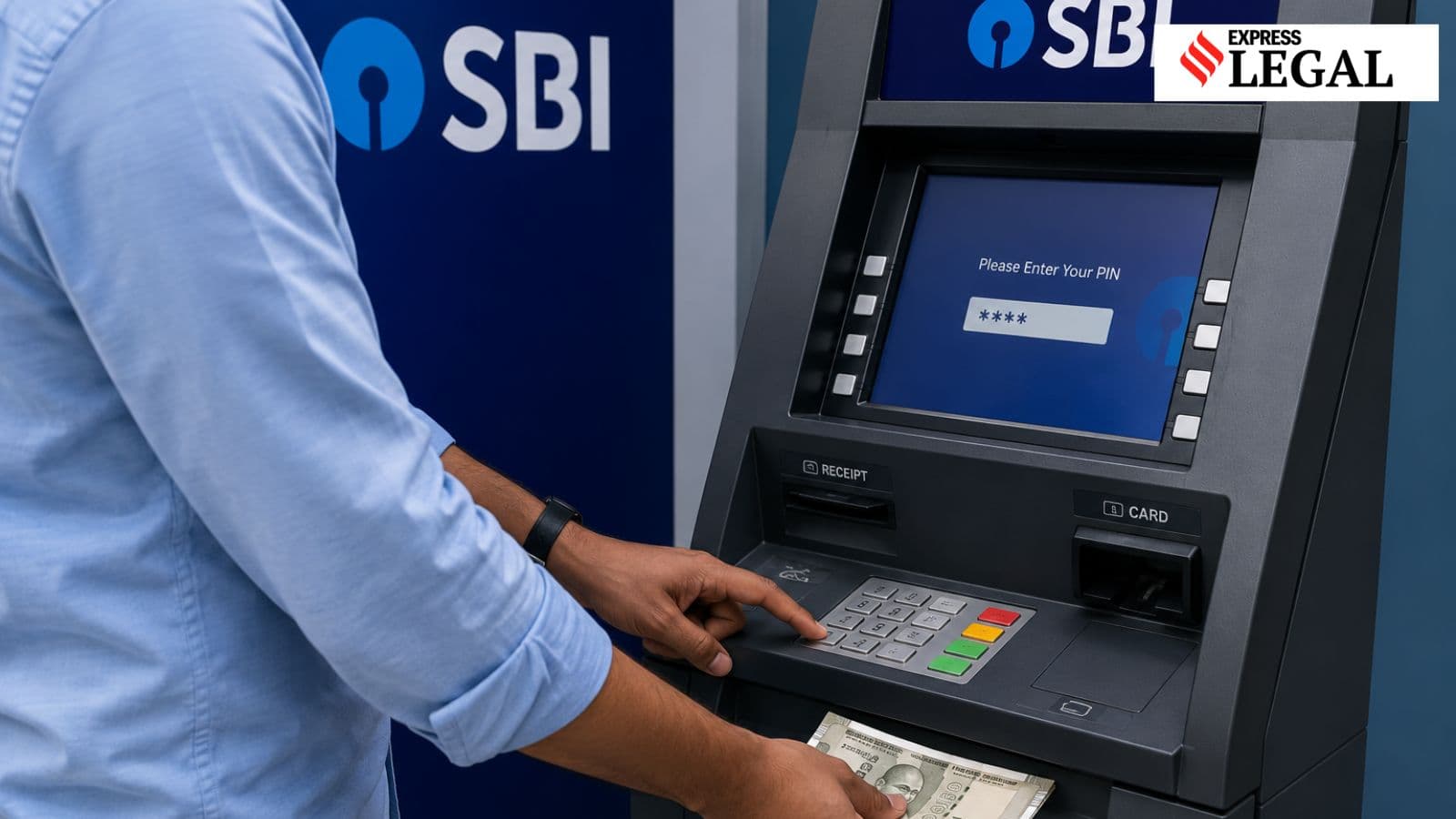
A district consumer commission in Punjab has directed the State Bank of India (SBI) to refund Rs 10,000 along with interest and pay Rs 10,000 as compensation and Rs 3,000 towards litigation costs...
A district consumer commission in Punjab has directed the State Bank of India (SBI) to refund Rs 10,000 along with interest and pay Rs 10,000 as compensation and Rs 3,000 towards litigation costs after an ATM dispensed just Rs 40,000 against a debit of Rs 50,000 from a customer’s account.
A bench of president Kulwinder Singh Pannu, along with members Rachna Arora and Raj Kumar Shukla of the Pathankot District Consumer Disputes Redressal Commission, held that SBI failed to produce key electronic records to prove that all the transactions were successful.
The commission was hearing a complaint filed by one Shakti Singh Malhotra, who had an account in IndusInd Bank and allegedly got a message of Rs 50,000 withdrawal when only Rs 40,000 was successfully withdrawn from an SBI ATM.
The case of the complainant, a customer of IndusInd Bank, is that on August 6, 2022, he tried to make an ATM withdrawal from the account and made five transactions out of which four times an amount of Rs 40,000 was dispensed, but the fifth time no money was dispensed from the said SBI ATM.
The complainant claimed that after withdrawing the said money, he got messages from IndusInd Bank and realised that an amount of Rs 50,000 was deducted from his account. It was further pleaded that the complainant tried to contact the bank concerned and raised a complaint, but no proper resolution was provided by the bank.
The complainant alleged that he had been following up for so many days, during which he had to face harassment and mental agony due to the deficiency of service on the part of the bank concerned, which is a matter of great shame and regret.
He added that due to IndusInd Bank’s mala fide act and conduct, the complainant got duped of his hard-earned money in an erroneous way and due to the same, he has not been able to live a life on his own accord.
He added that due to this illegal act and conduct of the bank concerned, he suffered great loss, mental agony, physical harassment and inconvenience. The complainant was represented by advocate Vijay Abrol in the matter.
IndusInd Bank argued that there is no unfair trade practice on its part and that the present complaint is not maintainable since there is no deficiency of service from its side.
It was stated that the complainant had used a third-party ATM of the SBI, on the basis of which IndusInd Bank followed up with that bank for the chargeback, but did not receive it from SBI till date.
It was contended that IndusInd Bank was not liable to make any refund to the complainant as the alleged withdrawals were made from the ATM of SBI and, as per investigations and information received from SBI, all five transactions were successful, and no excess cash was found in the said ATM.
This ruling highlights that banks operating ATMs cannot escape liability merely by asserting that a transaction was successful. If they fail to produce records proving that the cash was actually dispensed, they may be held liable for deficiency in service and directed to compensate the consumer.
For consumer-related grievances, individuals may contact the National Consumer Helpline at 1915 or 1800-11-4000 for assistance.
Richa Sahay is a Legal Correspondent for The Indian Express, where she focuses on simplifying the complexities of the Indian judicial system. A law postgraduate, she leverages her advanced legal education to bridge the gap between technical court rulings and public understanding, ensuring that readers stay informed about the rapidly evolving legal landscape. Expertise Advanced Legal Education: As a law postgraduate, Richa possesses the academic depth required to interpret intricate statutes and constitutional nuances. Her background allows her to provide more than just summaries; she offers context-driven analysis of how legal changes impact the average citizen. Specialized Beat: She operates at the intersection of law and public policy, focusing on: Judicial Updates: Providing timely reports on orders from the Supreme Court of India and various High Courts. Legal Simplification: Translating dense "legalese" into accessible, engaging narratives without sacrificing factual accuracy. Legislative Changes: Monitoring new bills, amendments, and regulatory shifts that shape Indian society. ... Read More