Punjab Caps Private School Fee Hike At 5 Orders Refund For Excess Charges
Hindustan Times
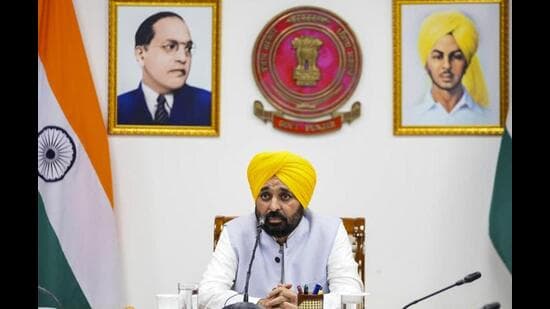
The Punjab cabinet on Monday decided to cap the annual fee increase by unaided schools in the state at 5%. The council of ministers, led by chief minister Bhagwant Mann, accorded formal approval to...
The Punjab cabinet on Monday decided to cap the annual fee increase by unaided schools in the state at 5%.
The council of ministers, led by chief minister Bhagwant Mann, accorded formal approval to the draft proposal presented by the state education department. Briefing the media after the meeting, finance minister Harpal Singh Cheema said that the cabinet has approved an ordinance that will become law immediately upon receiving Punjab governor Gulab Chand Kataria’s assent.
Elaborating on the decision, state education minister Harjot Singh Bains explained that unaided schools that have arbitrarily hiked fees by more than 15% cumulatively over the past three years will have to refund the excess amount to parents. Bains said that the government is seizing the records of these institutions to carry out a detailed scrutiny. He added that if any institution wishes to increase fees by more than 5%, it must justify the hike before a regulatory committee, comprising officials from the district administration, education department, and finance department.
In another major decision, the cabinet agreed to release pending fiscal incentives to 99 industrial units that had set up operations under various state industrial policies launched in 1978, 1987, 1989, 1992, 1996, and 2003. According to Cheema, these units had shut down due to various reasons, and previous governments had denied them their incentives, forcing the owners to move different courts.
The cabinet also approved the creation of additional deputy commissioner (ADC) posts in the Dasuya, Mukerian, Gardhiwala, Talwara, and Hajipur tehsils of Hoshiarpur district, as well as in the Phagwara tehsil of Kapurthala district.
Cheema said that the issue was brought to the chief minister’s notice during his recent Lok Milni public outreach programme in Mukerian, where residents reported facing difficulties travelling long distances to the district headquarters for routine administrative work. The new posts will ensure senior officials are stationed closer to local populations for their convenience.