Suvendu Govt Table Cag Reports Last 4 Years Mamata Rule
Indian Express
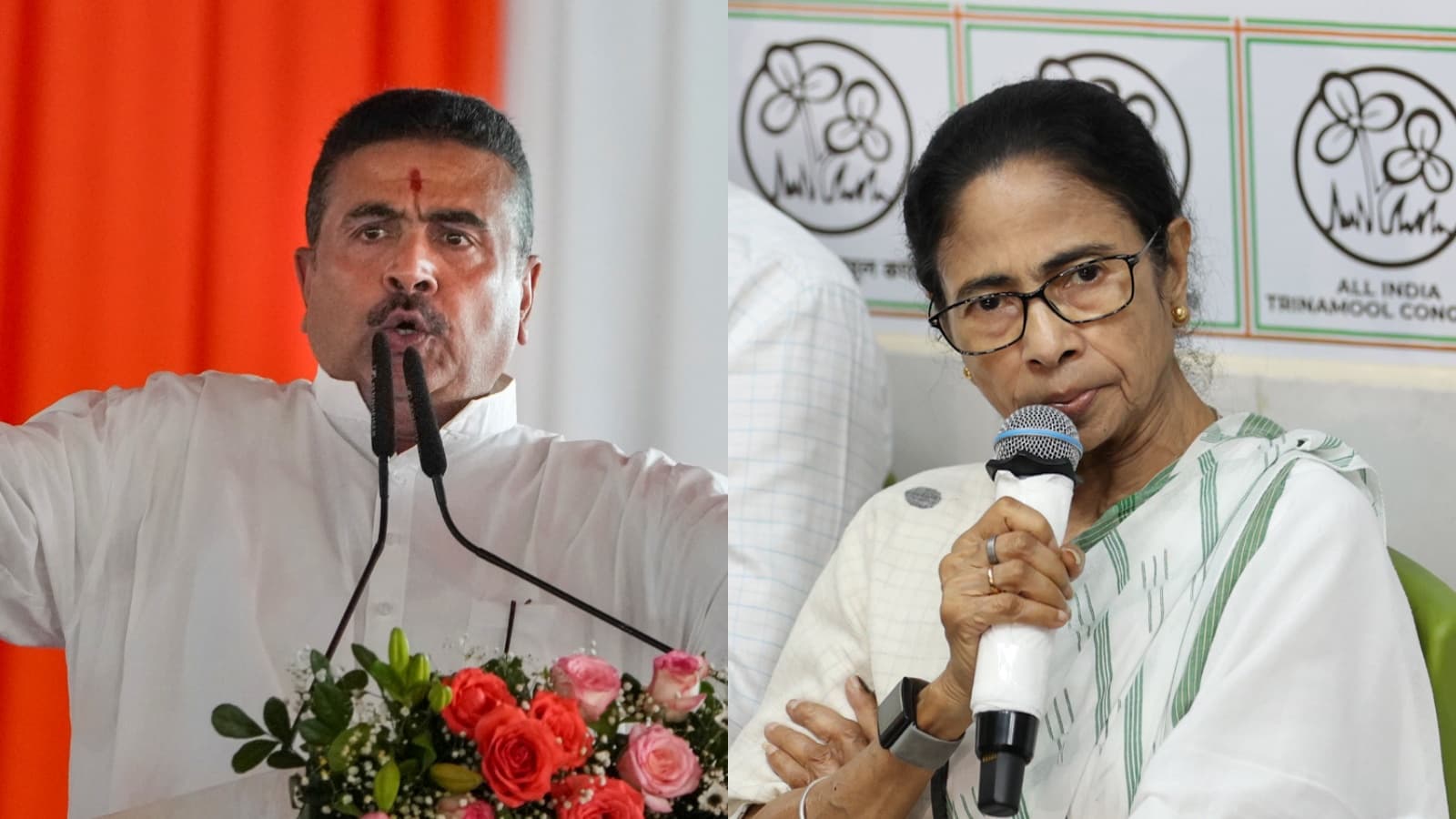
More trouble awaits the Trinamool Congress (TMC), which is facing charges of corruption during its 15 years of rule in West Bengal, as the new BJP government is likely to table the CAG reports of...
More trouble awaits the Trinamool Congress (TMC), which is facing charges of corruption during its 15 years of rule in West Bengal, as the new BJP government is likely to table the CAG reports of the last four years in the state Assembly during the ongoing Budget session.
The last CAG report tabled in the Assembly by the previous TMC government was for the 2020-21 financial year. Since then, the TMC government did not table the reports of the Comptroller and Auditor General (CAG) of India for the financial years 2021-22, 2022-23, 2023-24, and 2024-25 in the Assembly despite the then Governor CV Ananda Bose’s direction.
“The CAG reports always flagged corrupt practices of the TMC government. Naturally, the state government was not happy with the CAG reports and did not want them to be published,” said a senior state Finance Department official, adding that unless the CAG reports are tabled in the Assembly, they are not available in the public domain.
While the Budget for the current financial year will be presented by the new government on Monday, it is not clear when the CAG reports will be released. The current Assembly session will continue until June 25, and will resume on July 6 after a brief recess.
From 2011 to 2020, the CAG reports have been flagging the non-receipt of utilisation certificates (UCs), amounting to a whopping Rs 2.29 lakh crore of Central grants, from the West Bengal government.
The utilisation certificates (UCs) are documents submitted by the beneficiaries of grants, or welfare schemes and projects, endorsing the receipt and proper utilisation of funds. As per the state government’s rules, UCs have to be collected from grantees within a year of disbursal of grants by officers of the department through which the funds had been disbursed.
“It is assumed that UCs are not submitted if the funds have not been utilised properly and have been misappropriated,” said an official. The CAG report of 2020-21 stated that the state Panchayat and Rural Development Department had the maximum pendency of UCs (81,950 UCs, amounting to Rs 81,839 crore), followed by the School Education Department (38,117 UCs for Rs 36,850 crore), and the Urban Development and Municipal Affairs department (34,837 UCs for Rs 30,693 crore).
“In the absence of UCs, it could not be ascertained whether the recipients had utilised the grants for the purposes for which these were given. This assumes greater importance as pendency in non-submission of UCs is fraught with the risk of misappropriation,” the report stated, adding that despite successive audit reports flagging the issue of non-submission of UCs, the West Bengal government under the TMC remained unconcerned.
Since the TMC came to power in 2011, non-submission of UCs has turned into a chronic problem.
Another major financial anomaly flagged by the CAG in its last tabled report was “non-submission of detailed contingent (DC) bills” even years after withdrawal of funds from the state exchequer through abstract contingent (AC) bills.
Money is drawn from the state exchequer through AC bills in case of contingencies like floods, erosion, droughts, and other natural disasters, or to provide relief and meet other contingency expenses for events and happenings that are unforeseen.
The state government’s rules stipulate that DC bills with clearer and verifiable details of the funds withdrawn through AC bills have to be submitted within a maximum period of 60 days of the withdrawal of funds.
The CAG report revealed that as of March 2021, 11,321 DC bills for a total amount of Rs 3,400 crore had not been submitted. “Pending DC bills reflect accounting indiscipline by government functionaries and controlling authorities, leading to risk of fraud, temporary misappropriation and embezzlement of funds,” the CAG said in its report.
Atri Mitra is a highly accomplished Special Correspondent for The Indian Express, bringing over 20 years of experience to his reporting. His work is characterized by deep regional knowledge and a focus on critical administrative and political developments, establishing strong Expertise and Authority in his domain. Experience Current Role: Special Correspondent, The Indian Express. Decades of Experience: Over two decades of extensive reporting experience, primarily covering administration and political news. Geographical Focus: Holds significant reporting experience from West Bengal, Bihar, and the North-East, providing a comprehensive understanding of the socio-political landscape in these regions. Key Coverage: Has dedicated more than ten years to covering administration and political news, with a keen focus on political developments in West Bengal. Electoral Reporting: Demonstrated a commitment to crucial political moments, having covered the 2009 Lok Sabha election and 2010 assembly elections during his time at Anandabazar Patrika, and the 2019 Bihar Lok Sabha election while working with News18-Bangla. Career Foundation: Began his career at the leading vernacular daily Anandabazar Patrika, where he worked for more than fifteen years, including a three-year stint as the Bihar correspondent. Education Advanced Degree: Holds a Master's degree in Economics from Rabindrabharati University, providing an analytical framework for his political and administrative reporting. Undergraduate Education: Holds a Bachelor's degree from Calcutta University. Prestigious Alumni: His educational background includes attending esteemed institutions: he is an alumnus of St. Xavier's, Kolkata and Ramakrishna Mission Asrama, Narendrapur. Atri Mitra's decades of dedicated reporting, substantial focus on political and administrative beats, and solid academic credentials make him a trusted and authoritative source for news and analysis from Eastern and North-Eastern India. ... Read More