Children Violent Towards Parents Shame Accountability Family Relationships
Indian Express
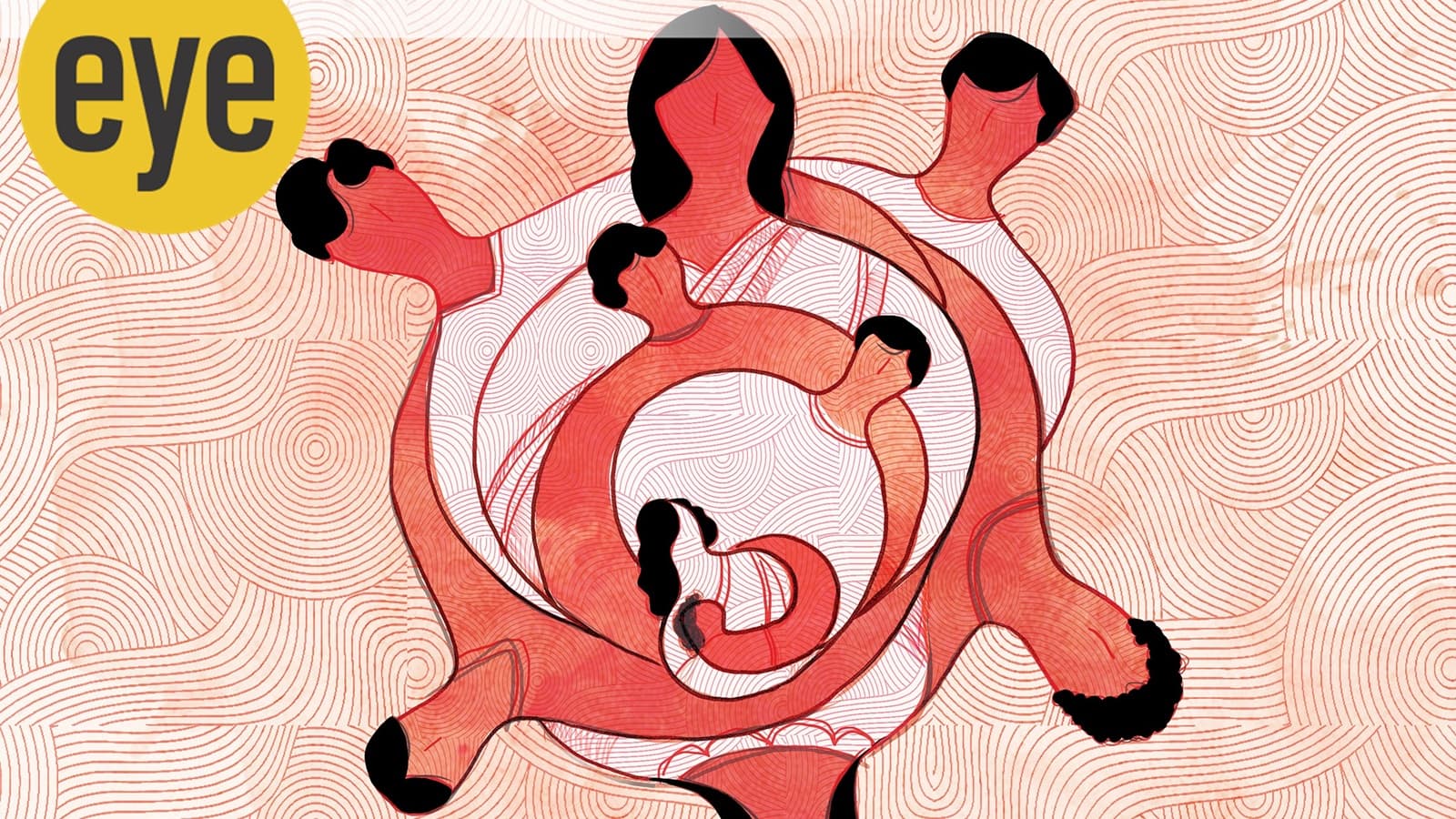
Invariably, there is silence, as there is a lot of shame around it. As a parent shared, We act as if nothing has happened every time he hits his mother.
Invariably, there is silence, as there is a lot of shame around it. As a parent shared, “We act as if nothing has happened every time he hits his mother.” Often, the aggression remains confined to the family, making it harder to discuss. To name it as violence would make it real, and that would be too painful to accept. Self-blame and guilt can keep parents silent, out of fear of being judged in society as “bad parents” and having “failed as a parent.”
Blame can shift to the children, too. “There is something seriously wrong with him” is a sentiment I have heard often. When children are seen as at fault, then there can be immense rage directed at them. Violence is met with violence, and it might reach a point when it is not possible to keep quiet. Things spiral out of control, other family members, school, neighbours might be pulled in or, in extreme conditions, the police might have to be called in too.
Unwittingly, we all might be complicit in this shaming, and dismiss them as “violent child,” “nalaayak”, “bad seed”, or even find fault with the parents, “bad parenting,” “bahut chhoot de di to bigadna to tha hi.” Or have other simplistic explanations, “it is all that violence in the video games they watch nowadays”, etc. But violence comes with complexities, and easy answers rarely hold.
Nysa pushed her mother so hard that she hit her forehead against the door and had to be rushed to the hospital. Arif hit his mother with a bat when she tried to take his gadgets away. These stories sound horrifying, and we could easily jump to the conclusion that all these children, aged 13 and 17 years, were plain evil and headed towards a life of crime. Some psychiatrists and psychologists might end up colluding in these totalising descriptions by being quick to label them as having Oppositional Defiant Disorder, Conduct Disorder or even a Personality Disorder. Labels that restrict the child’s identity to a problem-saturated story with no possibilities. Let’s pause a little and ask ourselves the question, “Are our children disordered or the culture in which they grow up disordered?”
As Resmaa Menakem, anti-racist therapist and author, explains, “Many times trauma in a person decontextualised over time can look like personality. Trauma in a family decontextualized over time can look like family traits, trauma decontextualized in a people over time can look like culture and it takes time to slow it down so you can begin to discern what’s what.”
Children’s behaviour always makes sense. On the same note, children’s violence always makes sense, too. Every single time, and there are no exceptions.
There is no rushing this. It has taken them years to reach this point, and one fun evening might not change everything. It is possible that there is no way to have a conversation. I hear children very often talk about how they have “blocked off” their parents, like pesky spam. Then parents can practise the riverbank through their presence, words of appreciation, cooking their favourite food, and doing small things that express their love. They might not show it, but when children are hurting, they are clocking in every bit of care towards them.
So, am I saying that everything goes, and we should just throw our hands up in the air and say, “Children will be children” and hope one day they will grow out of it? Not at all. I have too much respect for children and believe that they are not using violence as a preferred way of being. Sometimes rage becomes the only language they think is available to them to express their anguish, frustration or even as a wall of protection. In my conversations with young people, we unpack the idea of “justified anger” or “justified violence.” Often it shows up as, “My mother shouts so much that I had to hit her to shut her up.” We might even discuss how violence is generally directed towards women in the house – the mothers, the sisters and the domestic workers. And the politics and the patriarchy of violence, and how we can get recruited into it.
Then how do we hold them accountable without judgment or shaming? I turned to the collective wisdom of parents I have worked with to understand what has helped them. Invariably, parents talked about starting with an apology. As a father shared, “I had to say sorry to my son for years of rage that he had been witness to when I was struggling with my alcohol problem.” This father also showed that accountability is not just words and gave up alcohol to heal his relationship with his son. A family committed to respectful language and to “not spreading shaming stories in the family grapevine” that had damaged relationships.
A mother shared that she realised that, “I have been walking on eggshells and making excuses for my son’s rage, and it became important for me to sit with him and name it as violence. It’s only when we did that, we knew we had to do something about it.” Another mother sat down with her child and made a list of what they called “above the line” (acceptable ways of expressing frustration) and “below the line” (unacceptable ways of expressing frustration) for all the family members, with a list of household chores that would have to be done as community service if anyone lapsed.
In my conversations with young people who use violence, it has been so heartwarming to see that once they have a space where they are not being blamed or judged, they are ready to take accountability. Every child wants to live their life in keeping with what they value or hope for. So the next time we are faced with a child’s ferocity, let’s step away from shame and invite stories of repair and possibilities.