Locals Around 20 Km Radius Of Toll Plaza To Get Annual Pass Road Ministry
Indian Express
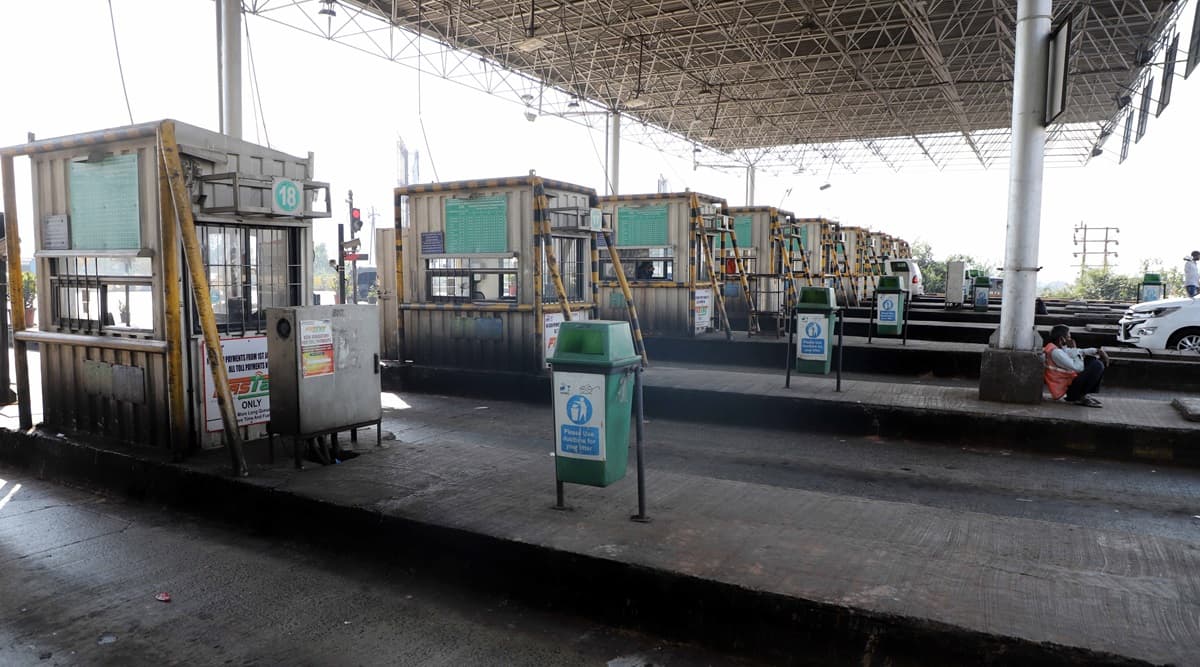
In a push for barrier-less tolling system under which commuters do not have to stop to pay the toll fee, the Union Ministry of Road Transport and Highways will issue new digital monthly and annual passes by next month for residents in the 20-km radius of toll
plazas, said an official with knowledge of the development.
The amount to be paid to acquire the passes, which will be linked to FASTag, however, is under discussion, the official said. Under the new system, the vehicle owners who live in the 20-km radius of the toll plazas will be verified through their Aadhaar numbers, the official said.
MLFF is currently operational at two toll plazas of the country — Choryasi in Gujarat and Mundka-Bakkarwala toll plaza on Urban Extension Road (UER)-II in New Delhi.
Locals around the 20-km radius of a toll plaza constitute a significant share of unpaid user fee violations recorded so far, said the official.
Currently, as per the National Highway user fee rules, a monthly pass at a rate of Rs 350 is issued to the locals (who have non-commercial vehicles) for passing through a toll gate for unlimited times in a month. The pass is physically issued at the concerned toll plaza and the commuters have to show it to move through the toll gate.
“In the MLFF violations, we have found that many local residents around a toll plaza did not have a pass and used to frequent on the basis of familiarity with the toll gate employees — saying that they are locals. However, this thing will not work in MLFF as it will immediately issue an e-notice for such vehicles. To address this problem, we are working to issue a monthly, as well as an yearly pass for the commuters around 20-km radius of a toll plaza. The system will verify their location with the help of the Aadhaar number,” said the official.
The official further said, “The prices of such passes are yet to be decided. As per the previous rules, the locals have to pay Rs 350 for a monthly pass. In this new digital pass, the amount is expected to be lesser. The pass will be available on Rajmarg portal. With this pass, locals will be able to cross the respective toll gate an unlimited number of times.”
Toll exemptions; MLFF contract for more toll plazas
The movement of armed forces is another issue that has been flagged in the MLFF tolling system. Sources said the Ministry is deliberating the matter with the department of Military affairs to issue a FASTag exempt from toll charges.
The toll exemptions and discounts on National Highways are governed by the National Highways Fee (Determination of Rates and Collection) Rules, 2008.
Currently, defence personnel get the exemption after identification of their vehicle or production of the pass as specified in the Indian Toll (Army and Air Force) Rules, 1942.
The boom barrier-less toll plazas have very minimum human intervention and it immediately issues an e-notice against the vehicle or vehicle owner, if the passage is recorded and user fee is not paid.
In such cases, commuters will have to pay double the applicable toll amount at the respective toll plaza. However, if it is paid within 72 hours, only the original user fee will apply.
In MLFF, high-performance Radio Frequency Identification (RFID) readers and Automatic Number Plate Recognition (ANPR) cameras read the FASTag and Vehicle Registration Number (VRN) to deduct the toll amount.
Indian Highways Management Company Ltd (IHMCL) — NHAI’s tolling implementation agency — has awarded the MLFF contract for more toll plazas.
These are Gharaunda on NH-44 in Haryana, Boariach on NH-48 in Gujarat; Daulatpura, Manoharpura and Shahjahanpur on NH-48 in Rajasthan; Mundaka on UER-II in New Delhi; Nemili and Chenasamudram on NH-48 and Paranur on NH-45 in Tamil Nadu; Kasepalli, Amakathadu and Marur on NH-44 in Andhra Pradesh, Chalakwadi and Hiwargaon Pavsa on NH-50 in Maharashtra, and Badarpur Faridabad on NH-19 in Haryana. Further, bids have been invited for an additional 108 fee plazas.
Dheeraj Mishra is a Principal Correspondent with the Business Bureau of The Indian Express. He plays a critical role in covering India's massive infrastructure sectors, providing in-depth reporting on the connectivity lifelines of the nation. Expertise & Focus Areas: Mishra’s journalism is focused on two of the country's most capital-intensive and public-facing ministries: Ministry of Railways: Tracking the operations, safety, and development of India's vast railway network. Ministry of Road Transport & Highways: Covering policy decisions, infrastructure projects, and highway development. What sets Mishra apart is his rigorous use of the Right to Information (RTI) Actas a primary tool for news gathering. By relying on official data and government records, he ensures a high degree of accuracy and trustworthiness in his reporting. This data-driven approach has resulted in numerous impactful reports that hold public institutions accountable and bring transparency to government operations. Find all stories by Dheeraj Mishra here ... Read More