Planning To Donate Blood Here Is What First Time Donors Should Know Before Heading To The Donation Centre
Hindustan Times
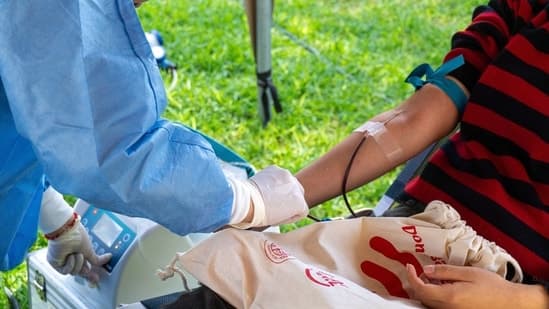
Blood donation is perhaps one of the easiest things that a person can do to save lives. One donation can provide enough blood to help patients undergoing surgery, those with cancer, trauma patients, and those with chronic illnesses
.
Although many willing individuals are eager to donate blood, first-timers are often confused about how to donate, what they need to know before donating, and the procedures involved. In an interview with HT Lifestyle, Dr Aravind Badiger, technical director, BDR Pharmaceuticals, breaks down the process for first-time donors.
“One should start by knowing his or her eligibility requirements in order to donate blood,” said Dr Aravind. The eligibility requirements will differ slightly between blood banks and even from one country to another. Generally, healthy individuals who are above 18 years old and reach the weight limit set by the blood bank are qualified to donate blood. At the same time, these individuals should not have any current illnesses and must be healthy. They must be free of fever and without any infections.
According to Dr Aravind, here are a few things you should know before donation:
Dr Aravind highlighted that most first-time donors are usually surprised at how easy it is to donate their blood. This begins by filling out the required forms, where health screening tests such as blood pressure, pulse rate, temperature and haemoglobin will be taken to ascertain that the person is fit for donation. After being cleared, the donor is taken to another room where blood is collected using a sterile needle inserted in the vein, which could take approximately eight to ten minutes.
Once the procedure is over, donors are advised to rest for a while and have some refreshments at the donation centre. The consumption of additional fluids for 24 hours and avoiding any physical exertion for the next few hours will ensure speedy recovery.
“In some cases, donors might feel some fatigue or even bruising, but those sensations do not last long,” said Dr Aravind. In case of any other symptoms, donors should consult their physicians immediately. For many people, the act of blood donation starts with the first donation and goes on throughout one's lifetime. It is crucial for patients receiving transfusions to maintain sufficient stocks of donated blood. As first-time donors get to know about the procedure of blood donation and prepare themselves properly, they can very well become regular donors, saving the lives of other individuals.
Note to readers: This article is for informational purposes only and not a substitute for professional medical advice. Always seek the advice of your doctor with any questions about a medical condition.
Anukriti Srivastava thrives at the intersection of words and voice, where journalism meets storytelling. A digital editor and journalist with over 5 years of experience, she has written across lifestyle, women issues, relationships, entertainment, fashion, and travel. She did her Masters in Broadcast Journalism and has published more than 500+ lifestyle content pieces across platforms. As a former Sub-Editor at HerZindagi, she produced engaging digital content, interviews, and event coverage for a wide audience. She has also contributed as a Webstory Producer with Travel + Leisure, transforming travel experiences into immersive stories for readers who love exploring the world. Beyond writing, Anukriti’s storytelling extends to the microphone. As a voice-over artist, her warm and expressive voice has brought scripts to life across audio platforms, turning simple words into immersive experiences. Her work reflects a deep interest in people, culture, and everyday stories that resonate with readers and listeners alike. She enjoys crafting content that informs, inspires, and sparks curiosity. Away from screens and studios, you’ll find her reading self-help books, listening to music, getting lost in romantic novels, and playing the guitar for a creative reset. For Anukriti, storytelling isn’t just a profession—it’s a way of seeing and sharing the world.Read More