Jaspal Rana Ignored Heart Attack For 3 Days Missed Golden Hour Cardiologists Explain Cost Of Ignoring Warning Signs
Hindustan Times
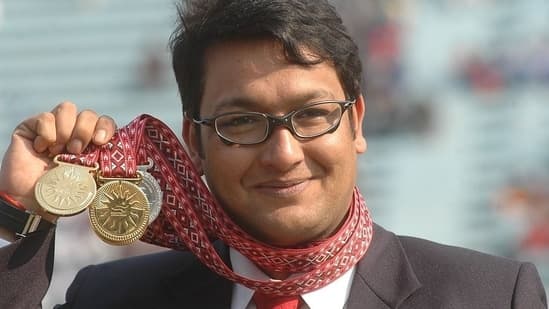
India s shooting legend Jaspal Rana, who had a glorious run at the Commonwealth Games and coached Olympic medalist Manu Bhaker, recently died at the age of 49. The athlete passed away following a cardiac rupture
India’s shooting legend Jaspal Rana, who had a glorious run at the Commonwealth Games and coached Olympic medalist Manu Bhaker, recently died at the age of 49. The athlete passed away following a cardiac rupture.
According to reports, Jaspal was admitted to a hospital in a critical condition after he ‘carried a heart attack’ for at least three days. He had been travelling and continued to feel chest pain before arriving at the hospital, where, though the doctors stabilised his condition, he later suffered a fatal heart rupture.
Jaspal Rana's demise has not only sparked a concern over the rising middle-aged cardiac deaths in India but also the risks of delayed heart attack treatment and missing the golden hour. To understand the importance of early intervention in a heart attack, HT Lifestyle spoke with two cardiologists.
Highlighting the importance of not ignoring heart-related signs, Dr Naresh Munot, consultant interventional cardiologist, global physician scholar, USA, Apollo Hospital, Pune, shared, “A lot of times people tend to dismiss the heart-related symptoms as not important. People think that it is related to acidity, exhaustion, or stress. Sometimes, if the pain is mild, people even dismiss it as a muscle strain.”
“Cardiologists are cautioning that even minor symptoms may indicate an underlying cardiac emergency. People increase the risk of serious complications if they delay a medical evaluation, since this allows damage to the heart muscle to progress,” he added.
In cardiology, the term golden hour refers to the first 60 to 90 minutes after the onset of heart attack symptoms. According to Dr Paras Lalwani, cardiothoracic and vascular surgeon, HCG Hospitals, Rajkot, this is the critical period during which prompt treatment can restore blood flow and significantly limit damage to the heart.
He stresses that timely interventions, such as clot-dissolving medications or angioplasty with stent placement, can save much of the heart muscle if performed early.
However, he cautions, “After three to six hours, heart muscle damage accelerates rapidly, and beyond 12 hours, much of the injury becomes irreversible. Patients who delay seeking medical attention for days often arrive after the heart attack has already run its course. While doctors can still manage complications, they cannot revive dead heart tissue. Missing the golden hour dramatically increases the risk of long-term disability and death.”
Underlining the importance of timely intervention and how it can significantly improve survival and recovery outcomes, Dr Munot shared, “Emergency procedures such as angioplasty and some clot-dissolving medications can reopen the blocked arteries. Interventions like this limit the damage of heart muscle injury and reduce the number of complications. It can also improve survival rates and quality of life.”
Dr Lalwani also stresses that recognising the symptoms of a heart attack early can save lives. He notes that, contrary to popular belief, heart attacks do not always present as the classic ‘clutching the chest.’
Moreover, Dr Lalwani adds that women, older adults, and people with diabetes frequently experience atypical symptoms, including shortness of breath, jaw, neck, or back pain, indigestion-like discomfort, unusual fatigue, nausea, or lightheadedness.
So, what are the key warning signs to keep in mind? Dr Lalwani and Dr Munot share:
If any of these symptoms persist for more than five minutes, treat them as a medical emergency. Lastly, Dr Lalwani cautions, “The guiding principle in cardiology is simple: ‘Time is muscle.’ If you suspect a heart attack, call emergency medical services immediately, avoid driving yourself to the hospital, and do not wait to see if symptoms improve. If you are not allergic and have not been advised otherwise by your doctor, chewing a 325 mg aspirin while waiting for medical help may help reduce clot formation.”
Note to readers: This article is for informational purposes only and not a substitute for professional medical advice. Always seek the advice of your doctor with any questions about a medical condition.
Krishna Priya Pallavi is a journalist with over 9 years of experience, covering health, fashion, pop culture, travel, wellness, entertainment, festivals, mental health, art, decor, fitness, and sex and relationships. She is an alumna of the Indian Institute of Mass Communication (IIMC), Dhenkanal, and holds an undergraduate degree in Journalism and Mass Communication from Guru Gobind Singh Indraprastha University, Delhi. Her strong academic foundation informs her analytical and detail-oriented approach to storytelling, helping her uncover stories where none seem to exist. Before joining Hindustan Times, Pallavi worked with some of India’s leading media organisations. She spent close to three years at India Today, where she honed her newsroom skills and developed a sharp editorial sensibility. She also worked for over a year and a half at Vagabomb, ScoopWhoop’s feminist digital platform, where she explored stories through a gender-sensitive, socially aware lens. Pallavi has a deep interest in global fashion trends and international fashion seasons, and enjoys interviewing celebrities and tracking pop culture movements—interests that frequently translate into engaging, reader-friendly stories. Alongside lifestyle and entertainment, she has a keen eye for impactful health and wellness journalism, regularly interacting with doctors, designers, and digital content creators to bring nuance and credibility to her work. Born and raised in Haryana, Pallavi remains deeply connected to her ancestral roots in Odisha. Her ability to spot fresh angles brings curiosity and depth to stories she pursues. When not chasing deadlines, she enjoys spending time with her dog, planning her next vacation, reading, running new trails, and discovering new destinations.Read More