Building With A View To Contextual Modernity
Hindustan Times
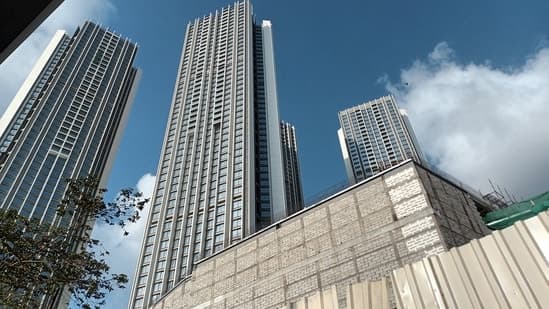
There is an undeniable, intoxicating electricity to India s contemporary landscape. We are currently witnessing the most rapid expansion of the built environment in human history
There is an undeniable, intoxicating electricity to India’s contemporary landscape. We are currently witnessing the most rapid expansion of the built environment in human history. To put the sheer volume into perspective: over 362,000 formal residential units were launched in major markets in 2025 alone, with total active pipeline inventory hovering above half a million units across the top eight metros, according to the Knight Frank India Real Estate Report. Over the next 10 years, as our urbanisation rate climbs past 44%, the National Institute of Urban Affairs (NIUA) expects India to become a central driver of the global urban transition, alongside China and Nigeria. Yet, if you look out the window of a high-rise in Gurugram, Lower Parel, or New Town in Kolkata, a deeply unsettling question emerges: Why does it all look exactly the same?
We have traded our rich, millennia-old architectural vocabulary for a monotonous, globalised landscape. This phenomenon architectural homogenisation is transforming India's distinct metros into interchangeable copies of a generic ideal. However, this aesthetic flattening manifests differently across asset classes, with the landscape having split into two highly predictable typologies: the corporate glass aquarium and the defensive residential concrete fortress.
In the commercial sector, the primary driver behind this aesthetic flattening is financial and logistical expediency. In a hyper-accelerated market, stakeholders face intense pressure to deliver projects within razor-thin timelines. Standardised glass and steel allow a commercial tower to be assembled in a fraction of the time it takes to execute context-specific masonry or vernacular detailing. Furthermore, global institutional capital which increasingly funds Indian real estate via Real Estate Investment Trusts (REITs) demands predictable, institutional-grade assets that match the familiar corporate profiles of offices in London, Frankfurt, or New York.
But this one-size-fits-all approach ignores a critical reality: Geography.
The most egregious flaw in our copy-paste commercial architecture is its complete disregard for India’s climate zones. Glass-and-steel curtain walls were pioneered in the cold, temperate climates of Northern Europe and North America to trap heat and maximise scarce sunlight. Importing this typology into a subcontinent where temperatures routinely breach 40 degrees Celsius creates severe engineering and environmental challenges.
Highly glazed buildings create a massive greenhouse effect, trapping solar radiation and driving indoor temperatures to unbearable levels. Extensive glass facades dramatically inflate a building’s cooling load, turning modern business districts into massive thermal liabilities and actively worsening the urban heat island effect, a consequence detailed in recent climate-impact studies from Sweden’s Lund University.
Recognising this, the Bureau of Energy Efficiency (BEE) under the Energy Conservation Building Code (ECBC) mandates that the Window-to-Wall Ratio (WWR) must not exceed 40% for buildings utilising standard compliance methods. Yet, the industry routinely engineers its way around the spirit of this code rather than fixing the core envelope architecture itself.
While commercial districts mimic global tech hubs, our residential landscape has succumbed to a different kind of monotony: The copy-paste, gated high-rise complex.
The residential landscape is now dominated by soaring, monolithic towers organised into insulated enclaves. To meet the housing deficit, construction has shifted heavily toward standardised aluminium formwork (commonly known as Mivan shuttering), which allows a new concrete floor to be cast every few days. While highly efficient and structurally robust for rapid execution, this system inherently forces architectural uniformity. It yields rigid, repetitive concrete floor plates with identical window placements, flat facades, and minimal structural room for deep recesses, shading projections, or regional variations.
This creates a sharp urban residential design paradox. While modern marketing promises thematic names, floor-to-ceiling unshaded glazing, and resort-style podium greens, the local environmental truth is vastly different. These monolithic buildings trap intense heat via exposed concrete surfaces, create severe glare issues internally, and remain entirely dependent on 24/7 split air conditioners to remain liveable. When project layouts are optimised primarily by geometric algorithms for maximum Floor Space Index (FSI) and efficiency profiles, the result is a series of free-standing blocks that remain detached from the streetscape and oblivious to the sun's path.
Beyond the environmental and energy toll, there is a profound cultural loss. For centuries, Indian architecture was celebrated for its hyper-local intelligence. In India’s Northwest, the jaali (latticed stone screen) was perfected to perforate light and accelerate breeze. In the South, deep overhangs and sloping roofs deftly managed torrential monsoons. Across the Deccan region, central courtyards formed the lungs of domestic and public life, naturally regulating microclimates.
Speed does not have to mean a surrender of identity. India’s historic infrastructure boom presents a once-in-a-generation opportunity to define a new, uniquely Indian modernism: One that is data-driven, sustainable, and culturally rooted.
We must shift our aspirations from mimicking foreign models to modernising our own traditional wisdom. This means prioritising climate-responsive facades, local materials like terracotta, stone, and exposed brick, and passive cooling. Our regulatory frameworks must evolve past mere box-ticking exercises; building codes should incentivise climate-appropriate shadow-casting, structural insulation, and smarter facade engineering.
India is building its future at breakneck speed. But if we do not pause to question the form this future is taking, we risk inheriting cities that are efficient on paper, yet completely devoid of soul, character, and survival instinct. It is time to stop building for the global gaze and start building for the Indian sun.
This article is authored by Manit Rastogi, founder and chairman, Morphogenesis.